HISTORICAL CONTEXT OF IGBO ATTIRE
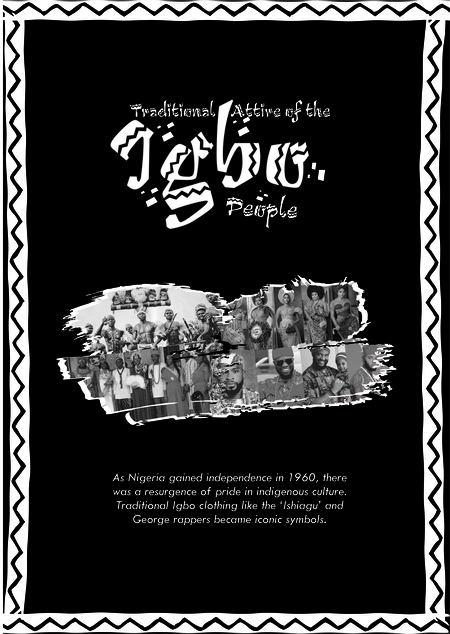
Igbo attire has evolved over centuries, influenced by trade, colonialism, and globalization.
Traditional garments often reflect historical events and changes in society, with modern influences blending into the rich textile heritage of the Igbo people.
The Igwe (King) and Lolo (Queen) attire in the 80s and 21st century
MEN’S ATTIRE
Igbo men’s attire typically includes the 'isi agu', a patterned shirt paired with trousers or shorts.
Accessories such as caps called 'okpu agu' and beads signify status and cultural pride.
WOMEN’S ATTIRE
Igbo women traditionally wear the 'blouse and wrapper' combination, which includes a fitted top and a wrap-around skirt.
Bright colors and patterns symbolize beauty and social status within the community.
IGBO TRADITIONAL ATTIRE & ITS SIGNIFICANCE IN SOCIETY
Clothing in Igbo society serves multiple functions, including cultural expression, social status indication, and protection. Traditionally, attire symbolizes one’s tribe, age, and marital status, emphasizing the cultural identity and heritage of the wearer. It also reflects to their cultural heritage and identity, playing a vital role in various festivals and ceremonies.
Different style of Igbo attire for Traditional Marriage
The New yam festival is one of the important Igbo festivals arranged according to level of popularity