Content:
1. Concept
2. Background
3. Chapter 1: The woodblock printing techniques in Africa.
4. Chapter 2: African Children’s Books Illustrated in Different Styles (Without Block /Linocut Techniques)
5. Chapter 3: Woodblock/ linocut style usage among African illustrators.
6. Chapter 3.1: Digitally produced but woodblock-inspired illustrations.
7. Conclusion
8. Image sources and bibliography
Concept
This study looks at African illustrated books and the style of woodblock/linocut printing. It studies how these two forms have been combined to form an amazing and very effective way of storytelling, sharing learning, and keeping cultures alive. Though woodblock printing is a technique that comes with a long history in many parts of the world, its implementation in African illustrated books has been one of adaptation and ingenuity. The study is suggesting that African artists and print publishers have employed woodblock printing as not only a means of production but even more as a visual language that has an artistic value of its own. It comes down to the fact that a hand-carved woodblock carries the spirit and texture of its carving that makes it so different that a paper book reader can actually feel the story. This contrast is often made with the glossy, factory-style images typical of many Western books. The research says that this method is an example of visual storytelling that is highly influenced by tradition, while simultaneously very avant-garde. The books themselves are what we are going to talk about primarily here, but not simply as items; rather as dynamic living artworks. The study here through an exploration of some particular cases tries to show how the use of strong lines, high contrast, and occasionally «flawed» beauty of the woodblocks helps some print-artists to produce works whose vividness really makes the viewer see them as living things.
These pictures are obviously not only decorative elements but they serve as tools in constructing the whole world of the story the reader is engaged in, be it a tale, a poem, or kids' picture book. The researcher here takes on the role of a tour guide through the books, showing that the books are the agents in making a combination of words and pictures and thus leading to an entirely artistic enjoyment. This technique keeps the focus on the real artistic work, the painter’s decisions, rather than on the outer influences. Basis of the study framework points out the development of a certain trend, mostly from the mid-20th century, where Artists/illustrators from African countries that had recently become independent tried to make books that spoke to their own experiences and views. In their efforts they adopted woodblock printing to make images that were really their own and not reminiscent of what had been done in the colonial years. This topic was selected primarily due to the fact that the narrative of African illustrated books is usually disregarded in global art history. People generally imagine book illustrations coming from the European context if they think about a style at all. By showcasing the inventive and bold creations of African illustrators, this piece of work aims to confront this one-sided perspective. For them, the woodblock is more than just a tool; it is a medium carrying a lot of history and culture. The final artworks are the major factor to be considered here since they represent a valuable insight into the process of storytelling as well as the means of culture sharing.
The question this research poses is what kinds of different visual styles and ways of telling stories have African artists/illustrators created through woodblock printing and book illustrations? The researcher believe that by doing this, the illustrators have managed to find their own style, using the striking and bold characteristics of woodblock/linocut printing to produce images that are at once aesthetically pleasing and profoundly meaningful. In effect, the book is reimagined as an arena where cultural identity and artistic innovation meet and interact. Based upon an intensive analysis of illustrated books, discussions with painters and publishers, and works published in the last few decades dealing with the print and book art history in Africa, the present study is a research involving a combination of various sources of information.
Background
The starting point of this study is the awareness that block printing is not an alien practice superimposed on book publishing in Africa, but rather a deeply rooted and highly adaptive local method. From West Africa where hand-carved calabash or wooden blocks are dipped in vegetable dye and pressed onto fabrics to reproduce symbols in patterns on Adinkra cloth. To other parts of the continent, relief techniques have long been present in different forms. Because of this prior acquaintance with block-cutting, when woodcut and lino print methods were adopted for the production of books and fine-art prints, African artists were not facing an unfamiliar medium. They were essentially deepening a conceptual approach already found in textile and craft traditions through a new medium. In fact, it must have been rather strange that this hand-carved block arrived with the illustrated books bearing memories of local artistry, in its carved signs and contrasts it was as much a continuation of local sign systems as a print tradition worldwide.
«The Fourteen Stations of the Cross», 1974; Onobrakpeya Bruce.
Decolonization and its aftermath were decisive historical moments. After the artists in newly independent African countries realized that printmaking could become a powerful medium of cultural identity and self-redefinition through art, they turned to it. In Nigeria, the Zaria Art Society known as «Zaria Rebels» for their boldness proposed what they called «Natural Synthesis» which they defined as a blend of native visual arts with a selective infusion of western elements.
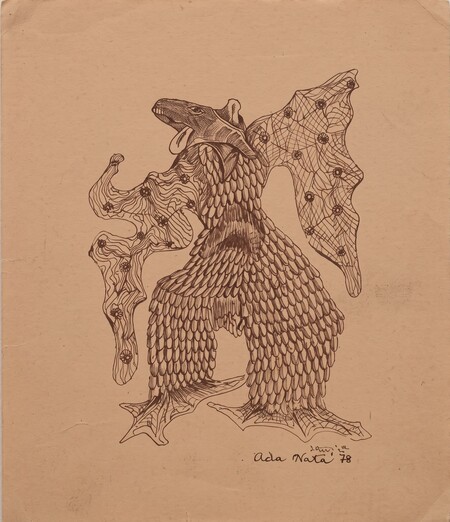
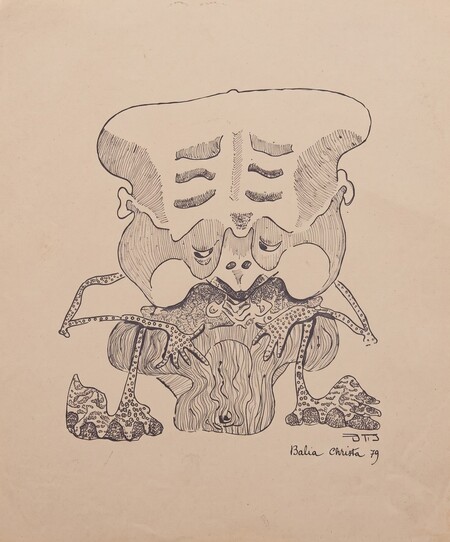
Uche Okeke, Nze the smart, 1958. and The Orphan, 1958.
Uche Okeke got his main visual ideas from the Igbo uli tradition: sinuous line, asymmetry, and figure-ground relationship which he found very suitable for linocut and woodcut, which are basically high-contrast and linear techniques. With illustration, he expressed a statement about their own aesthetic sovereignty. Creative expressions of that generation moved towards illustrated books: Solomon Irein Wangboje, using his woodcut skills, illustrated Nigerian tales, legends, and folklore which became very popular among the people.
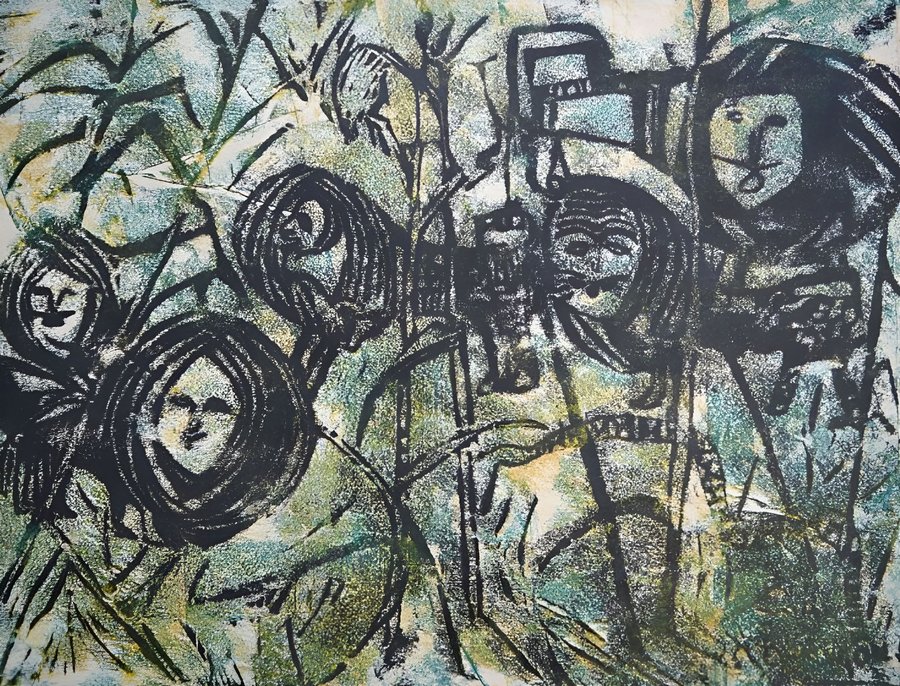
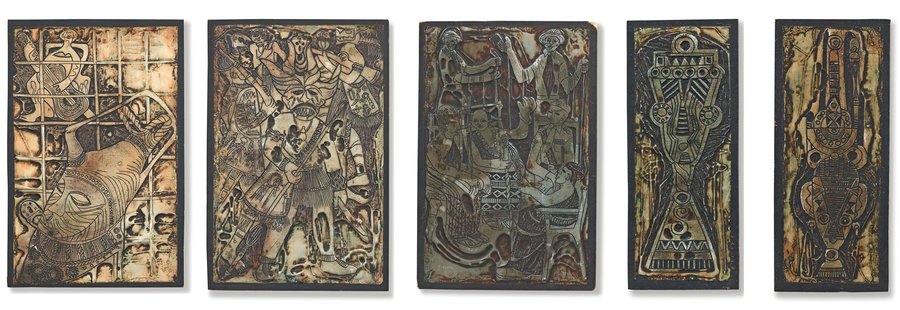
Five metal foil relief (repoussé) panels (i-v): 1980, and Lion on a Walk (1965); Bruce Onobarpeya.
Bruce Onobarpeya, in turn, created relief printmaking of high quality that had its inspirations firmly grounded in traditional West African decorative arts and Pan-African symbolisms; an example is Lion on a Walk (1965); wood was a very intentional choice, whose resistance against the chisel could produce images of great clarity that would transform a simple folk tale, a few lines of poem, or a mythology into a piece of work that would appear to be just as ancient as it does modern.
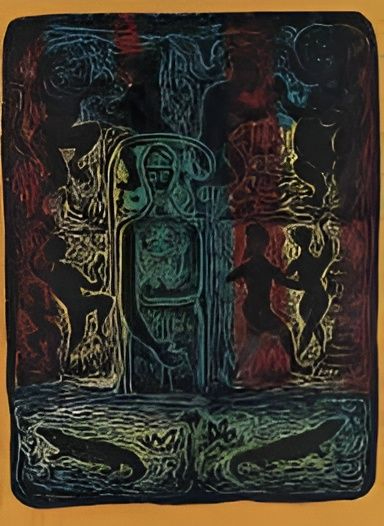
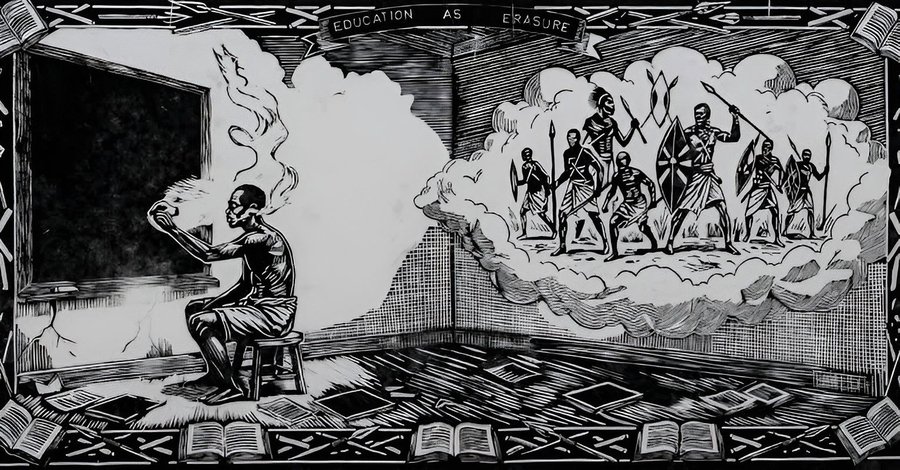
Tales of Amadou Koumba, Africa (1978) of James Lesesne Wells and black-and-white wood cut by Abdul Rop.
Woodcut Tales of Amadou Koumba, Africa (1978) of James Lesesne Wells expresses Senegalese folk tales in the use of long, color blocks of red, yellow, blue, and green. Its rhythmic arrangement acts out the beat of oral performance; the art has kept alive traditions in Kenya to this day, where John «Silver» Kimani’s big-scale narrative woodcuts have been criticized as «Africa’s Hieronymus Bosch,» and Abdul Rop uses sharp black-and-white wood cuts to summarize the history of the Nandi Resistance to British colonial rule in strong visual images with short texts.
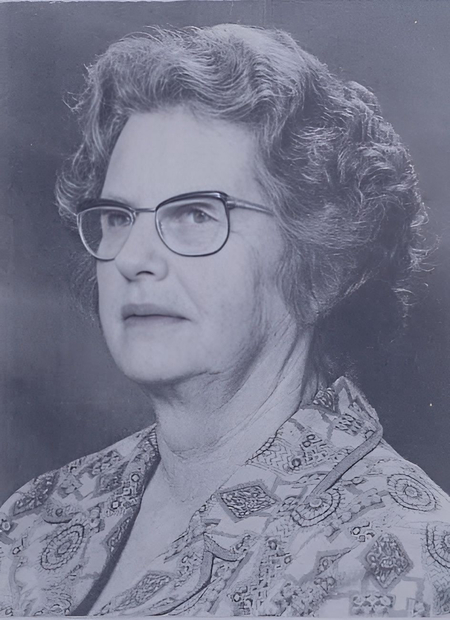
Woodblock illustration’s foundation was laid in the educational institutions by those times, and its contradictions have always been a part of the story. Margaret Trowell established Makerere arts school in Uganda in 1937 and introduced an educational system opposing mimicry and encouraging students to use their own visual traditions to create forms. Her book Art Teaching in African Schools contends that «a poorly duplicated picture is worth more than a well-copied one,» and she published several picture books such as And Was Made Man (1967) that used the art of the Makerere students, nevertheless the mission system was the basis of her scheme, colonial, and Christian, and it demanded that African artists depict Christian scenes in African styles.
Today, images of woodblock prints appear in mass-produced trade picture books with digital production: It’s said that the designs drawn for the books like Olu and Greta and I’ll See You in Ijebu by Diana Ejaita were done in a style that «blends the inspiration from African fabric designs with that of woodblock printing», the drawings are made up with sharp, flat, well-defined forms, striking silhouettes, and motifs taken from textiles so that the look and spirit of woodblock print can be understood as a language that it is possible to carry around from one place to another, this has made us wonder at least to an extent about what disappears and what keeps coming back when the physical mark of the carving tool disappears as a result of being replaced by the digitized one.
Chapter 1:
The woodblock/linocut printing techniques in Africa.
Woodblock /linocut printing is a method of printing text or images by using a block of wood/ linoleum.
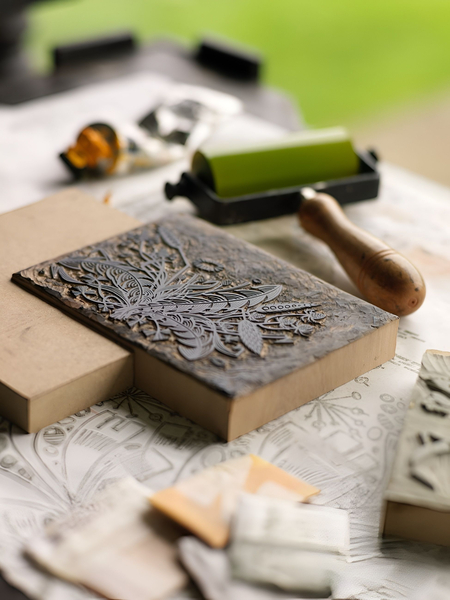
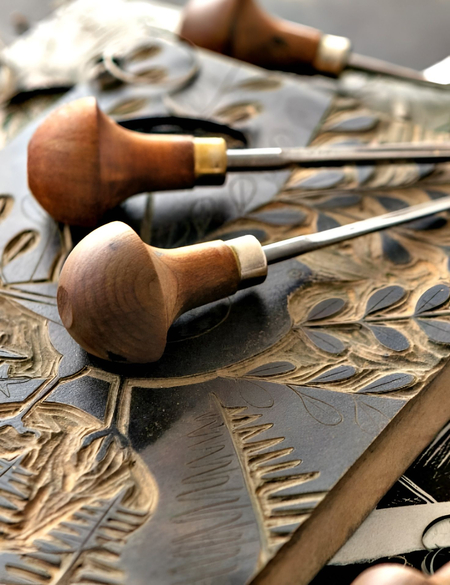
Woodblock and linocut curving, 2026; Angie Lewin.
Linocut printing was practiced in Africa along with woodblock printing. The technique is similar to woodblock in that they both used the same principles of carving away areas that do not want to be printed on using a wood block or linoleum block and then pressing ink onto the raised areas that do want to print. While it was cheap to make prints using this technique, linoleum was much cheaper than wood and an expensive press was not required. It also produced an image with strong high-contrast black lines on white paper with a certain graphic punch. The beauty of both techniques is that they were very simple and direct.
Woodblock printing process, 2026 Mary Hark.
Instead of using a printing press to print the text or images onto a page of paper, African woodblock printing uses the woodblock printing method to apply pattern onto cloth. The artisans would carve the desired design onto a wooden block (sometimes a calabash gourd) and then apply a dye to or a paste to resist dye and stamp the fabric by placing the block directly onto the cloth. The print can be repeated to make the whole image tell a story.
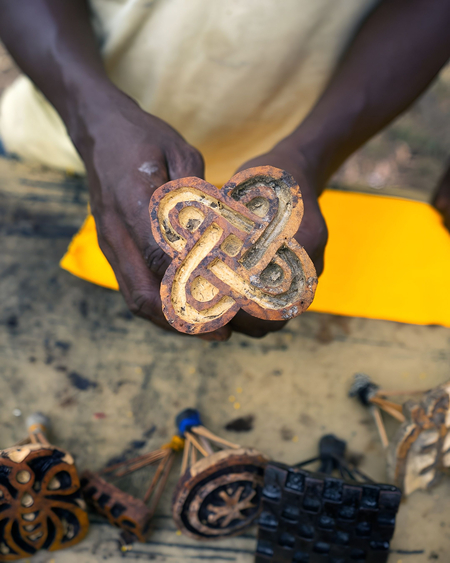
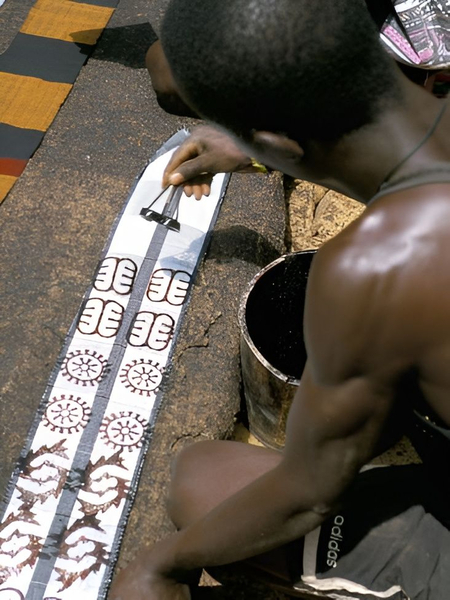
«Adinkra symbols stamped onto cloth using carved calabash stamps and natural dyes», 2026 Afrofa.
A well-known and widely practiced fabric-stamping tradition, is adinkra printing, practiced by the Asante and Bono of Ghana. Stamps are carved from a calabash gourd or from wood and dipped in a thick dye and then pressed against the cloth to create tiny dots which make up the symbols. Symbols are arranged in a grid and can be interpreted to mean different things; in some cases, the meaning of the symbols are understood by all, while in other cases, only certain groups of people within society can understand the deeper meaning of the symbols. Some common symbols are Gye Nyame (except for God) and Sankofa, a bird whose saying is «go back and get it,» meaning going back to the wisdom of one’s past.
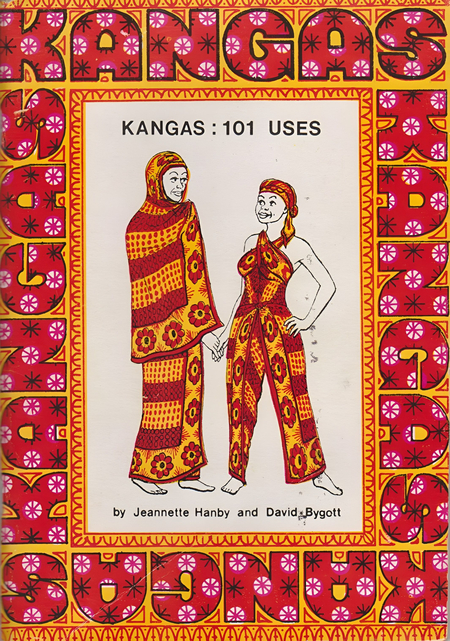
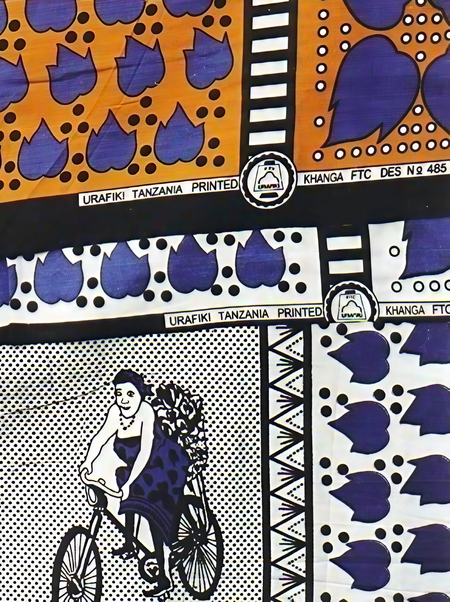
«Kanga; a rectangular, cotton textile from East Africa», 2010, wordpress.
Kanga is a brightly-colored rectangular cloth originally from the Swahili Coast of East Africa, and remains the face of traditional dress in East Africa to this day. Kanga is produced via the woodblock printing technique, where motifs and borders are carved into the faces of wooden blocks, which are then inked and stamped onto fabric to create the final product. The korosho, also known as the 'cashew nut', pattern is a popular example of kanga design and is seen as a symbol of wealth and fertility. Here, we’ve inked and stamped the block onto fabric and printed a Swahili proverb alongside it. Small pieces of felt have also been set into the recesses of the block to absorb excess ink and produce a sharp impression. Wax resist printing is one kind of woodblock printing which is practiced in some parts of West Africa. An artisan would dip a wooden block into hot wax and stamp it onto white cloth. The wax prevents dye from colorizing the cloth where it is applied. The cloth is dyed after it is printed. It is usually first dyed with indigo and kola. A different combination of colors is used for each style.
The wax is resistant to the dyes, and thus the waxed areas do not take the color of the dyes, creating designs on the cloth. Example of the wax resist printing is the cloth worn by the dioula people of côte d’ivoire. They have local woodblock makers produce woodblocks to create repeat geometric patterns like squares with dots that extend out with lines radiating from the center. The pattern is stamped on the cloth and then dyed using kola and indigo to create the beautiful khaki green patterns.
An amulet printed on paper originating in Egypt is known in post-classical Arabic as a ṭarsh (طرش), 10th and 14th centuries