Essay
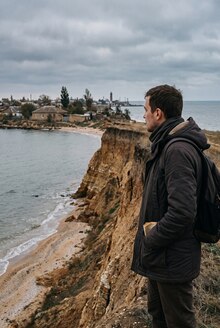
Here you walk the streets of Genichesk—a typical seaside resort town on the shores of the Sea of Azov. People rush to the beach, some repair a boat at the pier, and old women sell sunflower seeds near the market. Nothing suggests that beneath your feet, several meters deep, lies a labyrinth whose age exceeds two and a half thousand years.
This is no natural formation or the product of local storytellers' imagination. The Genichesk catacombs are a system of underground passages and galleries that run beneath the city, extend under the Tonky Strait, and, according to some theories, connect to the crypts of Kerch and the galleries of the Stone Tomb.
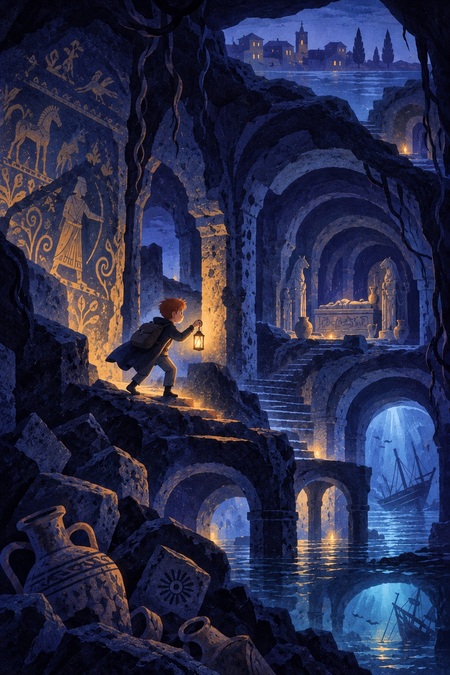
Currently, about forty kilometers of hidden passages have been explored. However, researchers are convinced that this is only a small fraction. The catacombs are multi-leveled. The lower tiers are submerged by the waters of the Sivash and the Sea of Azov, while the upper ones have been filled in during construction or bricked up. Sinkholes in the city center are not unusual—they are a reminder that the city stands atop a gigantic underground labyrinth that lives its own life.
Herodotus was the first to mention an underground city on the shores of Meotia—that is how the ancient Greeks called the Sea of Azov. He visited here in 440 BCE and recorded a local legend: the Scythians hid a rich ransom from King Darius in the «underground city on the shores of Meotia.» Ever since, everyone has been searching for the treasure—from archaeologists to grave robbers. So far, without success.
There are several theories regarding the catacombs' origins. Some believe they were dug by the ancient Greeks who founded colonies here. Others are certain they were the work of the Scythians, who sought refuge from the Persian invaders. A third group points to the Sarmatians, whose arrows and ornaments are found in this region. There are even fantastical hypotheses—that these are the remains of a civilization that existed before the Great Flood. The age of the underground structures in certain areas exceeds 2,500 years—this is confirmed by findings of ancient amphorae, medieval mosaics, and Sarmatian weaponry.
The catacombs are more than just a historical monument. They are a living entity that still speaks to us today. During road and building repairs, workers frequently encounter tunnels. Most often, they are simply filled in—there is no time for research when a project deadline must be met. Scientists from various cities come here to study the underground passages, but a lack of funding and the immense scale of the work turn these plans into unattainable dreams.
Local residents tell stories of ghosts and spirits inhabiting the underground chambers. They say that deep within the tunnels, one can hear voices and see strange lights. Legends of treasures hidden by the Scythians have haunted treasure hunters for centuries. There is also a tale that the catacombs lead to the sea, and one can emerge from them to discover shipwrecks laden with gold.
The wealth and scale of the subterranean complex suggest that high-ranking individuals may have been buried here. Perhaps the tomb of a Scythian king or one of his close associates rests within. However, no written records survive, and the tombs were looted long before archaeologists could begin their work.
We can only speculate who dug these tunnels, what they held, and why they were forgotten. Who was the person for whom an entire underground city was constructed? How many stories vanished along with the objects that succumbed to time? We will never know. But the mere fact that an entire era lies beneath our feet compels us to view the familiar streets of Henichesk with entirely new eyes.
Legend
On the night Fisherman Fyodor disappeared, the sea retreated from the shore further than it had in many years, leaving the boats stranded on the wet sand. The wind bent the reeds, tore at the nets tied to the dock, and the water receded into the strait with a dull roar. By morning, the sea had returned, but Fyodor never came home. His daughter, Anna, walked along the entire coast, questioned the fishermen, and visited the port and the market. They only found a scrap of net snagged on the rocks. Her father knew the sea better than anyone in Genichesk and never went out onto the water before a storm. Anna could not believe he could have simply vanished. Three days passed. On the fourth night, she awoke to a strange sound. Tap. Tap. Tap. The knocks came from below, as if someone were tapping on the wooden floor from the cellar. Anna lit a candle and placed her palm against the boards. They were cold and slightly damp. She called for her father, but the only reply was the sound of the surf washing against the window. The next night, it happened again. Three knocks—short, dull, with equal intervals. Anna searched the house, checked the doors, and looked under the porch. No one. And when she went outside, the sound rang out again—this time from the old fishing pier.
In the morning, Anna went to Luka, an old fisherman who remembered Genichesk before new buildings appeared on the embankment. He listened to her, slowly working his fingers over the knots in a frayed rope, and then covered her hand with his. «You haven’t answered anyone?» «Who?» «Whoever is knocking.» Anna frowned. «So you know what it is?» Luka turned his gaze toward the sea. «My grandfather used to say that beneath the city there are places where the earth is thinner than a shell. The sea walks beneath your feet there. When it finds a new path, the stones begin to speak. If you hear three knocks—leave. Do not knock back.» «What if there is a person there?» «Then definitely do not knock. A person who calls from beneath the earth may no longer be where you hear them.» Anna decided the old man was just trying to scare her. She knew people readily invent frightening stories where they cannot explain what is happening. But if her father was alive, she couldn’t leave him underground just because someone told her to be afraid. In the evening, she took a lantern, a rope, and her father’s knife. Behind the old smokehouse, where Fyodor kept his fishing gear, Anna noticed a narrow crack between the stones. Previously, it had been covered by planks and mounds of earth, but now cold and damp air wafted from it. The young woman secured the rope to an old beam and descended. At first, Anna had to walk bent over. The walls were uneven, covered with a white salt residue. Stones crunched under her feet, and water dripped from the ceiling. The farther she went, the quieter the sound of the sea became. Finally, the passage widened, and the lantern illuminated a long underground corridor with a high stone ceiling. The corridor stretched in both directions, as if there was an entire street beneath the city that had long been forgotten.
Anna called out to her father. «Dad!» Her voice echoed off the stone walls, returning as a strange, distorted reverberation. Something struck in the distance. Tap. Tap. Tap. The girl rushed toward the sound. Around the corner, she saw a narrow niche, and inside it—her father’s glove. She recognized it by the darned thumb. Next to it on the stone lay Fyodor’s folding knife, the very one he always carried with him. Anna grabbed the items and held them to her chest. So, her father really had been here. «Dad, I’m here!» she shouted. A faint voice drifted from the darkness: «Ania…» She froze. It was his voice—hoarse, familiar down to the last inflection. He was calling her from the passage ahead. Anna stepped forward, but at that very moment, the ground trembled beneath her feet. The lantern swayed, and the light slid across the wall. A thin stream of water burst from a crack, instantly turning into a gushing torrent. Debris rained from the ceiling, and somewhere deep inside, a stone crashed down with a deafening roar. And three taps sounded again. Now Anna understood that she heard them not just ahead. They were echoing everywhere: to the left, to the right, behind her. As if a massive, invisible fist was beating against the walls of the underground city. The water found a way through the stones, rising from the lower tunnels and pushing aside anything in its path. The girl stared into the dark passage. From there, he called her name again. She could walk toward the voice. She could find her father—or what was left of him. But the passage was already flooding with water, and the stone vault above her head was cracking. Anna remembered Luca’s words: the person who calls from underground might not be where you hear them. She turned around and ran for the exit. The return journey was almost unrecognizable. The water reached her ankles, then her knees. Anna fell several times, hitting the stone walls with her hands, losing her lantern, and groping for the wall. When a sliver of night sky finally appeared ahead, she felt as if she were seeing the sky for the first time in her life.
Stepping outside, the young woman did not go home. She rushed to the nearest houses and began knocking on doors, pulling people out of bed. There was no time to explain—the ground beneath their feet was trembling almost imperceptibly, and a low rumble came from the old pier. «Get away from the shore!» Anna shouted. «Immediately! There’s water beneath us!» No one believed her. Some cursed, some demanded an explanation. But old Luca, hearing her scream, was the first to lead his family to higher ground. Neighbors followed him, then other fishermen. People moved away from the dock, taking their children, documents, and the essentials. When the last person retreated from the old smokehouse, the earth gave way. A section of the shore slumped with a heavy crack. The pier boards splintered, stones tumbled into the black void, and a chasm opened where the familiar road used to be. Damp, salty air rose from the depths. For a few moments, it seemed a human whisper drifted up from below, but the wind quickly muffled it. By dawn, the water had receded. The pit was barricaded, the passage filled with debris, and Anna never went underground again. Fedor was never found. Luca insisted that the fisherman might have found the same passage while trying to save his nets, only to find himself cut off from the exit. Others claimed he knew far more about the underground tunnels than he let on, and that night he went down not for a catch. Anna argued with no one. She kept her father’s glove and knife, but every time the sea unexpectedly pulled back from the shore, she would leave the house and listen to the earth. Since then, in Genichesk, they say: if you hear three dull thuds from beneath your feet on a windless night, do not rush to find the source of the sound. Do not answer, do not call out the names of those you have lost, and do not try to discover who is lurking in the darkness. Stop and listen. Perhaps the underground city is not calling you to itself. Perhaps it is trying to warn those who live above it that the sea is seeking a path through the stone once more. Or maybe, somewhere deep below, Fisherman Fedor is still waiting for his chance—and the three thuds merely mean that he has not stopped searching for a way home.