1. Media Concept
Media exploring how perceptions of beauty are formed and why appearance constantly becomes the subject of new demands.
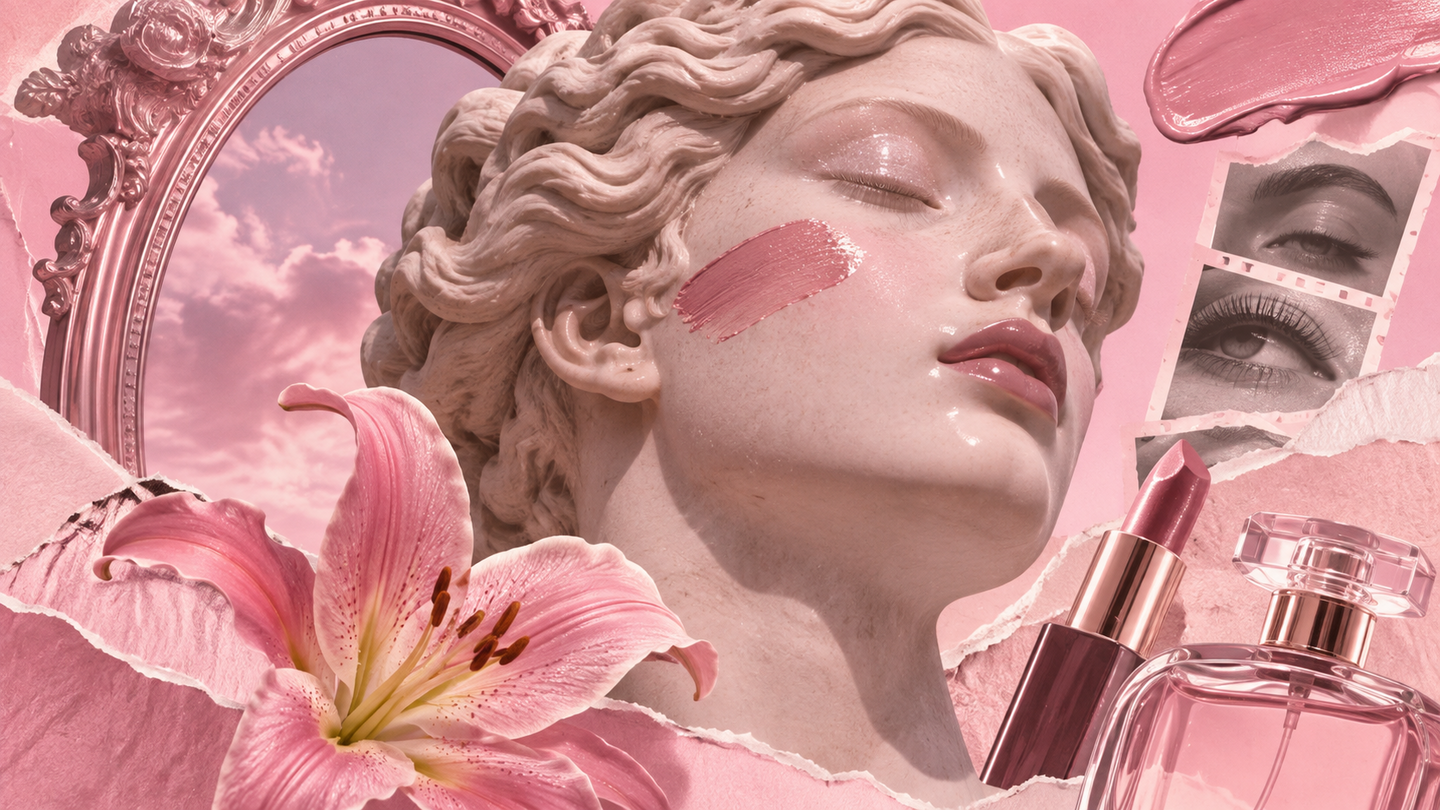
BEAUTY WITHOUT RULES — an informational media outlet that investigates the origins of beauty standards and their impact on daily life.
Popular aesthetics, cosmetic advertising, and social media continuously present new ideals of beauty. What was considered attractive yesterday may be replaced by a completely different image today.
The project explains how beauty trends emerge, why they become popular, and how the beauty industry influences one’s perception of their own appearance.
Primary platform: Telegram.
Additional platforms: Pinterest and VKontakte.
Target audience: women aged 18 to 30 who are interested in contemporary beauty culture and follow trend changes.
Format: visual research, comparison cards, short analytical texts, collages, polls, and video content.
Frequency: 2 publications per week.
Goal: to help the audience critically perceive beauty standards and independently shape their attitude toward their own appearance.
Artificial intelligence is planned to be used in material preparation. It will assist in analyzing trends, systematizing information, drafting texts, and preparing visual assets.
2. Data Sources for Media
BEAUTY WITHOUT RULES publications will utilize scientific research, archival materials, advertising campaigns, social media, and audience feedback. The primary goal is to merge verified information about beauty culture with current trends and relatable real-life scenarios for our readers.
Scientific and psychological research.Articles on appearance perception, self-esteem, social comparison, and media influence. Materials will be sourced from Google Scholar and academic databases.These sources will help explain the psychological mechanisms of beauty perception.Social media and beauty trends.Publications on TikTok, Pinterest, Telegram, and VKontakte. Special attention will be paid to popular aesthetics, visual identities, and methods of trend dissemination.This data will allow tracking shifts in beauty culture and identifying relevant topics for publications.Advertising campaigns and brand materials.Advertisements for cosmetic products, visual campaigns, brand publications, and beauty blogger content.These sources will be used to analyze marketing tactics, advertising promises, and demand-shaping strategies.Historical and archival materials.Photographs, fashion magazines, advertising imagery, and publications from various decades.These will aid in comparing perceptions of attractiveness across different historical periods and tracing the evolution of beauty standards.Search queries and audience questions.Google Trends, Yandex Wordstat, subscriber comments, and survey results.This data will help determine which topics generate interest and which questions about appearance are most frequently discussed.Visual materials.Archival photographs, licensed advertising imagery, original collages and AI-generated illustrations.The compiled information will be systematized into a unified database. For each material, we plan to record the topic, source link, publication date, and key facts.This will enable the use of verified data when creating new publications and comparative visual studies.
3. Data schema divided into human and machine processing
The process of creating a publication in the BEAUTY WITHOUT RULES media outlet consists of eight consecutive stages. Artificial intelligence assists in analyzing trends, processing information, and generating materials. The editor is responsible for topic selection, fact-checking, and the final content of the publications.
- Trend Data CollectionWho: Human + automated collection.What: Publications from social media, advertising campaigns, search queries, and audience comments are collected.Result: A database of current beauty trends and audience questions.02. Information Analysis and GroupingWho: AI.What: Artificial intelligence analyzes the collected materials, identifying recurring aesthetics, visual characteristics, and popular themes.Result: A structured list of trends and thematic directions.03. Selecting a Publication TopicWho: Editor.What: The editor assesses the relevance of topics and selects a suitable one, taking into account the media’s rubrics and content plan.Result: The approved topic for the future publication.04. Sourcing and Processing MaterialsWho: AI + Editor.What: AI assists in finding scientific research, archival images, and advertising materials. The editor verifies the accuracy of the information and the context of the sources.Result: A selection of verified facts and visual examples.05. Drafting the ArticleWho: AI.What: Artificial intelligence generates the text based on the selected information. The draft includes a trend description, an explanation of its origins, and an analysis of its influence on the perception of beauty.Result: The initial text for the publication.06. Fact-Checking and EditingWho: Editor.What: The editor verifies claims, corrects inaccuracies, clarifies phrasing, and adapts the text to fit the media’s style.Special attention is paid to maintaining a neutral stance regarding appearance and avoiding judgmental commentary.Result: The final, verified text.
- Visual Material PreparationWho does it: AI + Designer.What happens: AI assists in creating collages, comparison cards, and infographics. The Designer verifies the images’ relevance to the topic, the correctness of comparisons, and refines the design.Result: finished visual materials ready for publication.08. Publication and Response AnalysisWho does it: Editor + automated statistics.What happens: The Editor publishes the material on Telegram. After publication, data is collected on views, reactions, comments, and poll results.Result: published material and audience interest insights.The collected data is fed back into the working database and used to select subsequent topics.Outcome: a polished publication that helps readers better understand the mechanisms of beauty standard formation and critically engage with contemporary beauty trends.
4. Guidelines for Automated Services in the Diagram
The automated BEAUTY WITHOUT RULES services must adhere to unified requirements for information processing, text generation, and visual material preparation.
The AI’s primary goal is to assist the editor in creating authentic content about beauty culture without imposing appearance standards.
Information Management.
Use scientific, historical, and professional sources.
Cite materials and publication dates.
Group similar trends and audience inquiries.
Distinguish verified facts from assumptions and personal opinions.
Do not fabricate research, statistics, quotes, or historical events.
Credibility and Safety.
Verify the origin of trends and the context of their spread.
Do not present the popularity of an aesthetic as proof of its universality.
Do not make definitive conclusions about the influence of social media on self-esteem.
Do not offer medical advice regarding physical appearance.
Forward disputed claims to the editor for review.
Text Generation.
Use clear and accessible language for an audience aged 18–30.
Explain complex concepts using familiar examples from beauty culture.
Begin the post with a recognizable trend, a promotional image, or a real-life scenario.
Structure the material as follows: Situation → Trend Origin → Influence Analysis → Conclusion.
Maintain a friendly, inquisitive, and non-judgmental tone.
Avoid phrasing that frames physical traits as deficiencies.
Steer clear of clickbait, stereotypes, and absolute statements.
Image Generation.
Create visual materials that align with the publication’s theme.
Maintain diversity in appearance, facial features, and skin tones.
Do not alter real photographs in a way that distorts historical facts.
Do not present AI-generated images as archival photos or actual advertising campaigns.
Use collages and comparisons to explain information, not to judge people’s attractiveness.
Verify the accuracy of captions, dates, and visual comparisons.
Submit finished images to the designer or editor for approval.
Data Privacy.
Do not transmit subscribers' personal data to third-party services without necessity or legal basis.
Use anonymized comments when analyzing the audience.
Do not publish private correspondence without permission.
Comply with rules regarding the use of photographs, promotional images, and other materials.
Do not use photographs of real people to create demeaning comparisons of appearance.
If there is insufficient information.
Report that there is not enough data for a reliable conclusion.
Do not fabricate the origins or reasons for a trend’s popularity.
Suggest additional sources for verification.
Do not use unverified psychological claims.
Forward controversial material to the editor before publication.
All texts and images generated using artificial intelligence undergo human review.
The core principle: AI helps accelerate content creation, but it does not replace the editor. Media should explain beauty standards, not create new ones.