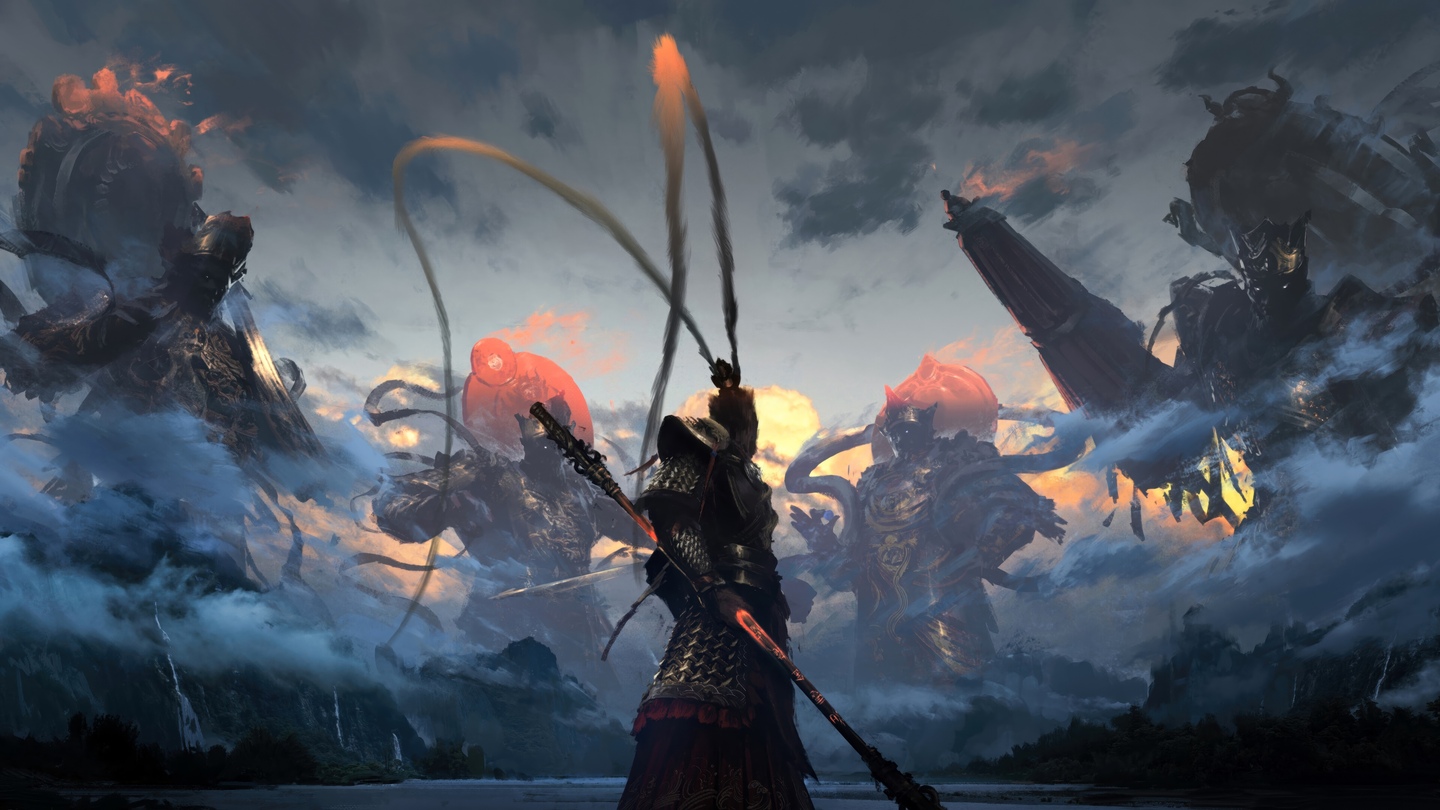
BEHIND THE GAME
Media on how games manipulate player emotions through design
Description
«BEHIND THE GAME»—an analytical media outlet focusing on game design. It explores how game mechanics, visual design, and the structure of game environments influence player perception. The articles examine specific examples from video games, explaining the function of design choices and their impact on player emotion and behavior.
Media objective
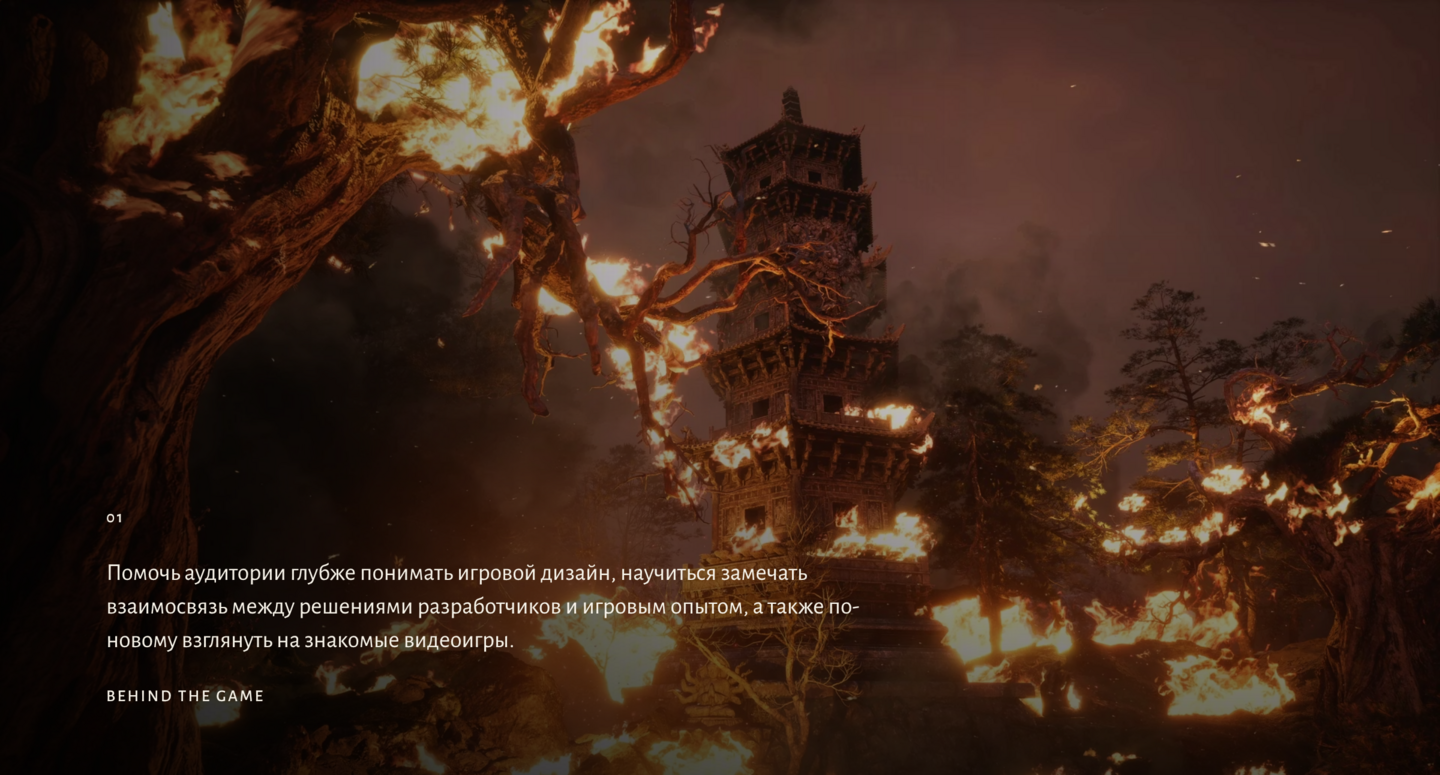
Game: Black Myth: Wukong
Themes
Segment — games and game design.Niche Topic — how game mechanics and the game’s visual language influence player emotion, perception, and behavior.The media will sit at the intersection of game design, visual design, and the psychology of player experience. The focus will not be on the game as a product itself, but rather on the decisions developers make and how those decisions are perceived by the player.Each piece of content can dissect a specific game element and illustrate the chain of:
Game: Resident Evil Requiem
For example, why limited resources create tension, why specific lighting compels a player to avoid or, conversely, explore a space, how object placement in a level directs attention, why developers choose a particular camera angle, and why a lack of information sometimes functions better than a direct explanation.
Core Content Areas
Gameplay Mechanics Analyzing the rules and systems that define player actions: limitations, resources, rewards, risk, choice, exploration, combat systems, and so on.Level Design How the structure of the game space influences player behavior: where they go, what they notice, what they avoid, where they pause, and what they explore.Visual Language Color, light, composition, scale, architecture, environment, camera, and other visual elements that shape the mood and help the player navigate the world.Interface and Feedback How UI, animations, sound, and visual effects communicate the outcome of a player’s actions and help them understand the game system.Emotional Experience How the combination of these decisions generates fear, tension, curiosity, a sense of freedom, loneliness, security, or control.
Competitors
Game: Resident Evil Requiem
Game Maker’s Toolkit (GMTK)
Key Observation: This is perhaps the closest competitor. Mark Brown’s channel is dedicated to analyzing game design: mechanics, level design, interfaces, accessibility, and other elements. The author describes the format as an investigation into how games are structured and why certain design decisions are effective.Strengths: It analyzes specific design decisions in detail; It uses real-world examples from games; It explains complex concepts in accessible language; It balances educational content with entertainment; It provides visual diagrams and demonstrations.Weaknesses: The scope of topics is very broad; It places significant emphasis on game design as a profession, rather than solely on the player’s emotional experience.What We Are Taking On: In-depth analysis combined with clear visual presentation.Sources: S01, S02
Design Doc
Key Observation: Design Docs produces video essays focused on specific elements of game design. The authors dissect UI, missions, levels, bosses, mechanics, and pacing. Furthermore, particular attention is given to how small design decisions coalesce into a cohesive player experience.Strengths: the subject matter is very relatable to us; each episode usually focuses on one specific problem; clear structure; it is suitable for both gamers and novice developers.Weaknesses: the focus is predominantly on design analysis, and the player’s emotional response is not always the primary object of study.What we are incorporating: making the player’s emotion and behavior the central focus of every analysis.Sources: S03, S04
Game: Black Myth: Wukong
Stylized Station
Key Observation: Stylized Station focuses on the visual aspects of video games. The channel showcases the process of working with 3D models, environments, textures, and the stylization of game scenes.For instance, materials might break down how to create a specific visual style or assemble a game location from scratch.Strengths: strong visual content; practical breakdowns and tutorials; attention to 3D and game environments; clear presentation of the creation process.Weaknesses: the main focus is on creating game visuals; less attention is paid to player emotions and behavior; it doesn’t deeply analyze why a specific design decision impacts perception.What we are taking forward: The strong visual presentation and analysis of specific game decisions, but shifting the focus from «how to create it» to «how it affects the player.»Sources: S05, S06
Razbuten
Key Observation: Razbuten examines various aspects of video games and player experience. One of his core approaches is viewing games from the perspective of people unfamiliar with gaming, alongside deconstructing interesting mechanics and themes.
For example, his materials explore how a person without gaming experience perceives mechanics that are familiar to established players.
Strengths: Focus on player experience; Interesting experiments; Analyzes not only how a mechanic functions, but how it is perceived by a human.
Weaknesses: The subject matter is significantly broader than our project; Not every piece of content is dedicated to game design.
What we are taking on: Adopting his focus on user experience while establishing a clearer specialization in design.
Sources: S07, S08
GDC Festival of Gaming
Key Takeaway: The GDC publishes talks from professional developers covering game design, systems, narrative, visual design, and game development. It functions more as a professional educational resource than as mainstream media. Strengths: Industry experts; High level of professional information; Real-world development case studies.Weaknesses: Content is often geared toward developers; The format can be complex for the average gamer; It lacks the accessible and streamlined presentation we aim to provide.What we will focus on: Translating professional concepts into language that resonates with the everyday gamer.Sources: S09, S10
Conclusions and Concept Revisions
There is a vacant niche—player emotions and behavior, butthe audience can be broader than just developers. GDC is primarily geared toward professionals, but «BEHIND THE GAME» can interest casual gamers, newcomers to game design, and more experienced developers.To general users, AI media can help discover new and unusual games, talk about interesting projects, and explain what makes them stand out.For beginners, it can offer an introduction to game design fundamentals through accessible breakdowns of real games, teaching students to observe how mechanics, visuals, and level structure affect the player experience.For mid-level professionals, it could become a source of fresh ideas, references, and interesting projects by showcasing the unusual solutions and approaches of other developers.
Comparison
Distribution