
Surf Coffee 's Logo
(1) Introduction
Surf Coffee® is an international coffeehouse brand and, at the same time, a lifestyle community built around the aesthetics of surfing, street culture, and travel.
The first Surf Coffee® spot opened in Russia in 2010, and by 2026 the network had grown to more than 300 locations worldwide. Notably, the brand consistently refers to its venues not simply as «coffee shops» but as spots, emphasising the spirit of a meeting place and a community hub. In its official communications, Surf Coffee defines itself as an international community where «every guest becomes a friend,» establishing a friendly, informal tone and placing relationships — rather than the product alone — at the centre of the brand experience.
Core Brand Positioning
In terms of positioning, Surf Coffee® presents itself as a lifestyle brand that sells not so much a beverage as a particular mindset and way of living — «surfing» understood in the broadest sense, as a metaphor for freedom, movement, and finding one’s own wave.
Marketing analyses of the brand consistently highlight that Surf Coffee «sells a lifestyle, not coffee»: the visual language, music, merchandise, and the atmosphere of each spot combine to create a holistic experience for which consumers are willing to pay a premium — including upwards of 400–500 roubles per drink.
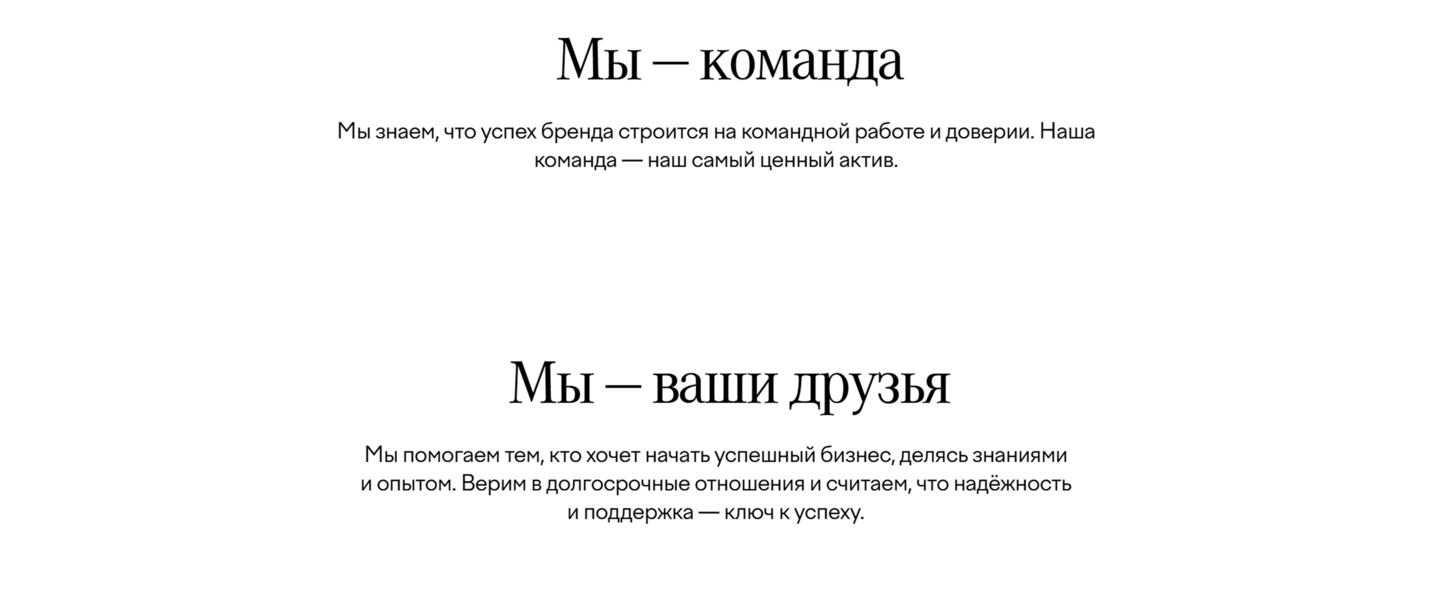
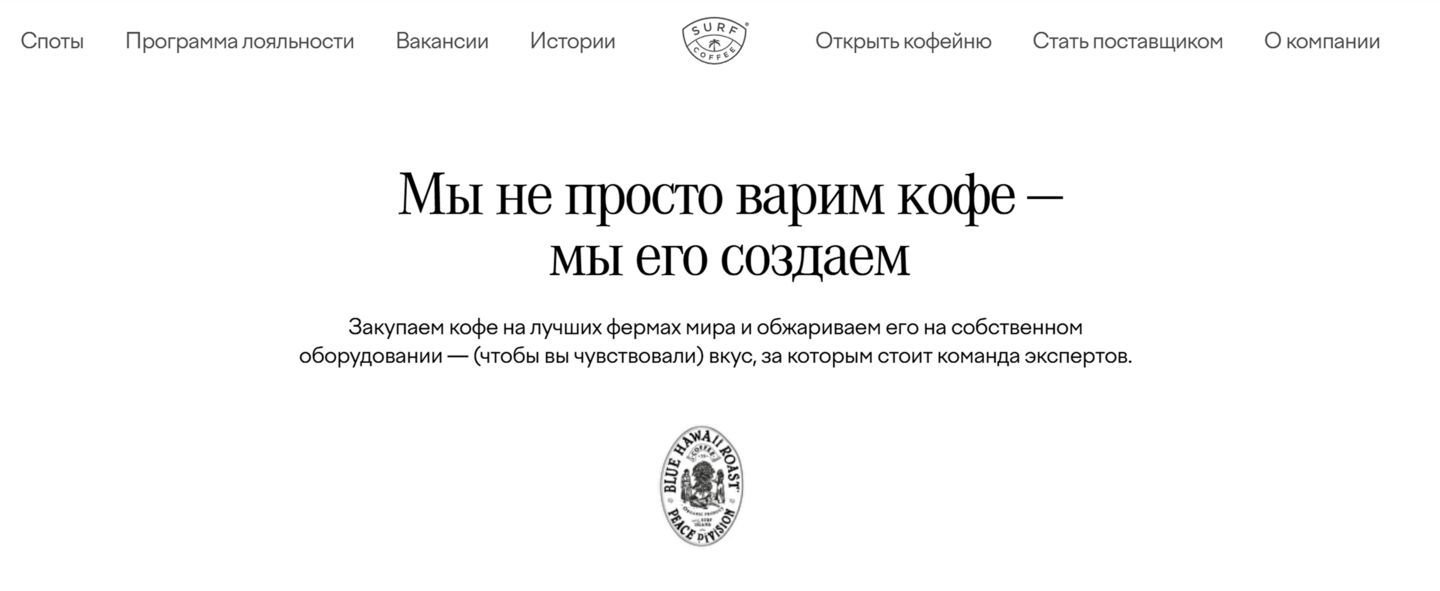
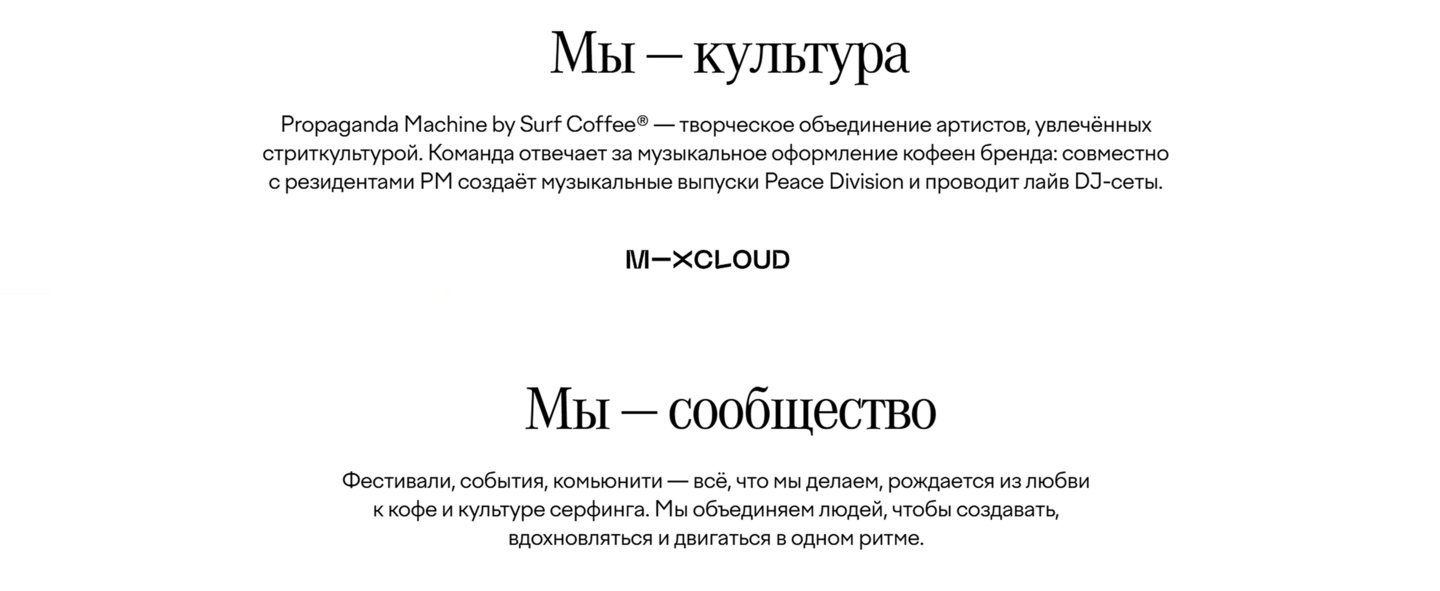
Screenshots from the Surf Coffee 's website
Target Audience
The target audience of Surf Coffee® is heterogeneous. The brand simultaneously works with café guests, social media followers, employees, potential franchisees, and partners. However, the main focus of its B2C communication is young urban individuals for whom a coffee shop is not only a place to purchase a drink, but also a «third place» between home, study, and work.
[1] Students and young professionals Place for studying, meetings, and working on a laptop, an affordable «premium» experience Atmospheric spots, friendly tone, loyalty program, convenient format
[2] Creative urban communities Aesthetic, music, events, visual identity Merch, collaborations, music projects, interior design
[3] «Third place» guests A pause in the city, a place for communication and rest Cozy atmosphere, lighting, baristas, beverages, feeling of a vacation within the urban environment
[4] Franchisees and team Business opportunities, training, stable system Franchise model, launch support, onboarding, standards, and team culture
(2) Communication Channels
— Website (the primary entry point: brand philosophy, spot map, franchise information) — Instagram and VK (event posters, cultural project announcements, surf-culture lifestyle content, UGC from guests) — Telegram (local city channels with hyperlocal content, special offers, operational announcements — the main channel for direct communication with the audience)


@surfcoffee.msk Instagram* post, 2026 @surfcoffee.msk Instagram* post (a fundraising campaign to support animals in the «Tvoe Sobachie Delo» foundation.), 2024
Surf Coffee® builds its communication through a multi-layered system of channels, in which social media is only one element. Everything works together toward a single goal — creating a living, engaged community around the brand.
Across social media, the brand maintains a presence on several platforms, though their roles partly overlap. VK and Instagram publish almost similar content: weekly event posters, cultural project announcements, seasonal merch collection launches, and lifestyle content rooted in surf culture. A significant share of content on both platforms consists of UGC — posts by guests themselves, which organically extend the brand’s visual identity.
Telegram stands apart with a clearer structure: the main channel broadcasts brand-wide news, while local city channels deliver hyperlocal content — spot-specific event posters, special offers, and urgent updates.
Surf Coffee® is an international coffeehouse brand and, at the same time, a lifestyle community built around the aesthetics of surfing, street culture, and travel. communicates far beyond standard social media. The brand operates a multi-layered system of channels, each contributing to a unified cultural identity.
Telegram posts: English Speaking Club Weekly Events Workshop Announcement, 2026
— Physical Spaces (Spots) The interior design, art objects, in-store navigation, and packaging all create a unified visual language that is instantly recognisable.
The atmosphere inside is shaped by the music collective Propaganda Machine: curated playlists, Peace Division releases, and live DJ sets define the sonic identity of every location, turning music into a genuine tool for communicating with guests.
— Merch At every spot, branded stickers are available for free — a simple yet effective tool that guests take with them and spread organically, for instance, on their laptops. Seasonal merch collections — clothing and accessories released each season — turn customers into living brand carriers far beyond the walls of the café.
— Event Programming The weekly event programme transforms each spot into a third place between home and work: workshops, book clubs, art evenings, language meetups, and games create regular live contact with the audience, turning occasional visitors into a loyal community.
Finally, collaborations with festivals allow the brand to extend well beyond its own locations, embedding itself into the cultural life of the city and introducing itself to new audiences in their natural environment.
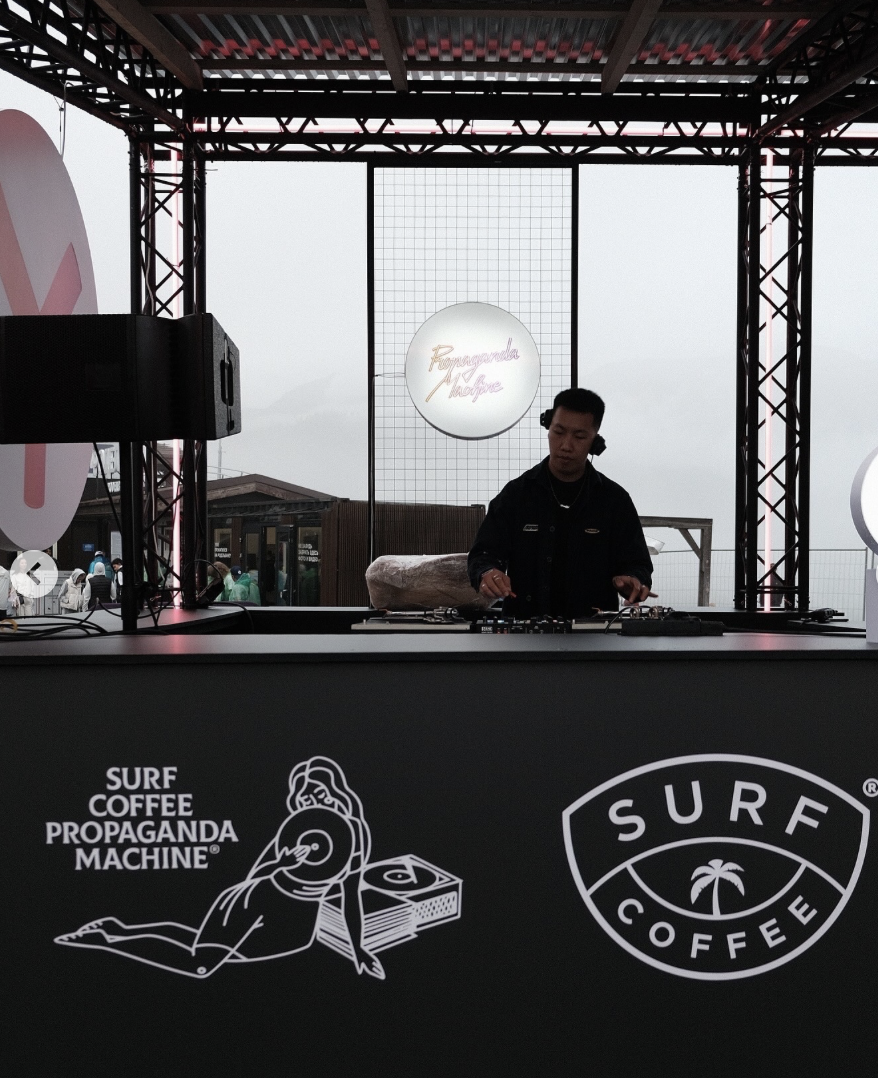
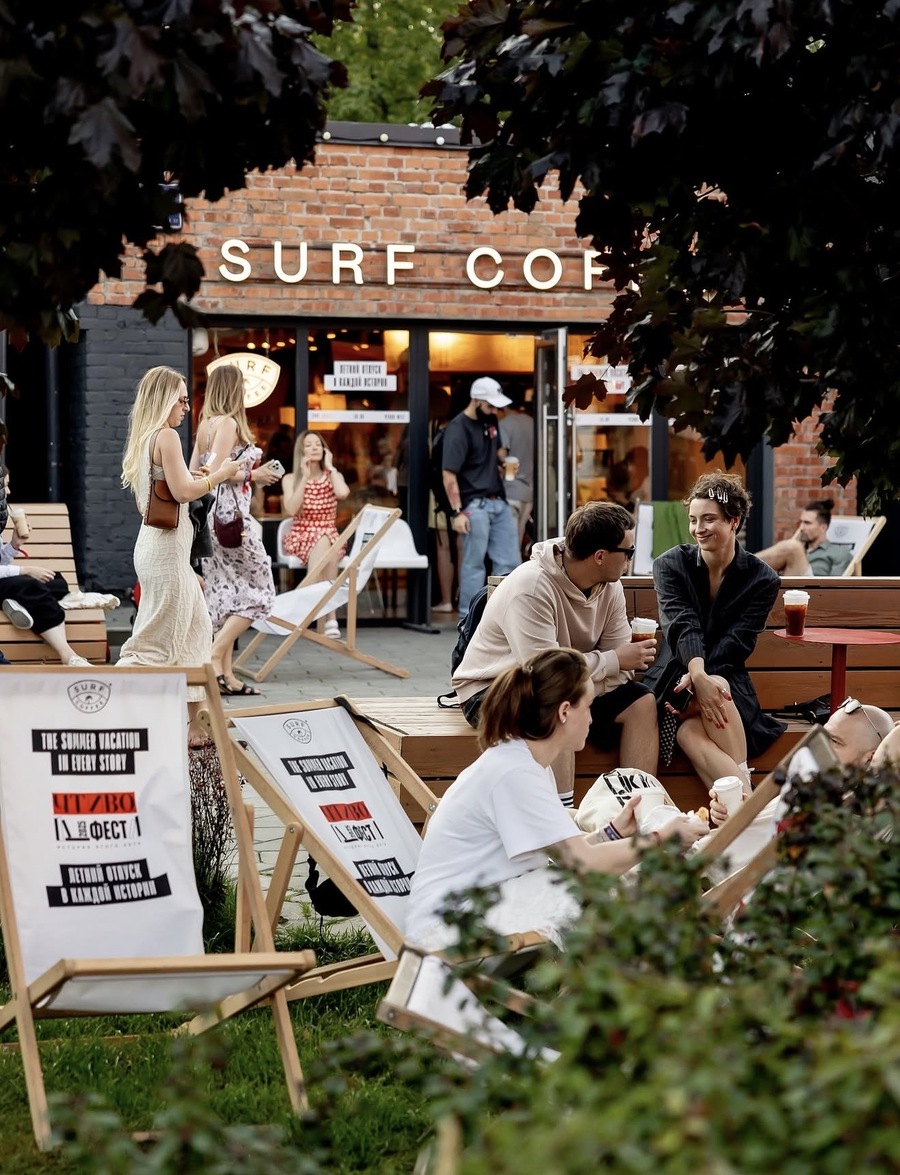
Surf Coffee® x New Star Weekend, 2024 Surf Coffee «CHTIVO-Kiosk», Khlebozavod, 2025
(3) Theoretical Framework
Dialogic Theory was developed by M. Kent and M. Taylor. This theory explains how organizations should build high-quality relationships with their publics through dialogue. According to this theory, communication should not be one-sided. An organization should not only send messages to the audience, but also listen, respond, and create an honest exchange of ideas and opinions.
The basis of dialogic communication is honesty, ethics, trust, and a positive attitude toward the audience. Dialogue allows both the organization and the public to participate in communication and create mutual understanding.
Dialogic Theory includes five main features:
[01] Mutuality means that the organization and the public recognize their connection and dependence on each other. Communication should be based on cooperation, not domination.
[02] Propinquity means timely and accessible communication. The organization should communicate with the public at the right moment, not only after decisions have already been made.
[03] Empathy means that the organization should create an atmosphere of support and trust. It should listen to the audience and respect different points of view.
[04] Risk means that real dialogue always includes vulnerability. The audience may criticize the brand or disagree with it, but the organization should still be open to communication.
[05] Commitment means that the organization should be ready to maintain dialogue over time.
[06] Communication should not happen only once; it should be continuous and focused on mutual understanding.
The Elaboration Likelihood Model was developed by Richard E. Petty and John T. Cacioppo. This theory explains how persuasive messages influence people’s attitudes. According to the model, people can process persuasive messages in two main ways: through the central route or through the peripheral route.
The central route is used when the audience is highly interested in the topic and is ready to think carefully about the message. In this case, people pay attention to facts, arguments, evidence, and logical explanations. This route requires more cognitive effort. The peripheral route is used when the audience is less involved or does not want to analyze the message deeply. In this case, people react to emotional signals, visual images, atmosphere, style, popularity, or other simple cues. The audience may be persuaded not by strong arguments, but by the general impression created by the brand.
(4) Analysis
The visual identity of Surf Coffee® is based on simple and easily recognizable symbols: surfing, palm trees, sand, the ocean, coffee, and spending time with friends. The name «Surf» itself creates associations with freedom, movement, relaxation, and an active lifestyle. Surf-inspired decor, warm natural colors, and a relaxed atmosphere create the feeling of a vacation, even in an urban environment.
Dialogic Theory
The most relevant feature of Dialogic Theory for analyzing Surf Coffee® is mutuality. The brand presents its guests not simply as customers, but as part of a community. The phrase «every guest becomes our friend» shows that Surf Coffee® aims to reduce the distance between the brand and its audience. This creates an image of friendly, open, and more equal interaction.
Surf Coffee 's Telegram Chanel
Another important feature for Surf Coffee® is empathy. The brand uses a warm and informal tone of voice, relaxed visual identity, and the idea of friendship. All these elements help create an atmosphere in which guests feel comfortable, calm, and emotionally connected to the brand.

Surf Coffee 's Telegram Chanel
The feature of risk is also relevant to Surf Coffee®. In Dialogic Theory, real dialogue may include criticism, disagreement, or unexpected reactions from the audience. For Surf Coffee®, this can be seen in comments, reviews, and feedback from guests. When the brand allows people to express their opinions openly, it becomes more vulnerable. However, this also makes Surf Coffee® look more honest, transparent, and closer to its audience.
Reviews of the Surf Coffee in Yandex Maps

One more important element is commitment, which means dedication to long-term relationships. Surf Coffee® does not focus only on a one-time coffee purchase. Through its loyalty program, events, local communities, and the atmosphere of its spots, the brand motivates the audience to return again. People come not only for a drink, but also for a sense of belonging to the community.
Finally, propinquity means closeness and timely communication. A brand should be available for communication with its audience at the right moment. Surf Coffee® supports this connection through social media, Telegram, announcements about events, new products, and local activities. As a result, the brand remains part of the audience’s everyday life and maintains regular contact with its guests.
Elaboration Likelihood Model
The Elaboration Likelihood Mode is especially suitable for analyzing Surf Coffee® because the brand combines both approaches, although the emotional, peripheral route is more dominant in its communication.
The central route appears when Surf Coffee® offers factual and verifiable arguments. The brand emphasizes that it does not simply make coffee, but creates it: it purchases beans from farms and roasts them on its own equipment. Professional achievements also support rational trust, including championships, packaging awards, the scale of the network, and the loyalty program with cashback and bonuses, which gives customers clear reasons to return.
The peripheral route is dominant in Surf Coffee®’s communication. The brand relies on atmosphere, visual identity, and lifestyle. These elements do not require deep analysis from the audience, but they quickly create a positive impression and connect the brand with freedom, relaxation, creativity, and friendship. Within the peripheral route, mechanisms such as social proof and liking play an important role. They do not require the audience to analyze the product deeply, but they help form a positive attitude toward the brand through emotions, associations, and social signals.
Video surfcoffee.ru
Social proof appears in the way Surf Coffee® creates the image of a popular and recognizable place. When people see that other visitors come to the spots, post photos, participate in events, and associate themselves with the Surf Coffee® community, this strengthens trust in the brand. The audience gets the impression that Surf Coffee® is not just a coffee shop, but a place that has already been chosen by «their people.»
The phrase that «every guest becomes our friend» additionally supports this effect. It presents the brand as an open community that is easy to join. As a result, belonging to Surf Coffee® becomes part of a person’s social image. A visitor chooses the brand not only because of coffee, but also because Surf Coffee® is connected with a certain lifestyle: freedom, creativity, movement, surf culture, and urban youth aesthetics.
The principle of reciprocity is also important. It is based on the idea that when a brand gives a person something useful or pleasant, the customer may feel a desire to respond with loyalty. In Surf Coffee®, this can be seen through the loyalty program, bonuses, cashback, birthday drinks, free stickers, bracelets, merchandise, public events, and a friendly attitude toward guests. When a visitor receives not only coffee, but also additional attention or a small pleasant bonus, they are more likely to return to the brand.
Posts @katrinedrugs, @annaamiranidze, @ksenia_klavdieva Instagram*
The principle of liking appears in the way Surf Coffee® creates an emotionally attractive image that the audience enjoys associating with. The brand uses surf-inspired decor, palm trees, warm natural shades, music, merchandise, streetwear, festivals, and cultural projects. These elements create positive emotions and make the brand more appealing to the audience.
In addition, Surf Coffee® connects itself with themes that are already close to its target audience: travel, relaxation, freedom, communication, sports, music, and creativity. As a result, visitors form a favorable attitude toward the brand even before deeply analyzing the quality of the product. They choose Surf Coffee® not only rationally, but also emotionally, because they like the atmosphere, visual style, and lifestyle that the brand communicates. Thus, social proof and liking strengthen the peripheral route of persuasion in Surf Coffee®’s communication. The brand persuades its audience not only through arguments about coffee quality, but also through the feeling of popularity, belonging, emotional closeness, and an attractive lifestyle image.
@surfcoffee.msk Instagram* posts, 2022
Many people choose Surf Coffee® not because they carefully compare roasting profiles, but because they feel close to the mood and lifestyle of the brand, as well as to the sense of belonging to a community. At the same time, the central route is activated among more motivated guests: freelancers evaluate Wi-Fi, sockets, acoustics, and prices; coffee enthusiasts pay attention to the origin of the beans and the stability of quality; participants of lectures and workshops evaluate the alignment of values. When rational arguments are strong and consistent, loyalty becomes more stable and less vulnerable to «beautiful» competitors.
Strategically, Surf Coffee® occupies a position between mass-market chains, which rely on utilitarian arguments, and third-wave coffee shops, which focus on product expertise. The brand is able to work with both routes for different audiences, but the key condition is internal consistency: the visual image and the real content must communicate the same message. The peripheral route attracts, while the central route retains; therefore, long-term success depends on how convincingly and transparently the second route works. Ultimately, Surf Coffee® sells not only coffee, but a complete lifestyle experience.
Surf Coffee 's Interiors
(5) Conclusion & Recommendations
The analysis shows that Surf Coffee®’s communication strategy is built not only around coffee, but also around a lifestyle image. The brand sells an atmosphere, a sense of freedom, friendliness, and belonging to a community, which makes its communication emotionally strong.
From the perspective of the Elaboration Likelihood Model, Surf Coffee® uses both routes of persuasion. The central route appears through rational arguments such as coffee quality, in-house roasting, professional achievements, loyalty program, and the scale of the network. However, the peripheral route is more dominant: visual style, interior design, surf aesthetics, music, merchandise, social proof, and liking quickly create a positive attitude toward the brand.
From the perspective of Dialogic Theory, Surf Coffee® aims to build close relationships with its audience. The brand uses a friendly tone of voice, responds to comments, and presents guests as part of the Surf Coffee® community. However, the brand could make dialogue more visible and transparent by showing feedback and real changes made in response to guests’ requests.
Overall, Surf Coffee® successfully connects product, atmosphere, and community. Its main strength is emotional communication, but long-term loyalty also requires stronger rational trust: product quality, transparency, work with reviews, and real audience participation. Thus, Surf Coffee®’s communication strategy is effective, but still has potential for further development.
Recommendations:
[1] Involve consumers in creating the new seasonal menu. Surf Coffee® can involve its audience more actively in the development of seasonal drinks and products. For example, the brand can organize polls on Telegram and social media, invite guests to choose flavors, drink names, cup designs, or test new items before their official launch. This would make communication more dialogic and show that the audience’s opinion actually influences the brand’s decisions. In addition, this approach would strengthen customer engagement: people would perceive the seasonal menu not simply as a ready-made offer from the brand, but as the result of joint participation within the Surf Coffee® community.
[2] Connect Surfer License not only with discounts, but also with the status of a community member. The loyalty program can be developed not only as a cashback tool, but also as a symbol of belonging to the Surf Coffee® community. For example, Surfer License members could receive access to private events, special offers, guest stories, local activities, or different levels of participation. This would help customers perceive the program not simply as a discount system, but as a way to become part of the brand community.
[3] Introduce a gamification system. Surf Coffee® can strengthen audience engagement through game mechanics: awarding points for attending events, being active on Telegram, participating in local activities, voting, and creating UGC content. These points could be exchanged for discounts, special offers, or access to private events. Such a system would make interaction with the brand more regular and conscious, as well as help strengthen long-term audience loyalty.
*The Meta company is recognized as an extremist organization and is banned in the Russian Federation.
Surf Coffee®: Official Website. — URL: https://www.surfcoffee.ru/ (accessed: 13.06.2026)
Communication Theory: Bridging Academia and Practice (Online Course). — HSE. URL: https://edu.hse.ru/course/view.php?id=133853 (accessed: 13.06.2026).
Instagram*: Official Website. — URL: http://instagram.com/ (accessed: 13.06.2026).
Surf Coffee®: Official Telegram Channel. — URL: https://t.me/surfcoffeeru (accessed: 13.06.2026).
Surf Coffee®: Official Website. — URL: https://www.surfcoffee.ru/ (accessed: 13.06.2026).
Yandex Maps. — URL: https://yandex.ru/maps (accessed: 13.06.2026).
Instagram*: Official Website. — URL: http://instagram.com/ (accessed: 13.06.2026).
Surf Coffee®: Official Telegram Channel. — URL: https://t.me/surfcoffeeru (accessed: 13.06.2026).