Key works
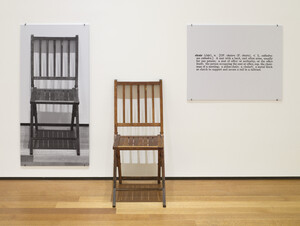
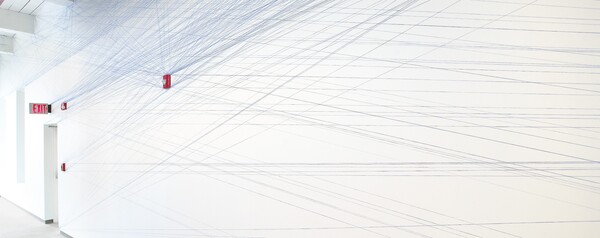
(1) Joseph Kosuth, One and Three Chairs (1965) (2) Sol LeWitt, Wall Drawing #51 (1970)
Several works clearly demonstrate the principles of conceptual art. Joseph Kosuth’s One and Three Chairs (1965) presents a chair, a photograph of that chair, and a dictionary definition of the word «chair.» The work encourages viewers to think about representation and meaning.
Sol LeWitt’s Wall Drawings (begun 1968) are based on written instructions. These instructions can be carried out by other people. As a result, the idea becomes more important than the final image.
On Kawara’s Today Series (begun 1966) consists of paintings that display only the date on which they were made. The series turns the passage of time into the subject of the artwork.
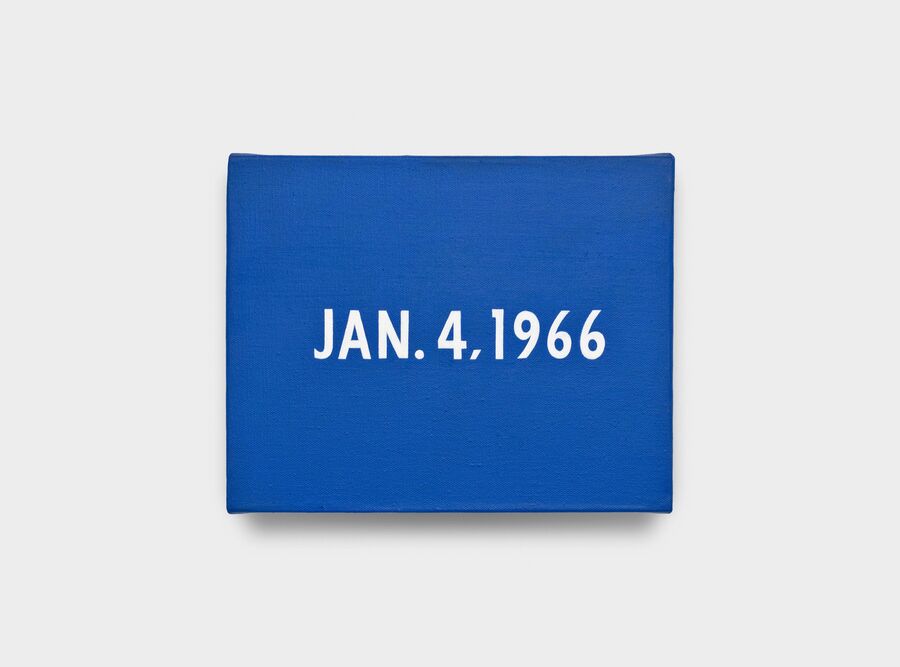
On Kawara, JAN. 4, 1966 (1966)
Practitioners
Joseph Kosuth was one of the movement’s leading figures. He approached art as a way of exploring philosophical questions about the nature of art itself. Sol LeWitt developed many of the ideas that became central to conceptual art.
Lawrence Weiner argued that a work of art did not need to be physically created. For him, the statement of an idea could already be the artwork.
Hans Haacke used conceptual methods to investigate museums and art institutions. His work revealed their political and economic structures.
On Kawara explored themes of time, presence, and everyday existence through highly systematic projects.
Theorists and texts
One of the most influential texts of the movement is Joseph Kosuth’s Art after Philosophy (1969). In this essay, he argues that modern art is mainly concerned with questioning and defining art itself.
Sol LeWitt’s Sentences on Conceptual Art (1969) presents a series of short statements about the logic and possibilities of conceptual art.
The editorial introduction to Art-Language (1969), written by members of the Art & Language group, argues that language and critical discussion can function as artistic media.
Precursors
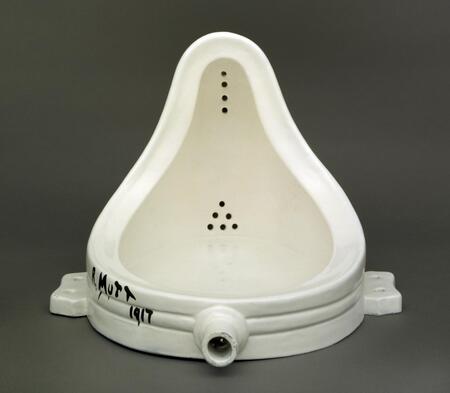
Conceptual art developed from several earlier ideas and movements. Marcel Duchamp’s readymades, especially Fountain (1917), showed that artistic meaning could depend on context and choice rather than technical skill.
The Fluxus movement of the early 1960s also influenced conceptual artists. Fluxus artists focused on actions, instructions, and processes instead of traditional art objects.
The philosophy of Ludwig Wittgenstein was another important influence. His ideas about language and meaning attracted artists who were interested in communication and interpretation.
Marcel Duchamp, Fountain (1917)
Legacy and influence
Conceptual art has had a lasting influence on contemporary art. It contributed to the development of institutional critique, an approach subsequently continued by artists such as Hans Haacke and Andrea Fraser.
Conceptual art has also influenced relational aesthetics, network art, and socially engaged art.
By placing ideas at the center of artistic practice, it has expanded the ways in which art is created, understood, and discussed.
Kosuth J. Art after Philosophy // Art after Philosophy and After: Collected Writings, 1966–1990. — Cambridge, MA: MIT Press, 1991. — P. 13–32.
LeWitt S. Paragraphs on Conceptual Art // Artforum. — 1967. — Vol. 5, № 10. — P. 79–83.
LeWitt S. Sentences on Conceptual Art // 0 to 9. — 1969. — № 5. — P. 3–5.
Art & Language. Editorial Introduction // Art-Language. — 1969. — Vol. 1, № 1. — P. 1–8.
Beuys J. Not Just a Few Are Called, But Everyone // Art in Theory 1900–1990: An Anthology of Changing Ideas / ed. by C. Harrison, P. Wood. — Oxford: Blackwell, 1992. — P. 889–892.
Art in Theory 1900–1990: An Anthology of Changing Ideas / ed. by C. Harrison, P. Wood. — Oxford: Blackwell, 1992. — 1112 p.
https://www.moma.org/collection/works/81435 (Accessed 2 June 2026)
https://massmoca.org/event/walldrawing51/ (Accessed 2 June 2026)
https://www.davidzwirner.com/artworks/on-kawara-jan-4-1966-17912 (Accessed 2 June 2026)
https://www.tate.org.uk/art/artworks/duchamp-fountain-t07573 (Accessed 2 June 2026)