Introduction
From the candle to the incandescent bulb, from the incandescent bulb to the LED—that is how the history of lighting fixtures appears to an outside observer. However, when viewed through the lens of a designer, the evolution of artificial light proceeded differently. Attention is drawn not only to the light source itself but also to how the light enters a space, how it organizes the environment, how it affects our perception of objects, volumes, and distances, and how it shapes our sense of self within that space.
The first lighting «devices» were essentially containers for fire: their form was dictated by practical necessities (holding oil, protecting the wick from the wind, not to mention the stone enclosures built against the wind). The light remained uncontrolled and «raw”—it simply existed around. With the advent of electricity and the invention of incandescent lamps, control over light increased slightly, but it still existed as something that simply needed to be turned on or off.
In the twentieth century, designers gradually began to conceptualize light not merely as an uncontrolled emanation from a source, but as a palette of possibilities for working with it. The Bauhaus School introduced the language of standardized forms; Art Deco brought sculptural quality and emotionality to the fixture; and architects began using light as a „building material“ for space. Later, the evolution of lighting fixtures was augmented by optics and lens systems, technical and stage lighting, and much later—LEDs and digital control.
In this study, I want to trace how lighting fixtures evolved from mere formal containers for a light source into instruments capable of shaping and managing the environment and space. I aim to follow how this progression logically leads to contemporary practices and to evaluate my own fixture design, „Crane,“ from this perspective.
[1] Historical Context: Light Before Electricity
Light as a Byproduct of Fire
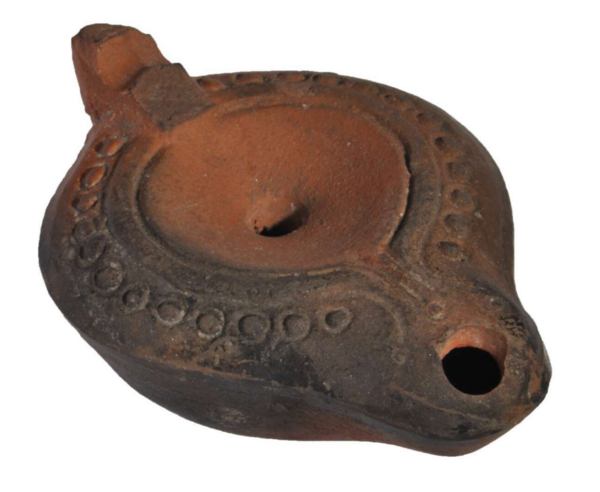
Before the advent of electricity, light was not designed—illumination was constructed as an inevitable, yet useful, consequence of burning. In the Roman Empire, oil lamps made of clay or bronze were invented; these consisted of a small reservoir with an opening for a wick. The luminosity was modest and difficult to regulate, only minimally by adjusting the wick length, similar to a lighter. The spots of light they produced were no larger than the light from a modern lighter, and the shadows were extremely deep.
Античная глиняная масляная лампа, I век н. э.
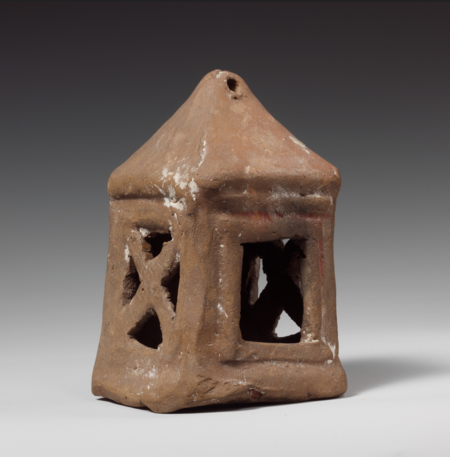
Глиняный светильник, Египет, I–II век н. э.
Early Attempts to Direct Light
In the next stage of lighting fixture development, the simplest ways to influence light appear: reflective surfaces behind the light source. In museums, we can observe candelabras and wall sconces featuring metallic reflectors behind a candle, which allowed for a slight intensification and direction of light forward.
This marks the first step toward the design of the lighting environment: light begins to illuminate specific areas, but this is not yet systematic optics (due to the low level of technological advancement), despite the obvious intentionality of the approach.
Wall painting. State Russian Museum Early 18th century
[2] The Early Electric Era: The Lamp as a Fixture Holder
The Incandescent Bulb: Light in Place of Fire
The introduction of the incandescent bulb eliminated the need to protect an open flame from the external environment. The light source became compact, reliable, and relatively safe.
Early Edison sockets and lamp holders look extremely minimalist. The design of the first electric fixtures was highly technical, and most fixtures were composed of only a few parts: a metal or ceramic housing, a wire, and a switch. The bulb was the main visual focal point. Many photographs from the late 19th and early 20th centuries feature lamps simply hanging by a cord without shades in interiors.
Auditorium Building Audience Hall Lighting, Late 19th Century
Typical early 20th-century electric chandeliers often mimic the forms of gas or candle fixtures (decorative elements, pendants, natural motifs). The light emitted is scattered chaotically. The fixture functions more as an interior design object; the light flow is a simple, binary consideration.
Electric sconce from the home of Morris Seitz, late 19th century
[3] The 20th Century: From Form Generation to the First Conscious Strategies of Light
Bauhaus: Standardizing Form and the First Step Toward Rational Light.
Bauhaus proposes a radically different approach to lighting fixtures. Form follows function.
Now, the shape of the diffuser and the fixture as a whole derives from the designer’s intention for organizing light. For example, the glass spherical shade in the Wagenfeld lamp diffusely scatters light in all directions, softening shadows and making the illumination more comfortable. While this is not yet controlling a specific lighting scenario, it is clearly a conscious effort regarding the softness and uniformity of the light. The lamp ceases to be just a «beautiful object» and becomes an element of a rational, reproducible industrial standard.
Willem Vanenfeld, desk lamp, 1924
Italian Design: The Lamp as Sculpture
In the latter half of the 20th century, Italian design (Artemide, Flos, and others) began once again to conceive of the lamp as a sculpture within space.
For example, the famous Arco lamp by Castiglioni is a carefully balanced composition of simple volumes in the base and the torchère, combined with an elegant line. Light plays a role as a localized spot, but the main message is the concise solution to the problems posed to the lamp (a localized pool of light without ceiling pendants), and the «WOW» effect is achieved more by the object’s form than by the light itself.
Arco Lamp, Castiglioni Brothers, 1962
Another example of this design approach to a lighting fixture is Nesso by Giancarlo Mattiolli. Its mushroom- or funnel-shaped plastic body casts a soft, diffused light downward, yet the object itself remains the primary memorable element. The fixture is not intended to be a fully integrated light-shaping element.
At this stage, the design actively experiments with the possibilities of material and form, but the light itself is not yet the focus for the designers.
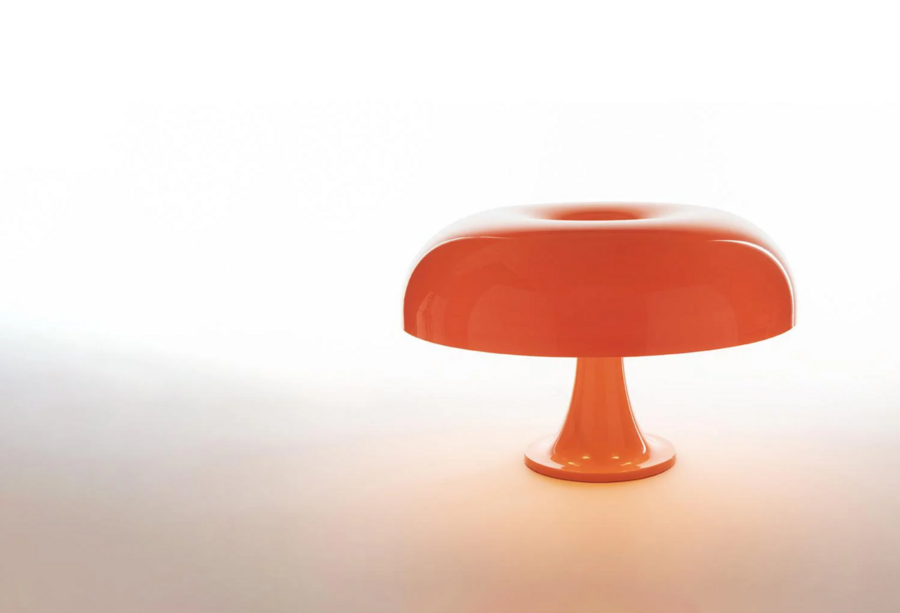
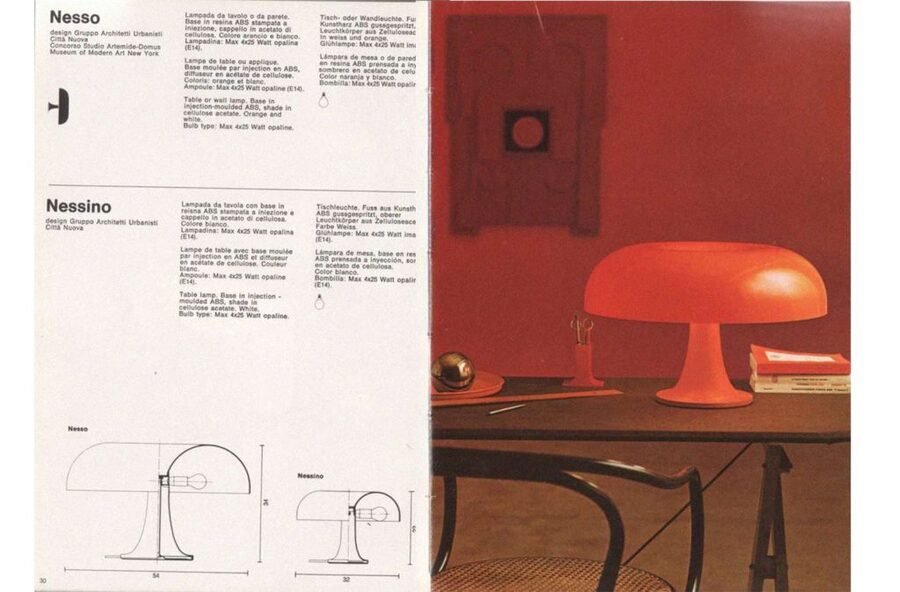
Nesso Lamp, Giancarlo Matioli, 1965
[4] Perception of light as a material
Designer Paul Henningsen
Paul Henningsen’s approach to lighting design marks a turning point. In his iconic PH series of lamps, he isolates specific problems with light that need to be resolved. The main objective is to eliminate direct glare and make the light comfortable for the eye.
The PH5 and other models are built upon a system of multi-layered shades. Each layer intercepts a portion of the light stream, redirects it, and reflects it. As a result, the light becomes multi-layered and controlled: — part illuminates the tabletop, — part illuminates the side surfaces, — part illuminates the ceiling.
Here, the form is completely subservient to the work with light, rather than the light being a product of the form. One could say that Henningsen is doing what architectural and technical lighting designers would later do: designing the light diagram, not just the housing.
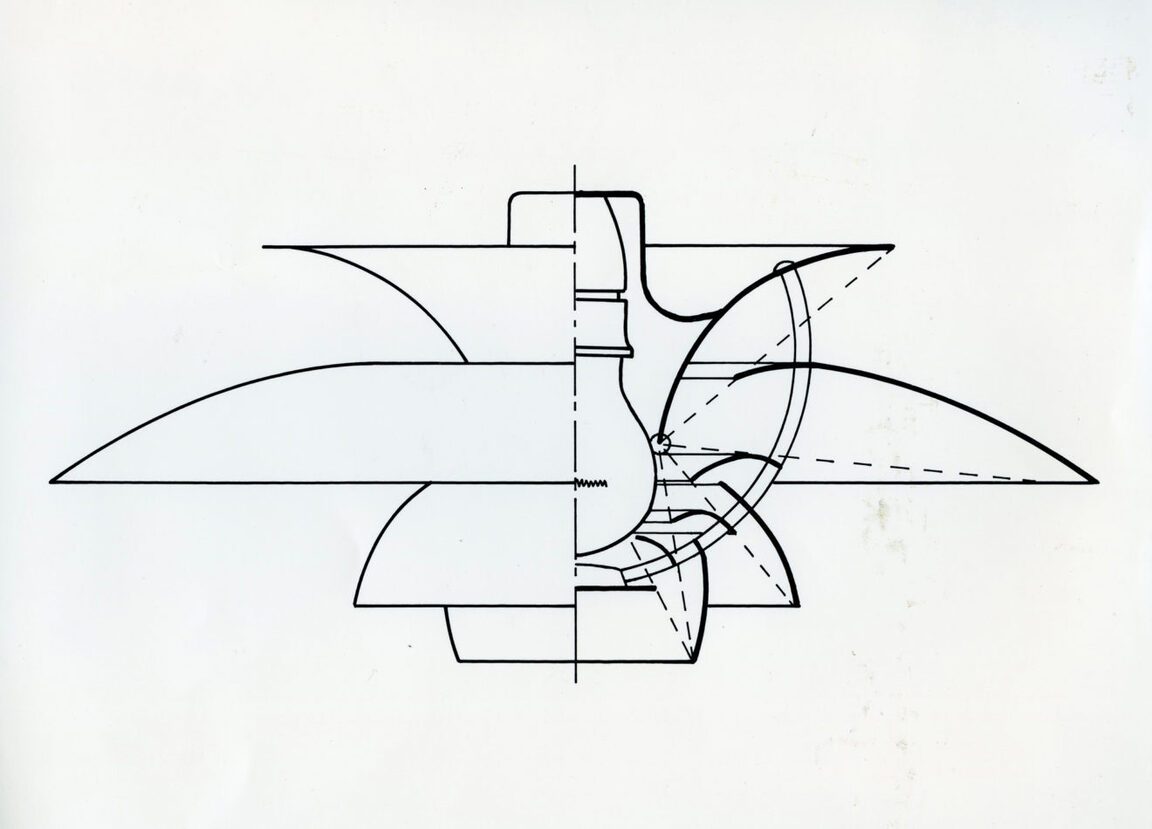
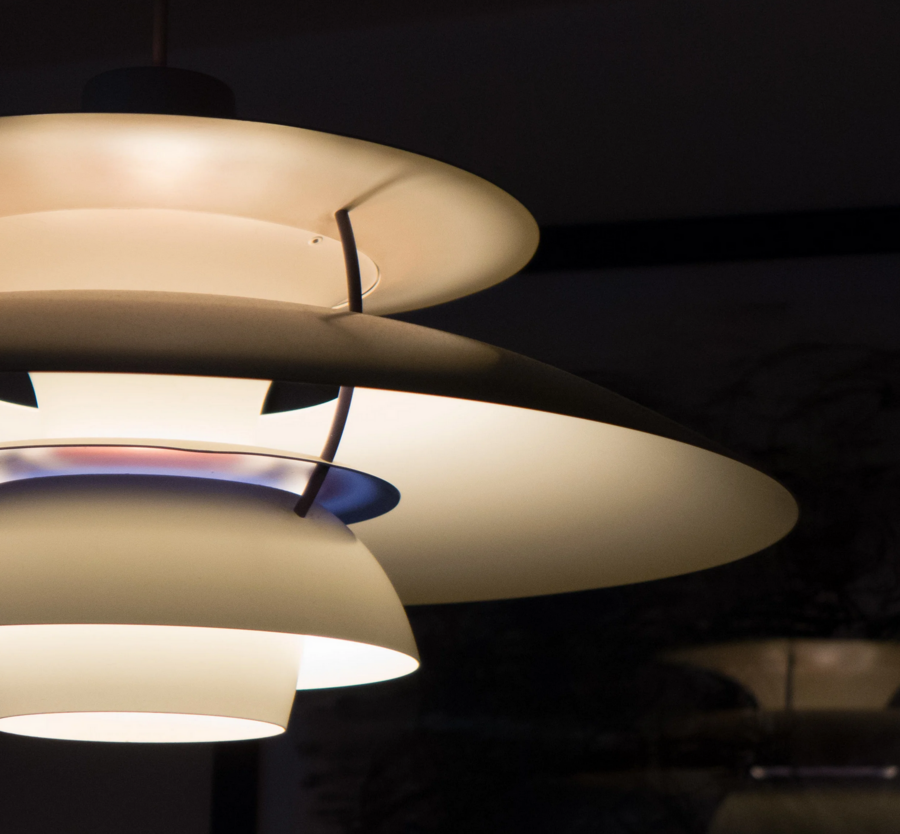
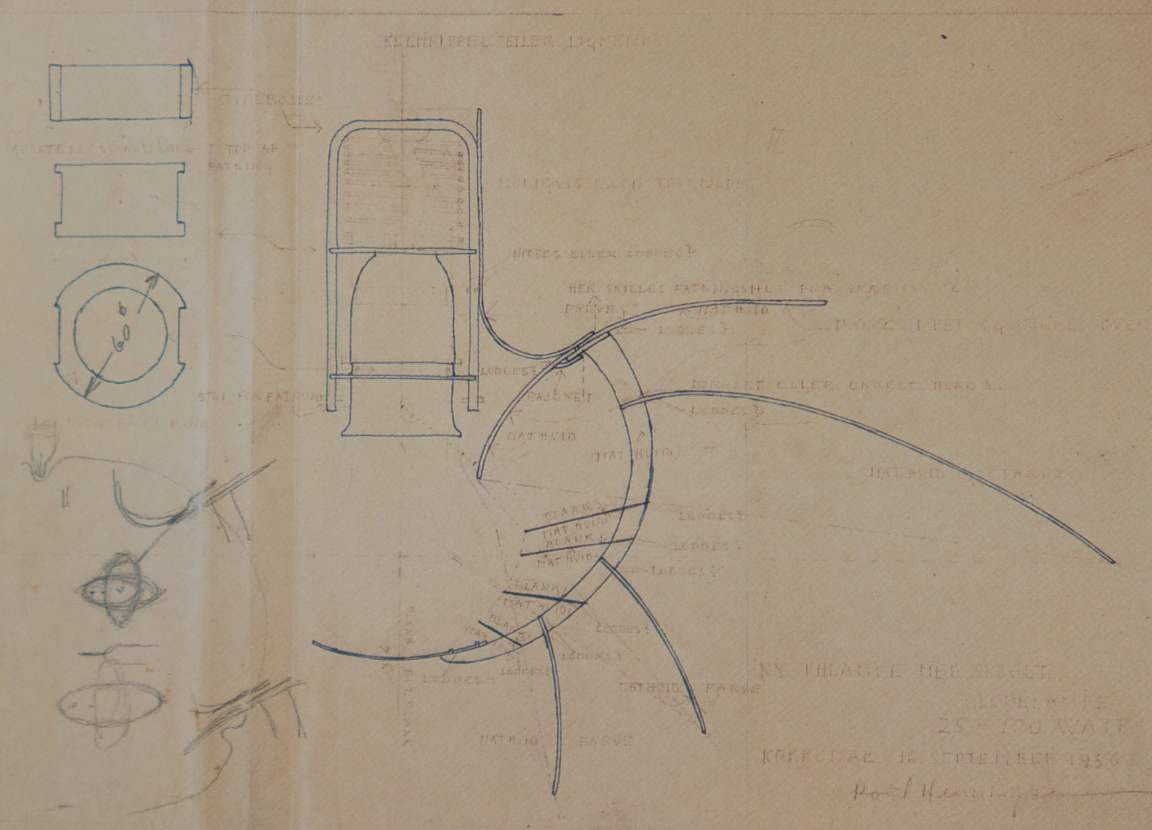
PH5 Lamp, Poul Henningsen, 1958
Louis Kahn and the Manipulation of Light in Architecture
Concurrently, practices are emerging in architecture and interior design where light begins to be perceived as one of the fundamental elements of space. In his projects, Louis Kahn employs complex light slits, shafts, and reflective surfaces, subordinating the immaterial quality of light to the material form of the building.
As light enters a building, it is reflected multiple times, softened, and refracted. The resulting system of openings, niches, and diffusers found in Kahn’s interiors establishes an emotional and functional mode of spatial perception—one that is richer and more controlled than in interiors featuring the standard lighting schemes of the time.
Crucially, both Heningensen and Kahn, each in their own field, pursue the same idea: shifting focus from the object’s form to the light’s behavior. Light begins to be designed—giving rise to the concept of «light quality.»
Louis Kahn, Salk Institute for Biological Studies, interior, 1959–65
[5] Technical and Architectural Light: Optics, Rays, Scenarios
Progress in Stage Lighting.
Twentieth-century theatrical lighting brought new colors to the palette of possibilities for working directly with light in lighting design.
Fresnel lenses began to be applied in stage floodlights. These lenses allow for a soft yet controlled beam with a smooth edge. Light rays from the source can now travel parallel to each other or at a controlled angle. Here, the floodlight housings are purely functional—the optical scheme inside is what matters most.
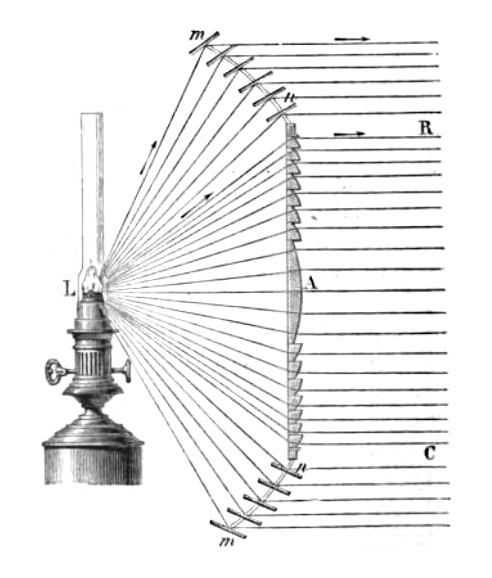
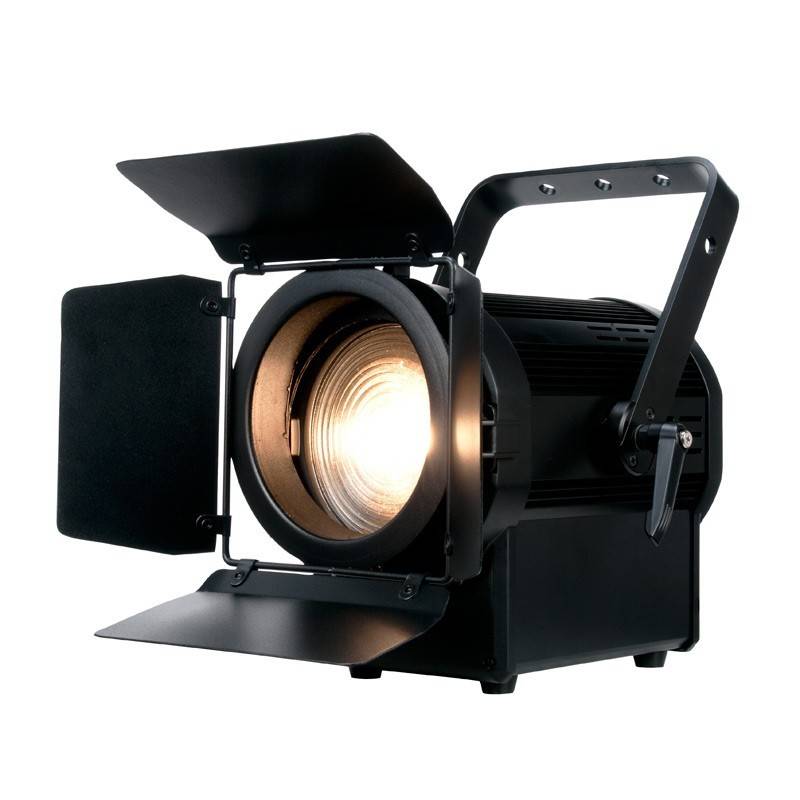
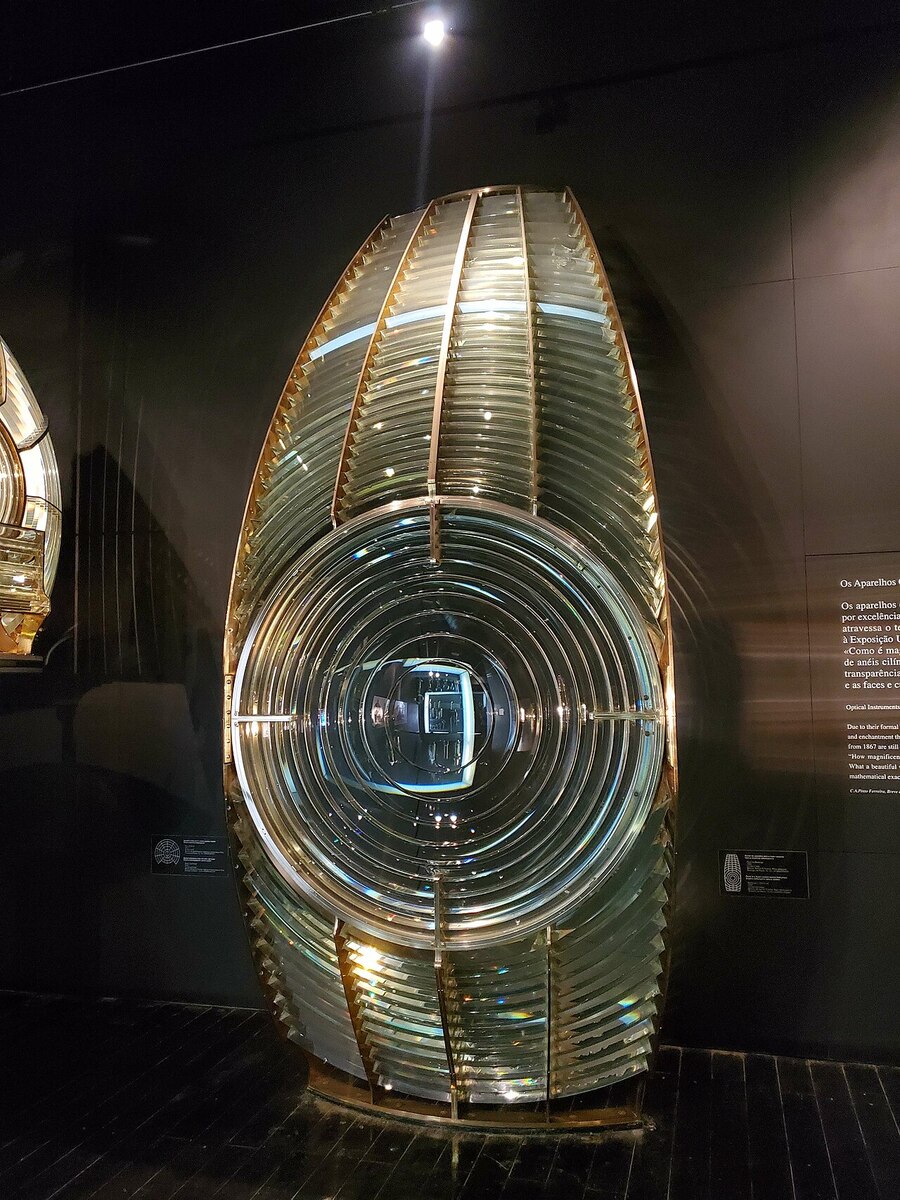
The Fresnel Projector and Lens Operation.
The capabilities of new optical types will prompt lighting designers to develop new standards for stage lighting: spot, flood, and wash. Each type offers a multitude of possibilities, ranging from altering the color and temperature of the light beam (both uniformly across the beam and gradationally) to projecting images and achieving extremely precise focus.
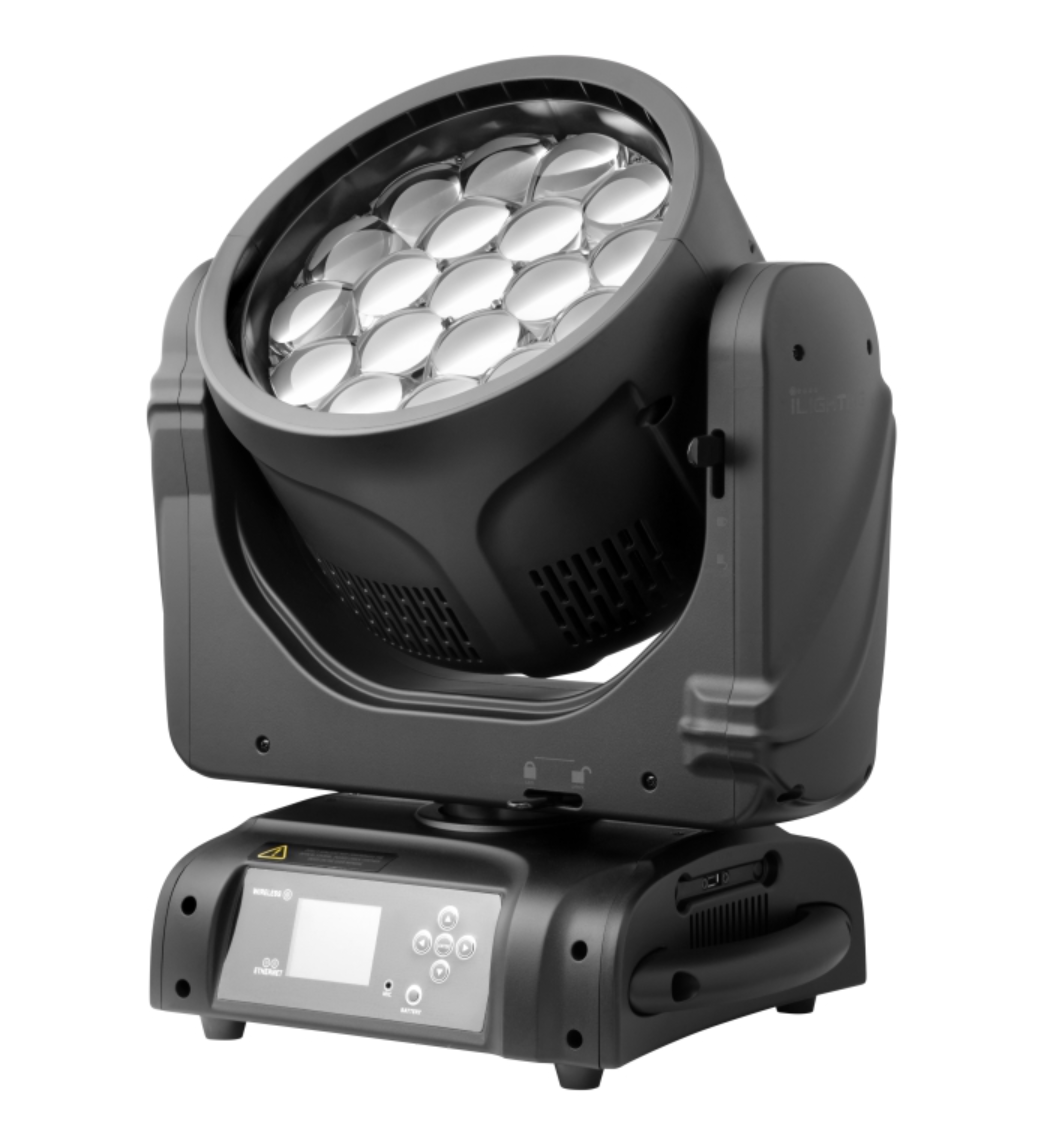
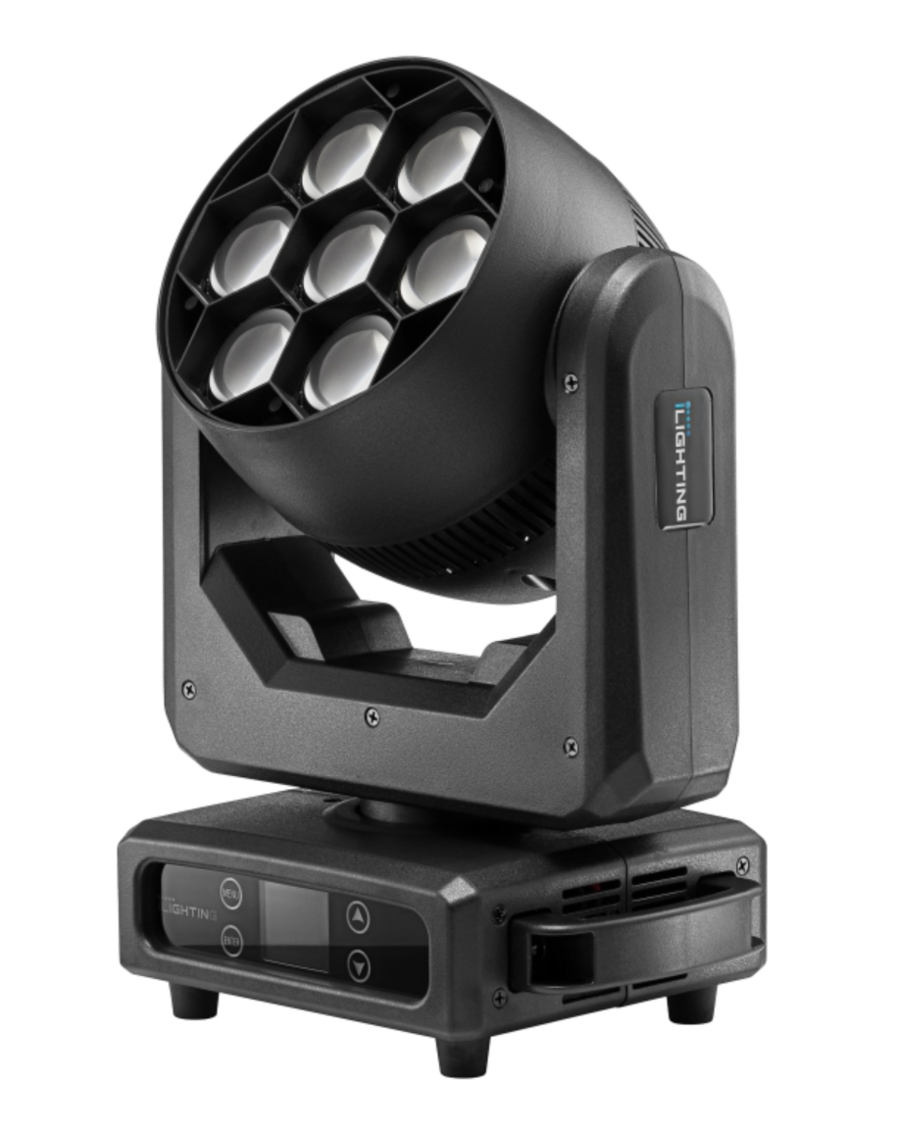
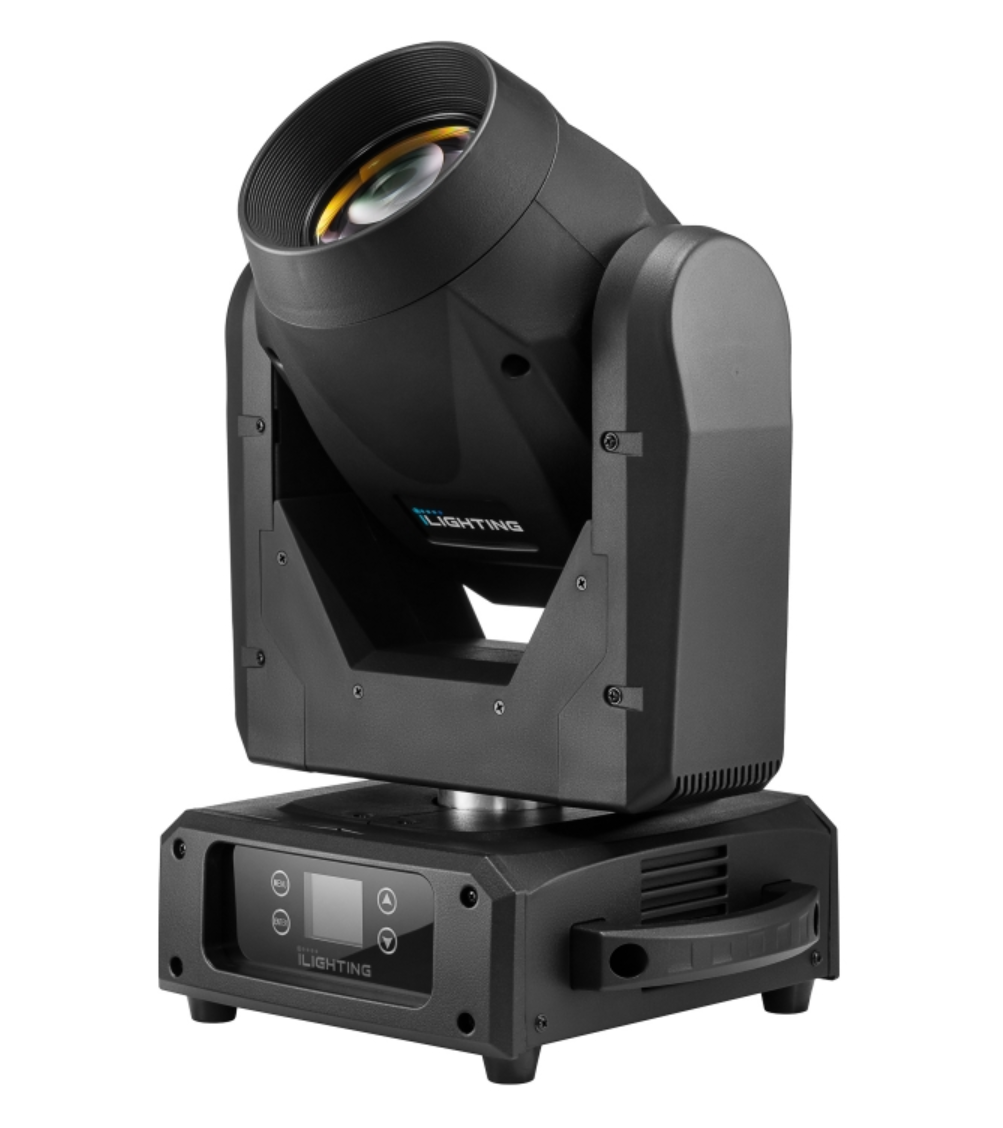
Modern stage spotlights of BEAM/SPOT/WASH types.
Contemporary Architectural Lighting
By the 1990s, interior and architectural accent lighting fixtures actively began borrowing from theatrical approaches. Spot and downlight systems emerged, complete with clearly defined optics.
Technical catalogs from leading functional lighting manufacturers—such as ERCO, Zumtobel, and iGuzzini—began to resemble tool manuals. For each luminaire, a light distribution diagram (IES), an intensity curve, anti-glare well depth, and dozens of other parameters were displayed (recent attention has been particularly focused on color rendering).
It is also significant that the fixture body design gradually became minimalistic and almost neutral, ironically looping back to the very first lighting fixtures—the housing once again became a container for light (a highly technical internal mechanism). The aesthetic shifted inward—to the optics. The luminaire evolved into a tool for constructing a specific lighting environment for a given space.