
The logo of Duolingo
Duolingo is a learning app that does not present education as something heavy or formal.
It makes learning look like a small daily action: open the app, do one short lesson, keep your streak, get a reward. This is why the brand is interesting for communication analysis. It sells not only language learning, but also the feeling that learning can fit into everyday life.
The brand’s main idea is very clear: education should be available to everyone.
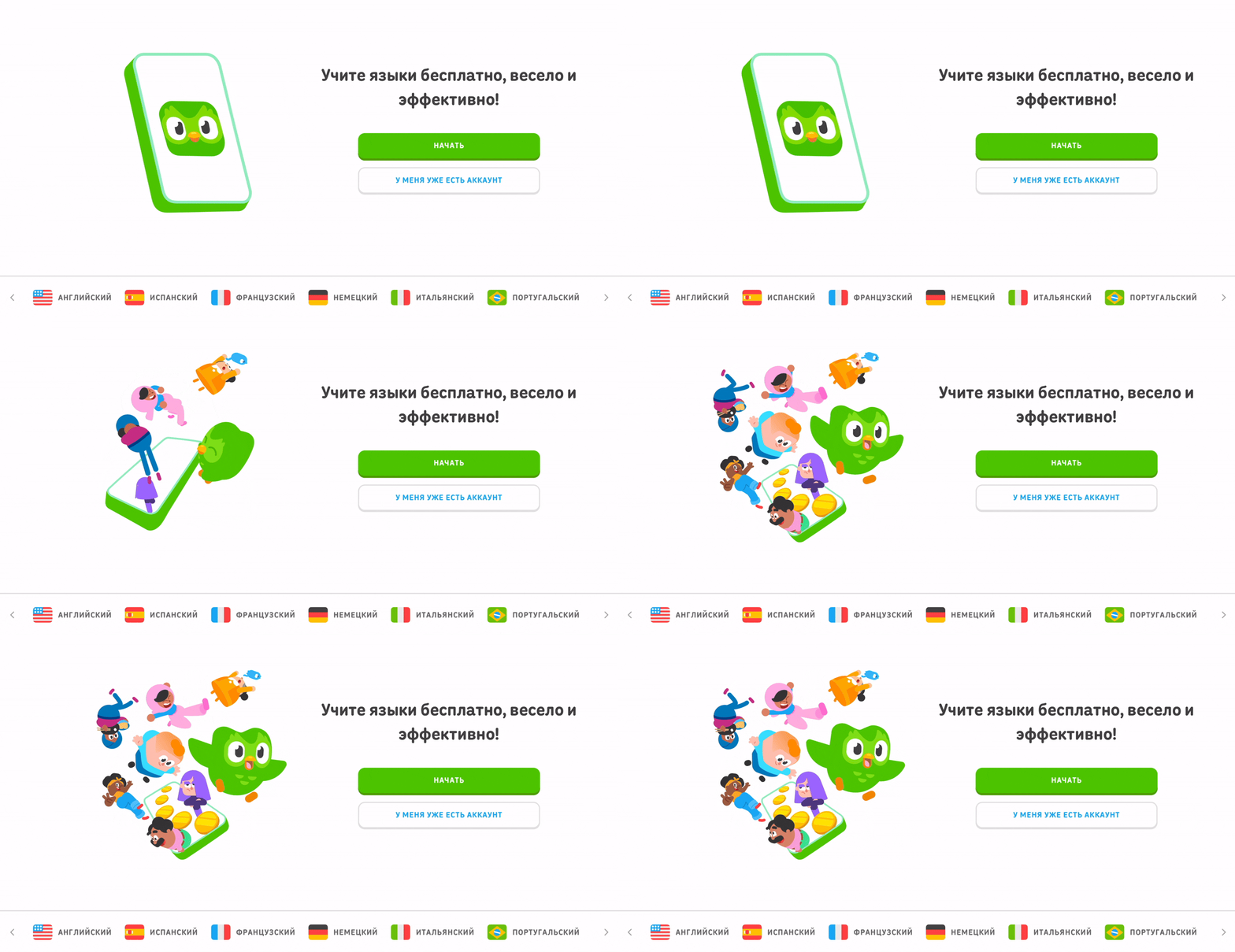
The official website of Duolingo
Duolingo repeats this idea on its official pages. The app is positioned as free, easy to start and useful for people with different levels of language knowledge. So the brand does not speak only to «serious students». It speaks to anyone who wants to learn a little, even if they only have a few minutes a day.

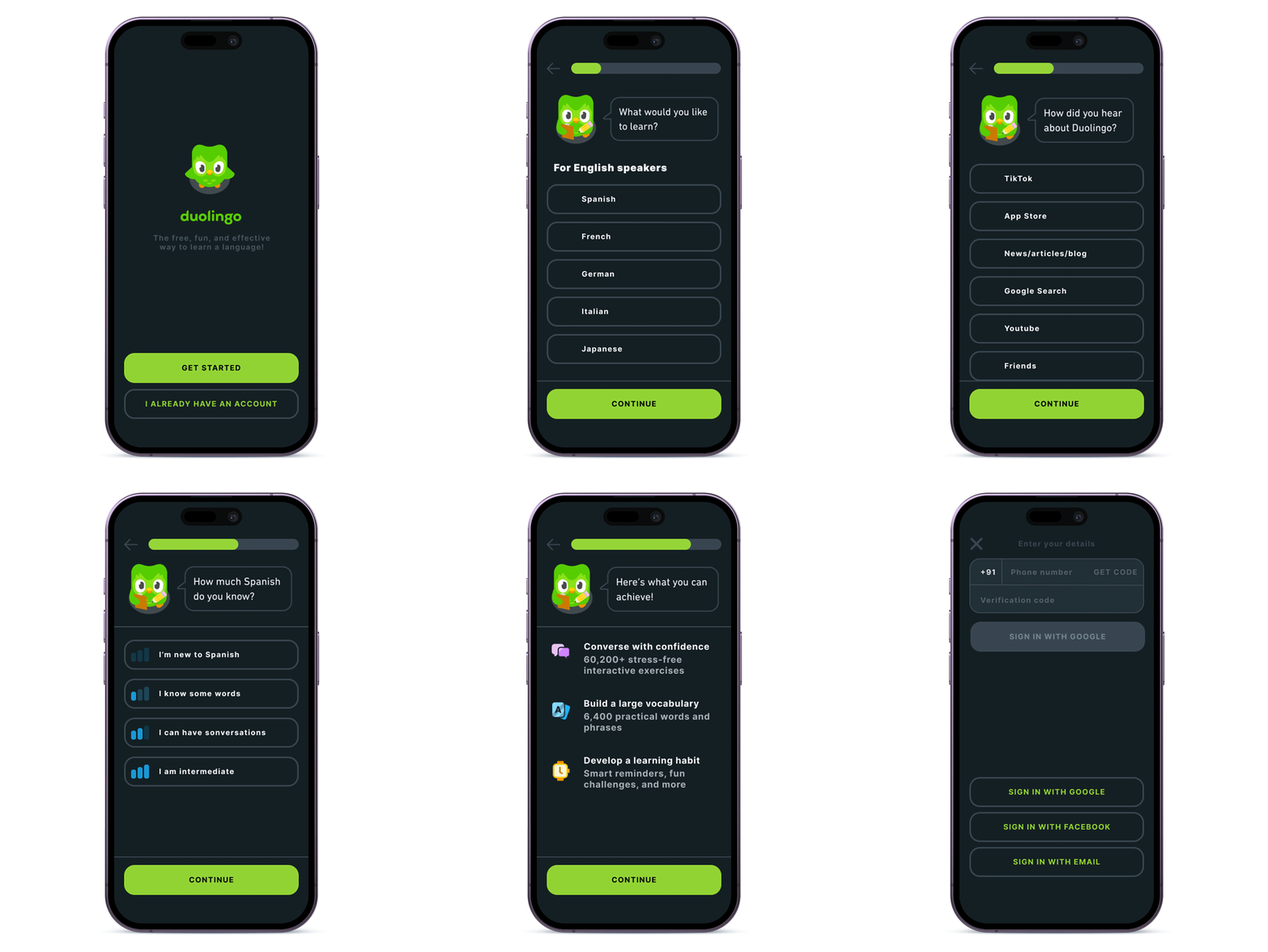
Icon in the duolingo app / Onboarding screen
Duolingo’s audience is quite broad.
It includes school students, university students, adults learning a language for work, people preparing for travel, and even those who simply want to learn something new in their free time. One reason for this wide appeal is that the app makes it very easy to get started. Users do not need to buy textbooks, find a tutor, or plan long study sessions. Instead, they can open the app and begin learning right away, which makes language learning feel more accessible and less intimidating.
Duolingo communicates through several app-based channels: website, mobile app, push notifications, email reminders, lesson interface, streaks, achievements, leaderboards and social sharing.
The app is the main place where Duolingo communicates with its users. Through its design, rewards and reminders, it keeps people engaged and encourages them to come back regularly.
Duolingo keeps users engaged through a mix of interface design, rewards and emotional cues.
UI screens that bring Duolingo’s products

The app constantly shows what to do next. The lesson path, progress bar, daily goals and rewards make it easy to understand where you are and what comes next. Even a short lesson feels like progress. At the same time, gamification plays a big role. Streaks, XP, badges and leagues turn learning into a game. Users are not only learning new words but also trying to maintain their progress and achievements.
Duo, the green owl, adds a personal element to this experience. The mascot celebrates successes, sends reminders and reacts to user activity. Because of this, communication feels less like a system message and more like an interaction with a character. Together, these elements create a simple message: keep going, your progress matters.
Lesson path from the Duolingo app
To understand why Duolingo’s communication is effective, we use the Elaboration Likelihood Model (ELM).
This theory explains that persuasion can happen through two different routes. The central route works when people pay attention to information and think about it carefully. The peripheral route works through quicker reactions to emotions, visuals, humor, characters and other simple cues.
Both routes can be seen in Duolingo’s app. The central route appears through clear learning goals, progress tracking, lesson structure and personalized practice. These elements show users that the app has practical value and can help them improve their language skills.
At the same time, the peripheral route is visible in Duo, bright colors, animations, streaks, badges and playful reminders. These features create emotional responses such as pride, curiosity, excitement or even the fear of losing a streak.
Progress bar in the Duolingo app
This is why Duolingo’s app communication works quite well.The brand combines useful learning tools with emotional design. The user understands the practical value, but returns because the app feels playful and personal.
Still, there is a limit. Sometimes the pressure around streaks and reminders can feel too strong. But for many users this pressure is also what keeps the habit alive.

After the app communication, Duolingo continues the same brand logic on social media. However, on these platforms, the brand does not speak mainly as an educational platform. It speaks as an internet character. The focus moves from direct learning motivation to entertainment, memes, comments and cultural participation.
This is important because Duolingo’s social media communication supports the main brand idea in another way. The app turns learning into a daily habit through streaks, rewards and reminders. Social media turns the brand itself into a habit: users do not only open the app to learn, but also follow Duo as a character, react to jokes, share memes and wait for the next post.
TikTok is one of the clearest examples of Duolingo’s social media strategy. The brand adapts to the platform’s logic: short videos, trends, popular sounds, absurd humor and fast reactions to internet culture. Instead of posting only educational content, Duolingo often places Duo in comic situations. The mascot dances, reacts dramatically, follows trends and behaves almost like a human influencer.
Examples of TikTok videos from Duolingo’s official brand account
This changes the role of the mascot. In the app, Duo is a reminder and motivator. On TikTok, Duo becomes a performer. The green owl is not only connected with lessons, but also with entertainment and internet humor. This makes the brand easier to remember.
A key feature of this communication is self-irony. Duolingo often uses jokes about its own reminders, streak pressure and the idea that Duo is «watching» users who do not complete lessons.
Examples of TikTok videos from Duolingo’s official brand account
These jokes are based on an already existing user perception. Instead of hiding this association, the brand exaggerates it and turns it into a meme. As a result, possible irritation from reminders becomes part of the brand’s humor.
On X/Twitter, Duolingo’s communication is more verbal and reactive. The platform is useful for short jokes, replies, cultural references and brand-to-brand interactions. Duolingo can comment on trends quickly and use a tone that feels informal and conversational.

Example of an X/Twitter post from Duolingo’s official brand account
One of the strongest examples is the «death of Duo» campaign.
Duolingo announced the fictional death of its mascot and turned it into a social media storyline. The campaign worked because it treated Duo not only as a logo, but as a public character with a biography, enemies, fans and emotional reactions from the audience. Other brands and users could join the joke, which made the campaign participatory rather than one-directional.
Duolingo’s tone of voice on social media can be described as playful, self-aware and intentionally chaotic. The brand uses humor, exaggeration, informal language and meme logic. At the same time, this tone is still connected to the product. Most jokes return to the same core themes: practice, streaks, learning, motivation and procrastination.
This balance is important. If Duolingo only posted random jokes, the communication would become disconnected from the product. But because Duo’s humor usually grows from the app experience, the memes continue to remind users about learning.
The joke and the product are not separate; the joke is built from the product.
The tone also makes education less intimidating. Language learning can be associated with school, mistakes, discipline and pressure. Duolingo softens this association by making the brand funny and emotionally expressive.
At the same time, the humor sometimes includes pressure, especially in jokes about missed lessons or broken streaks. This creates a tension: the brand is friendly, but also pushy. For Duolingo, this tension has become part of recognizability.
Progress indicator in the Duolingo app
Duolingo has built a public image that is very different from traditional educational brands. Instead of appearing formal and academic, the company presents itself as playful, humorous and culturally relevant. The mascot Duo has become the center of this image, helping the brand feel more human and recognizable. As a result, Duolingo is often discussed not only as a language-learning platform but also as an internet personality.
Dialogic Theory suggests that effective public relations are based on two-way communication rather than one-way messaging.
Duolingo follows this approach by actively interacting with users through comments, trends, memes and social media conversations.
As mentioned earlier in the social media section, the company announced that its mascot had died and transformed the event into a large-scale online story. Users, influencers, media outlets and even other brands joined the discussion, generating significant attention and media coverage.
However, the campaign extended beyond social media. Duolingo connected the story directly to the app experience by introducing a countdown timer and a special challenge that encouraged users to earn XP in order to «revive» Duo. Learners were invited to participate in the campaign rather than simply observe it.
This integration of PR, social media and product communication made the campaign especially effective. Users did not simply receive information — they became part of the story through learning activities, memes, reactions and discussions. From a dialogic perspective, communication became a two-way process in which audiences actively contributed to the campaign’s development.
Example of the «Save Duo» challenge from the Duolingo app
Duolingo also strengthens its public image through partnerships with popular cultural brands. One example is the collaboration with Netflix connected to Squid Game and Korean language learning. Such partnerships help the company remain culturally relevant while connecting entertainment with education.
A strong public image also creates risks. In 2025, Duolingo faced criticism after announcing an AI-first strategy and reducing some contractor roles. The situation showed that highly visible brands receive not only attention and praise but also public scrutiny.
Example of the Duolingo × Netflix collaboration campaign
Strengths
• Strong brand recognition • Highly shareable content • Consistent brand personality • Active audience engagement
Weaknesses
• Risk of controversy • Humor may not appeal to everyone • Some campaigns can distract from the educational mission
Duolingo should continue using humor and participation as core communication tools. However, the brand should communicate more carefully during sensitive topics and major business decisions. Balancing entertainment and credibility would help strengthen long-term trust.
Duolingo’s PR strategy is highly effective because it transforms communication into a shared experience. The brand successfully builds relationships with audiences through dialogue, participation and cultural relevance. At the same time, its unconventional style requires careful reputation management.
Overall, Duolingo can be considered one of the most successful examples of contemporary brand communication.
The company’s greatest achievement is not simply promoting a language-learning application, but transforming learning into a recognizable cultural experience. Across the app, social media platforms and public relations activities, Duolingo maintains a clear and consistent identity that audiences immediately recognize.
The brand successfully combines educational value with emotional engagement, making users not only consumers of a product but active participants in the brand narrative. This approach strengthens visibility, encourages loyalty and generates continuous public attention.
At the same time, Duolingo’s communication strategy is not without risks. Its reliance on humor, internet culture and provocative campaigns can occasionally lead to criticism or reputational challenges. However, these risks are largely outweighed by the brand’s ability to remain relevant, memorable and highly engaging.
Therefore, the overall communication strategy can be evaluated as highly effective.
Duolingo demonstrates how a modern brand can use product communication, social media and public relations not as separate activities, but as interconnected parts of a unified communication system.
Kapp K. M. The Gamification of Learning and Instruction: Game-Based Methods and Strategies for Training and Education. 2012. URL: https://books.google.kg/books/about/The_Gamification_of_Learning_and_Instruc.html?id=M2Rb9ZtFxccC&redir_esc=y (accessed: 11.06.2026).
Werbach K., Hunter D. For the Win: The Power of Gamification and Game Thinking. 2020. URL: https://books.google.ru/books?id=dQI2EAAAQBAJ&redir_esc=y (accessed: 11.06.2026).
Duolingo Brand Guidelines. URL: https://design.duolingo.com/ (accessed: 12.06.2026).
Duolingo Shares PR Secrets of Viral «Death of Duo» Campaign. PR Daily. URL: https://www.prdaily.com/duolingo-shares-pr-secrets-of-viral-death-of-duo-campaign/ (accessed: 12.06.2026).
Is Duolingo Dead? Understanding the Viral Duo Campaign. Headway Blog. URL: https://makeheadway.com/blog/is-duolingo-dead/ (accessed: 12.06.2026).
Ready, Set, Learn Korean: Duolingo and Netflix Prep Fans for Squid Game Season Two. TrendWatching. URL: https://www.trendwatching.com/innovations/ready-set-learn-korean-duolingo-and-netflix-prep-fans-for-squid-game-season-two (accessed: 12.06.2026).
The Backlash Against Duolingo Going AI-First Didn’t Even Matter. TechCrunch. URL: https://techcrunch.com/2025/08/07/the-backlash-against-duolingo-going-ai-first-didnt-even-matter/ (accessed: 12.06.2026).
What Duolingo’s AI Controversy Reveals About the Future of Work. Synnistry. URL: https://synnistry.com/what-duolingos-ai-controversy-reveals-about-the-future-of-work (accessed: 12.06.2026).
Advertising Vietnam. Khai Tử Linh Vật Duo Để Tạo Hiệu Ứng Truyền Thông: Chuyên Gia Marketing Nói Gì Về Chiêu Trò Của Duolingo? URL: https://advertisingvietnam.com/article/khai-tu-linh-vat-duo-de-tao-hieu-ung-truyen-thong-chuyen-gia-marketing-noi-gi-ve-chieu-tro-cua-duolingo-p25982 (accessed: 12.06.2026).
Duolingo About Page Illustration. URL: https://about.duolingo.com/0cea81bd1c4f888e111e.svg (accessed: 11.06.2026).
Duolingo Animated Interface Example on Dribbble. URL: https://cdn.dribbble.com/userupload/27751974/file/original-290ae50f4bfa9c75956f29c2183506bb.gif (accessed: 11.06.2026).
Duolingo Animated Visual on Behance. URL: https://mir-s3-cdn-cf.behance.net/project_modules/source/69d261179604791.64fc83a2cd75b.gif (accessed: 11.06.2026).
Duolingo Logo Guidelines. URL: https://design.duolingo.com/identity/logos#logotype (accessed: 12.06.2026).
Duolingo Logos. URL: https://duolingopress.lingoapp.com/s/Logos-oJyX2Q?v=0 (accessed: 11.06.2026).
Duolingo Official TikTok Video. URL: https://www.tiktok.com/@duolingo/video/7595611395048131853 (accessed: 12.06.2026).
Duolingo Official TikTok Video. URL: https://www.tiktok.com/@duolingo/video/7595962092172152119 (accessed: 12.06.2026).
Duolingo Official TikTok Video. URL: https://www.tiktok.com/@duolingo/video/7608654202746785037 (accessed: 12.06.2026).
Duolingo Official TikTok Video. URL: https://www.tiktok.com/@duolingo/video/7610483866096160013 (accessed: 12.06.2026).
Duolingo Official TikTok Video. URL: https://www.tiktok.com/@duolingo/video/7616849654512160014 (accessed: 12.06.2026).
Duolingo Official TikTok Video. URL: https://www.tiktok.com/@duolingo/video/7639404992998182157 (accessed: 12.06.2026).
Duolingo Official TikTok Video. URL: https://www.tiktok.com/@duolingo/video/7646412132157754637 (accessed: 12.06.2026).
Duolingo Official Website. URL: https://www.duolingo.com/ (accessed: 11.06.2026).
Duolingo Score Visual. URL: https://storage.ghost.io/c/7a/33/7a33d0f4-927d-4fe8-a6bf-96131b5e76d4/content/images/size/w1000/2024/10/Where-to-find-Duolingo-Score.png (accessed: 11.06.2026).
Duolingo Shares PR Secrets of Viral «Death of Duo» Campaign. PR Daily. URL: https://www.prdaily.com/duolingo-shares-pr-secrets-of-viral-death-of-duo-campaign/ (accessed: 12.06.2026).
Duolingo UI Screens. URL: https://duolingopress.lingoapp.com/s/UI-Screens-R316ve (accessed: 11.06.2026).
Jailbreak Wiki Forum Post. URL: https://jailbreak.fandom.com/f/p/4400000000000176845/r/4400000000000927826 (accessed: 12.06.2026).
Korean or Get Eaten. Genius Lyrics. URL: https://genius.com/Duolingo-korean-or-get-eaten-lyrics (accessed: 12.06.2026).
Pinterest Image. URL: https://ru.pinterest.com/pin/170292429656817232/ (accessed: 12.06.2026).
Pinterest Image. URL: https://ru.pinterest.com/pin/397653842117682939/ (accessed: 12.06.2026).
Pinterest Image. URL: https://ru.pinterest.com/pin/4855512093450424/ (accessed: 12.06.2026).
Pinterest Image. URL: https://ru.pinterest.com/pin/5911043262348821/ (accessed: 12.06.2026).
Pinterest Image. URL: https://ru.pinterest.com/pin/716987203218586896/ (accessed: 12.06.2026).
Pinterest Image. URL: https://ru.pinterest.com/pin/846747167488944495/ (accessed: 12.06.2026).
Pinterest Image. URL: https://ru.pinterest.com/pin/887983251546415066/ (accessed: 12.06.2026).
VC.ru. «Хочешь сыграть со мной в игру?» Сова из Duolingo в розовом костюме из «Игры в кальмара» прорекламировала сериал. URL: https://vc.ru/marketing/1701907-hochesh-sygrat-so-mnoi-v-igru-sova-iz-duolingo-v-rozovom-kostyume-iz-igry-v-kalmara-proreklamirovala-serial (accessed: 12.06.2026).