1. Introduction and Research Concept
Concept
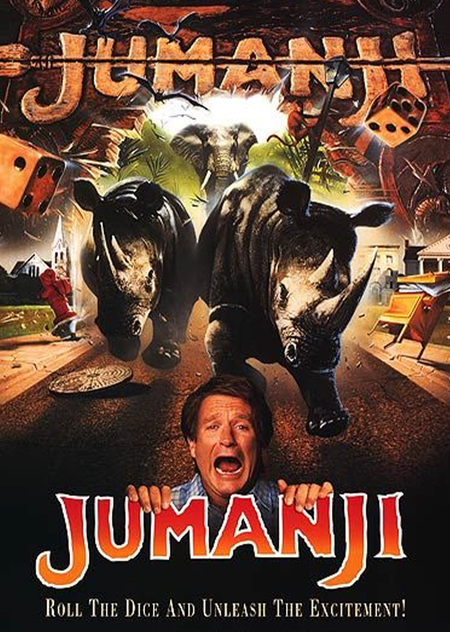
Animal studies in cinema is one of the key indicators of the evolution of visual effects (VFX). How filmmakers portray animals on screen best illustrates the progress of computer graphics and visual effects (VFX). The «Jumanji» films are an excellent example; through them, one can see how much the technology for creating wild beasts on screen has changed over 22 years.
• «Jumanji» (1995), directed by Joe Johnston, with VFX supervision from Stephen L. Price and Ken Ralston of Industrial Light & Magic (ILM), and featuring animatronics masters Tom Woodruff Jr. and Alec Gillis from Amalgamated Dynamics (ADI), stood at the intersection of two eras: physical animatronics/mechanics and emerging three-dimensional computer graphics (CGI).
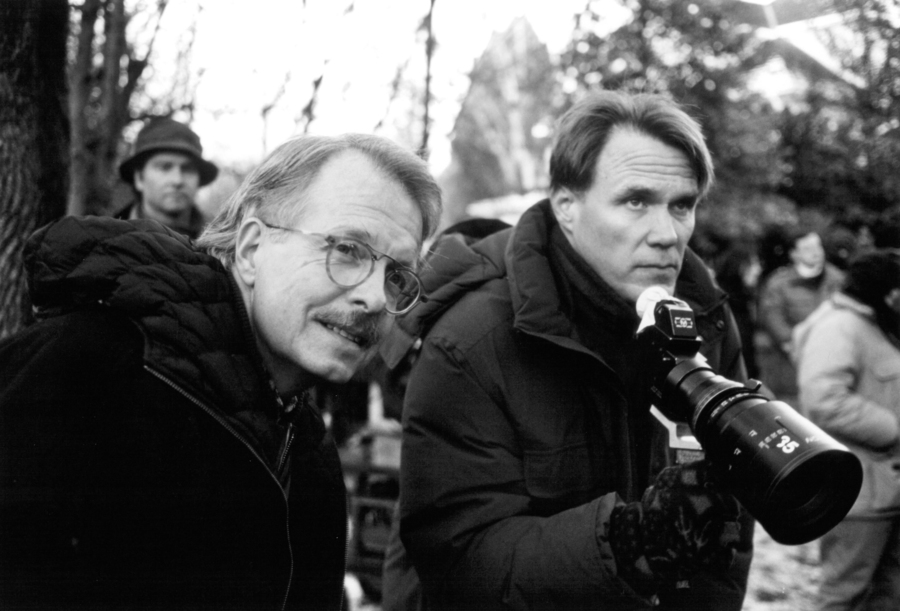
• «Jumanji: Welcome to the Jungle» (2017), directed by Jake Kasdan, featuring VFX Supervisor Jerome Chen and supervisors from key studios (including Bob Winter of MPC, as well as the Rodeo FX and Iloura teams), demonstrates the era of mature photorealistic CGI, digital scanning, Physically Based Rendering (PBR), and the complete abandonment of practical animal models.

Research Problem and Hypothesis
Key question: How has the way animals are created on screen changed over the past 22 years, and how has this transition affected how we see and perceive contemporary films?
Hypothesis: Previously, special effects artists focused on how to film a heavy rubber puppet so that it wouldn’t look artificial. With the advent of computer graphics, these physical constraints disappeared: now, they concentrate on making digital creatures as lifelike and indistinguishable from reality as possible. Directors once had to tailor the shot to actual robots and the limitations of early computers. Today, algorithms can render anything—from a single jaguar to a herd of hundreds of rhinoceroses. As a result, cinema has lost a sense of «living, physical materiality, ” but in exchange, it has gained complete freedom in movement, scale, and cinematography.
Research Objective: To trace the transformation of modeling, texturing, fur/skin simulation, and animal animation technologies using two key films from the franchise as examples.
2. Research Plan
1. Introduction and Conceptual Framework
2. Research Plan
3. Technological Development Levels and Key Studios/Personalities (1995–2017)
4. Comparative Visual Analysis and Technological Breakdown of Fauna Representations in «Jumanji» (1995) and «Jumanji: Welcome to the Jungle» (2017)
5. Comparative Analysis of Actor-Fauna Interaction (Interaction On-Set)
6. Conclusion
7. Findings
8. Bibliography and Sources
3. Level of Technological Development and Key Studios/Personalities (1995–2017)
4. Comparative Visual Analysis and Technological Breakdown of Fauna Representatives in «Jumanji» (1995) and «Jumanji: Welcome to the Jungle» (2017)
1. Close-up and individual predators (Lion / Jaguar)
• «Jumanji» (1995): Lew (Animatronics and early CG)
Creators / Studio: Amalgamated Dynamics Inc. (ADI), Industrial Light & Magic (ILM). Director: Joe Johnston.
Technology: Full-scale animatronic puppet for close-up shots and early 3D CGI for dynamic scenes (jumping, running) (Stephen L. Price and Jim Mitchell’s Ribbons pipeline).
Special Effects Analysis: The puppet’s mechanical head featured detailed facial expressions and eye movements, but the CG version suffered from rigid physics and limited fur simulation. Achieving tactile realism and a strong physical presence in the shot. Limited range of facial expressions and puppet movements; the fur looks monolithic («a carpet effect» or flat panels without individual strand simulation or collision physics).
Visual Realization: A full-scale animatronic lion puppet, designed by Tom Woodruff Jr. and Alec Gillis (ADI) and operated by puppeteers, is used in wide and medium shots. For dynamic scenes (leaps, running), CGI from the ILM team, under the direction of Jim Mitchell (CG Supervisor), was utilized.
Technical Features: The 1995 Computer Lion has rigid body boundaries. Simulating the mane at that time was an extremely challenging task: the fur appears slightly plastic («clumped»), and the paw movements were animated manually using Keyframe Animation.
ррвруррар