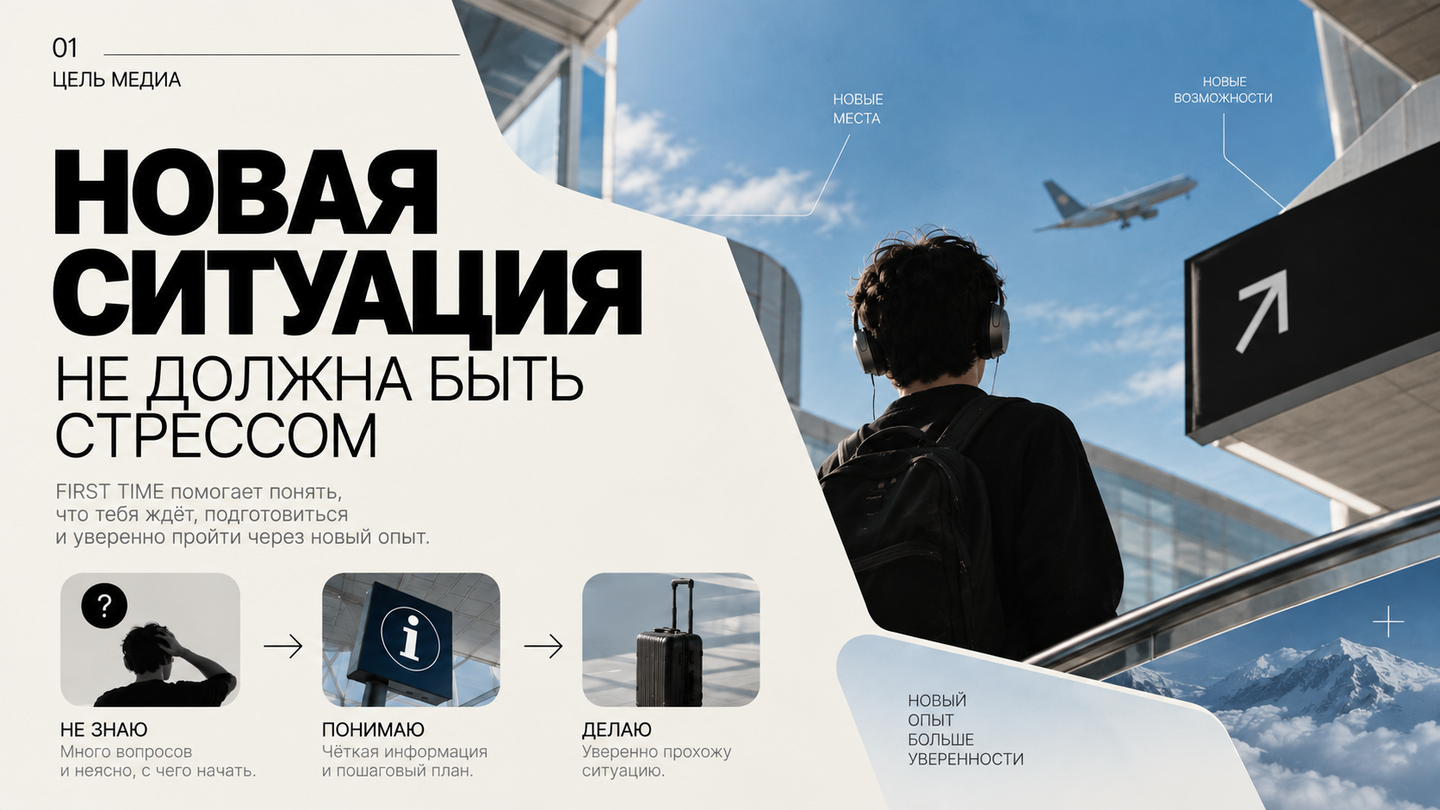
The Goal of FIRST TIME helps people feel more confident in unfamiliar situations. The media proactively explains what to expect, how to prepare, and what to do step by step. The Problem Before a new experience, information is often scattered across search engines, social media, forums, and videos. FIRST TIME gathers the most important details into one clear guide so users don’t have to search for answers to dozens of questions on their own. The Result The user receives a clear action plan, a checklist, and practical advice for a specific situation—from flying solo for the first time to attending a first interview or renting an apartment.
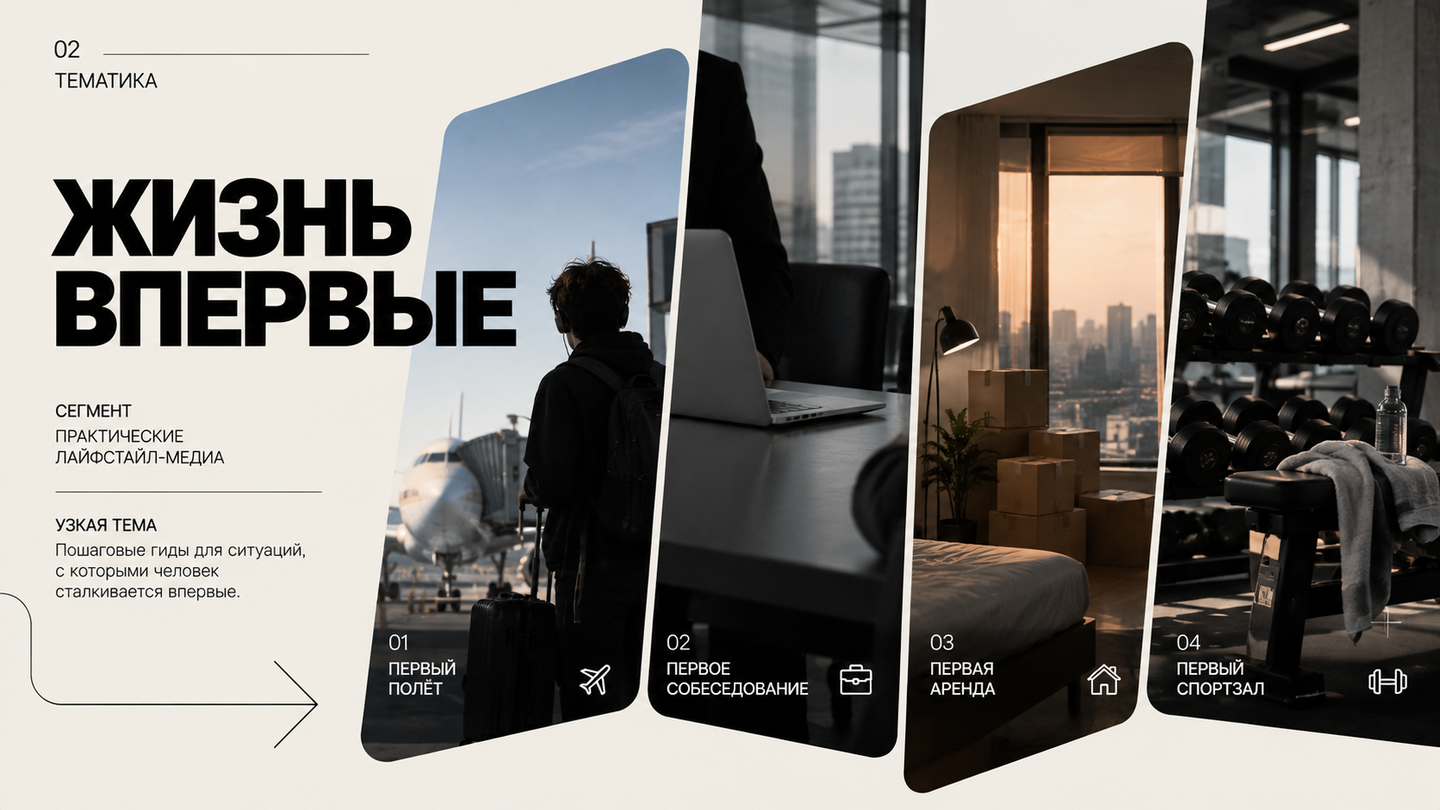
Media Theme FIRST TIME — a practical lifestyle media covering situations a person encounters for the first time. The project transforms unfamiliar experiences into clear, step-by-step processes: explaining what to expect, how to prepare, and what actions to take. Segment Practical lifestyle media and educational guides. Niche Topic Step-by-step guides for first-time experiences in daily life: first solo flight, first job interview, first apartment rental, first trip to the gym, and other new situations.
Format and TopicsContent for «FIRST TIME» is built around a specific situation that a person encounters for the first time. Instead of lengthy instructions, the user receives information in small, digestible blocks that can be used right before a new experience or while it is happening.Key Topics«First Time» is a complete guide to the situation. «What to Bring?» is a list of necessary items and documents. «Step-by-Step» is the sequence of actions. «Don’t Do This» covers common beginner mistakes. «You Should Know» outlines important rules and nuances.FormatsGuides, checklists, cards, and short videos. The format is chosen based on the situation, helping users quickly find necessary information without extensive searching.
Competitor Analysis Users can seek help with new situations via Goblin Tools, WikiHow, YouTube, or Reddit. These services address individual components of a task: they help break down tasks into steps, offer instructions, videos, or the experience of others. The FIRST TIME Position FIRST TIME synthesizes these approaches around a specific first experience. The user receives a personalized roadmap: how to prepare, what to bring, what to do step-by-step, and what is important to know in advance. Key Distinction Personalization + the first experience + step-by-step guidance from preparation through execution.
Insights Analysis of similar platforms shows that the issue is not a lack of information, but rather its volume and fragmentation. Users are forced to compare different sources, watch long videos, and determine for themselves which advice to follow. What the User Needs In a new situation, a person doesn’t need a large amount of information—they need a clear sequence of actions: what to prepare, where to start, what to do next, and what mistakes to avoid. Conclusion FIRST TIME shortens the path from question to action: it gathers the essentials in one place, structures the information step-by-step, and tailors it to a specific situation. Less searching → more confidence.
Primary Channel The main platform is FIRST TIME—Telegram. This channel publishes step-by-step guides, checklists, tips, and useful materials for situations a person is encountering for the first time. Audience Acquisition Social media platforms—TikTok, Reels, and YouTube Shorts—are used to attract new audiences. Short visual content introduces the topic to the user and directs them to the full material in Telegram. How the Channels Work Together Social media helps users discover FIRST TIME, and Telegram serves as the primary point of engagement with the media, where they can receive the complete guide, save it, and refer back to it later. The main principle: social media attracts attention → Telegram helps navigate the situation step-by-step.
How FIRST TIME Works The user selects a situation they are encountering for the first time and answers several short questions. For example, if it’s the first flight, the service will specify the flight type, baggage status, and other crucial conditions. AI Personalization Based on the answers, the AI tailors the material to the specific user: it removes unnecessary information and generates a suitable sequence of actions, checklists, and important advice. The Outcome Instead of a general article, the user receives a personalized, step-by-step guide that they can use immediately during the new situation. One situation → specific conditions → a clear action plan.
Target Audience The FIRST TIME audience is defined not by age or profession, but by situation. These are individuals encountering a new experience who wish to prepare in advance or quickly find a clear answer without extensive searching. Core Needs It is important for the user to understand what to expect, what to prepare, and the proper sequence of actions. FIRST TIME helps replace uncertainty with a concrete and understandable plan. Jobs to Be Done (JTBD) «When I face a new situation, I want to quickly understand what to expect and what steps to take so I feel more confident.»
UNIQUE SELLING PROPOSITION FIRST TIME is media designed for situations people encounter for the first time. Unlike standard articles, videos, or forums, this project doesn’t just offer advice—it creates a clear action plan, guiding the user from preparation through to the successful completion of the situation. The Key Difference The Guide customizes itself to the user’s specific circumstances: it acknowledges their situation, eliminates unnecessary information, and leaves only the essential steps, checklists, and tips. Value Users no longer need to gather information from disparate sources or decide independently what is most relevant to them. FIRST TIME shortens this journey and makes it clearer, while making the user’s actions more confident. FIRST TIME is not just advice. It’s a plan for your first time.