Concept
A typical day consists of decisions that rarely feel like gameplay: whether to get up or sleep more, prepare food, go to work, talk to a loved one, or rearrange furniture. The Sims series transforms these actions into a visible system. The house becomes an editable space, the character becomes a controllable participant in events, and needs, desires, and emotions are given on-screen representations. The player is offered not to complete one plot, but to repeatedly decide what life their created Sims will have.
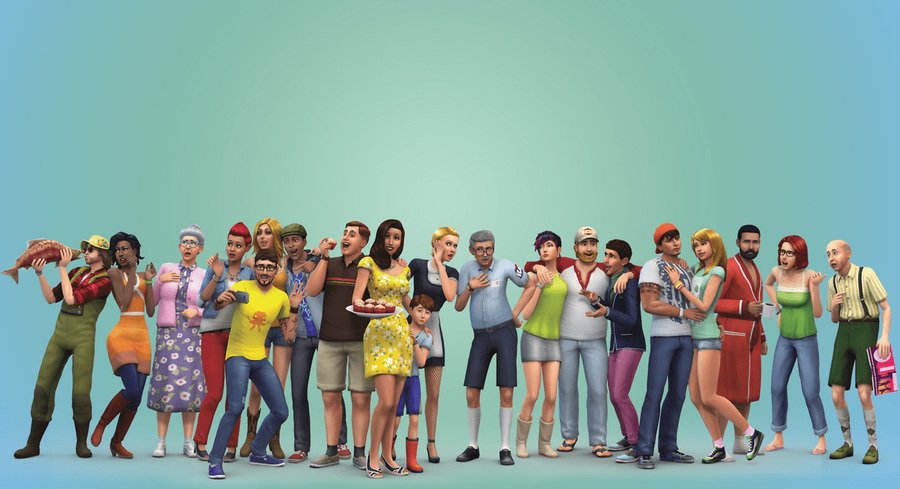
The Sims 4 Characters
But this freedom is organized in a special way. The player chooses characters, changes homes, assigns actions, and can create their own stories. Simultaneously, each part of the game sets its own conditions: time is limited, resources are not infinite, needs require attention, and the Sims' behavior doesn’t always align with the player’s plan. This series allows for an examination not only of what the player can control, but also of how the very possibility of choice changes alongside the game’s interface and rules.
Research Question: How does the The Sims series depict the relationship between player freedom and control over daily life?
It is suggested that the new parts of the game do not negate this contradiction, but rather restructure it in different ways. From the necessity of constantly maintaining basic needs in the first game, the series moves toward more pronounced individuality in characters—their desires and fears, personality traits, emotions, and expanded creative capabilities. Simultaneously, the player retains control over the home, time, and a significant portion of life circumstances. Freedom here emerges within the system, not outside of it.
The Sims 4, Electronic Arts
The research begins with pre-digital practices where life was already becoming a subject of play: furnishing a dollhouse, changing paper doll clothes, or navigating a tabletop life journey. It then examines the evolution of four main segments in the series. In each segment, it is important how the character and their state are depicted, what design choices the interface emphasizes, and the extent of player control. The work concludes by comparing these changes and addressing what the series defines as freedom.
The Sims can be understood as a digital space for several non-congruent scenarios. One player aims to build a career and a large family, another spends time in build mode, and a third intentionally disrupts the daily order or observes the absurdities. The game supports these ways of playing, but its systems make some actions prominent and convenient while others are difficult or impossible. Therefore, the main interest lies not in finding the «correct» life for the Sims, but in the tension between the established mechanics and the stories the player creates with them.
Work Index:1. Play in Everyday Life Before the Digital Age 1.1. Dollhouse: Space and Domestic Scenarios 1.2. Paper Doll: Image and Its Transformation 1.3. Life as a Route: Board Games on the Journey of Life 2. How Freedom Evolved in The Sims Series 2.1. The Sims: Daily Life Under Direct Control 2.2. The Sims 2: Desires, Fears, and the Passage of Generations 2.3. The Sims 3: Open City and Personal Goals 2.4. The Sims 4: Emotions, Creation, and Story Exchange 3. The Visual Language of Control 3.1. Scales, Icons, and Emotions as Ways to Convey Inner State 3.2. The Interface as the Boundaries of Possibility 4. The Player as Author and Controller 4.1. Sim Autonomy and Unpredictability 4.2. Script Freedom and Simulation Rules Conclusion. The Life That Can Be Changed, Not Completely
1. Playing in Everyday Life Before the Digital Age
Dollhouse: Space and Domestic Scenario
The dollhouse is one of the early examples of play where the everyday environment becomes an object for construction. The first European «dollhouses» from the late 16th century were more like miniature cabinets: they displayed furniture and interior objects. In the 17th and 18th centuries, German artisans began producing dollhouses for children’s play, where small beds, tables, chairs, and fabrics could be arranged [1]. The dollhouse did not impose a single narrative. The rooms and objects suggested familiar domestic actions, which the player then connected into stories: who lives in the house, what they do, or who has come to visit whom. The space here did not merely depict a dwelling; it helped organize the play. Changing the furniture or the function of a room could alter the imagined life of the inhabitants.
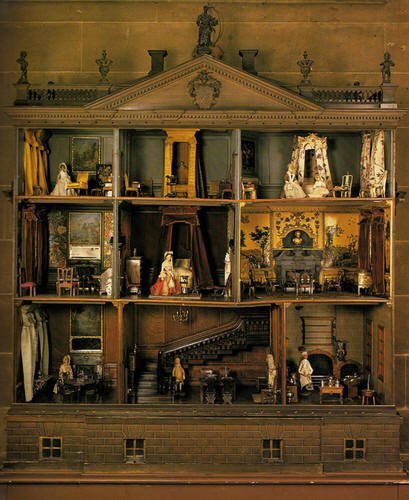
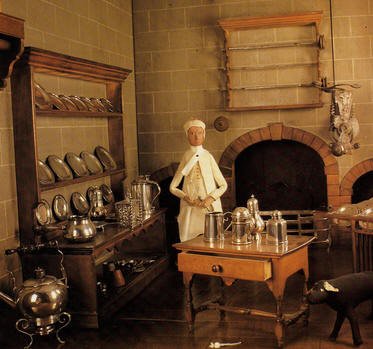
Photographs of the Nostell Priory dollhouse Date of Creation: 1735–1740
In The Sims, this capability receives an interactive continuation: the player changes the house, and the Sims use objects according to the game’s rules. This comparison does not mean that the digital series is a direct and complete descendant of the dollhouse. Rather, both forms make the domestic space a stage for creating everyday scenarios. The difference is that the digital house reacts to the player’s decisions through programmed rules.
Paper Doll: Image and Its Evolution
A paper doll shifts focus from the dwelling to the character’s external appearance. Toy paper figures have been known since the 17th century, and they spread throughout Europe again at the end of the 18th century. The journal «Journal des Luxus und der Moden» described an «English doll» imported from London with sets of clothing and hairstyles in 1791 [2]. The figure remained constant, but its look evolved thanks to a collection of interchangeable parts.
Esther Williams, Merrill Publishing Co. (1950)
Character creation in The Sims develops a similar capability in another form. The interface and level of customization detail have changed across different installments of the series, yet the player has consistently been involved in creating the Sim’s appearance. In The Sims 2, the visual image fits into the family’s history and generational changes; in The Sims 3, personality traits and preferences are added to it; and in The Sims 4, character creation becomes particularly detailed, including the selection of unique characteristics.
Here, the transition from a pre-made figurine to an image the player assembles from various options is crucial. The paper doll and the character editor are not identical, and similarity between them does not prove historical influence. However, both forms give the player the ability to change the hero’s appearance, thereby participating in the creation of a future narrative.
Life as a Journey: Board Games About the Path of Life
Board games offered another model: not building a house or altering the hero’s appearance, but progressing through life as a sequence of decisions. In 1860, Milton Bradley released «The Checkered Game of Life.» Players moved across the board and encountered circumstances related to their actions and their consequences [6]. Life became a path dictated by the game board and its rules.
Checkered Game of Life (1860)
In 1960, Reuben Klamer created the new game, «The Game of Life,» to commemorate the centennial of Milton Bradley. Players moved along a game path, choosing between education and career, starting families, and accumulating capital. The outcome of the game was determined by material results [7]. This game not only modeled life stages but also made a specific concept of success visible.
The Sims differs from tabletop role-playing games by lacking a single path to the finish line. However, both formats translate decisions and everyday life circumstances into gameplay events. The digital series expands on this model: players can not only choose between pre-set stages but also repeatedly reshape conditions, return to mundane activities, and invent their own goals.
2. How Freedom Evolved in The Sims Series
The Sims: Everyday Life Under Direct Control
The first The Sims game was released in 2000 and introduced home life as the core gameplay experience. Will Wright mentioned that he initially conceived of the project as an architecture game, but attention shifted to the residents and their behavior within the created environment [8]. This explains why the house in the game functions simultaneously as a creative object and a system influencing the Sims' actions.
The Sims, Electronic Arts
The first game’s interface makes daily status particularly legible. Needs—hunger, energy, hygiene, socialization, leisure, and others—are represented by separate indicators. The player monitors their decline and chooses actions that replenish them [9]. The freedom to build a home and manage time is combined with the regular management of basic needs. The player often acts as the scheduler: deciding when the simulation should eat, sleep, socialize, or go to work.