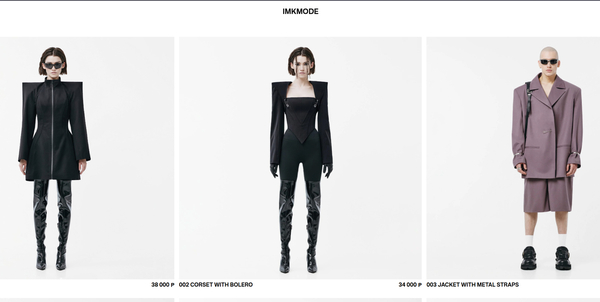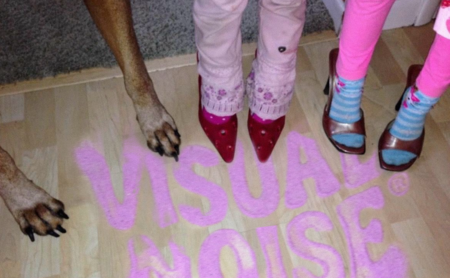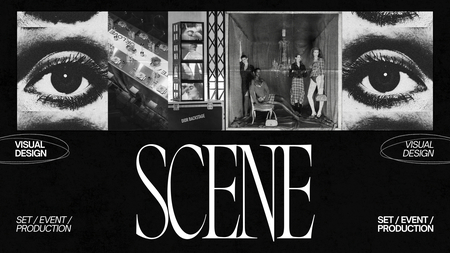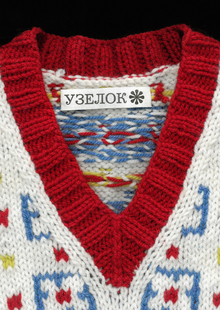
We are accustomed to seeing the finished product: a collection on the runway, a performance on stage, film on screen. But behind every image lies much more—people and their ideas, chance and mistakes, the work with space, costume, light, and dozens of decisions that the viewer usually doesn’t notice.
KULISY is a media platform dedicated to the people and processes behind everything we call «visuals.» Here, fashion intersects with theater, film, photography, and contemporary art.
The core principle of the platform can be summarized this way: we are interested not only in what was achieved, but also in how it was created and why it works.
GOALS AND OBJECTIVES
The primary goal of KULIS is to explore contemporary visual culture through the people who create it and the processes that usually remain behind the scenes. This media platform will introduce the audience to young and established designers, stylists, photographers, directors, actors, artists, set designers, producers, and other participants in creative industries. However, KULIS does not aim to be just another media outlet reporting on new collections, exhibitions, or performances. News here serves more as a catalyst for discussion—asking why something emerged now, how it functions, and what lies behind a particular visual choice. Another of our goals is to cultivate visual literacy and taste. We want to explain complex, specialized topics clearly, without turning our content into a textbook or a lecture.
THEME
The core themes of media are built around five disciplines:
FASHION — designers, brands, stylists, art direction, and production within the fashion sphere.
STAGE — theater, actors, directing, scenography, costume, makeup, and lighting.
IMAGE — photography, film, music videos, composition, and color.
PEOPLE — the individuals who create the visual environment. It is important to discuss not only celebrities but also those whose names the audience may not yet know.
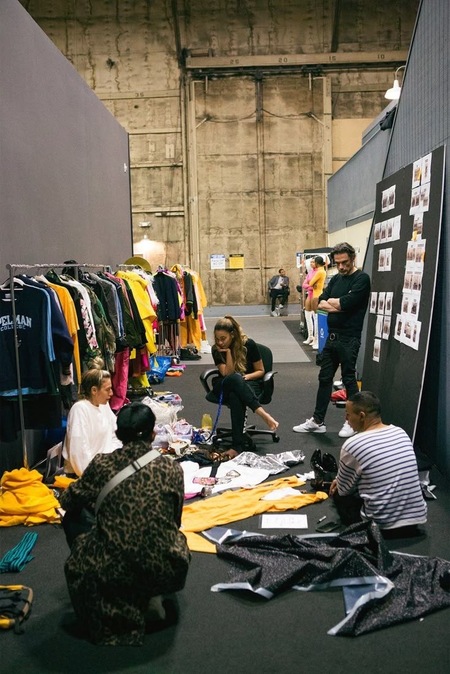
BACKSTAGE — filming, casting, rehearsals, fittings, set design, production, and everything that typically remains outside the final frame.
This last discipline is one of media’s defining characteristics: BACKSTAGE is interested not so much in the finished product as in its creation process.
TARGET AUDIENCE
Our audience consists of young adults aged 18–28, primarily residents of Moscow, Saint Petersburg, and other major cities, who are interested in visual culture and are somehow connected to creative industries. This includes students and young professionals from the fields of fashion, design, photography, film, theater, art, advertising, media, and production. They may create content themselves, work on shoots, or simply aspire to enter the industry. For this audience, merely seeing a beautiful image is not enough. They are interested in understanding how (!!!) it came to be.
Readers of KULIS want to know who conceived the look, why the director chose this specific space, how the scenography is created, what the art director does, and what the stylist’s or producer’s job truly entails.
Moreover, the media is designed not only for professionals. The secondary audience consists of culturally active individuals aged 20–35 who are interested in the same subjects—fashion, theater, film, and art—but who may not work in those fields.
The main unifying quality of this audience is their curiosity about what lies behind the finished image that we consume.
PERSONA
For example, Masha, age 22. She is studying the «Fashion Industry Branding» specialization and is already taking on her first projects. She follows fashion media and Telegram channels about culture, saves references on Pinterest, attends exhibitions and performances, and keeps track of emerging local brands and photographers. She constantly comes across beautiful campaigns but feels like she’s only seeing the surface of the process. She wants to understand why one photoshoot looks compelling while another doesn’t; who makes decisions on set, and how people generally enter the industry. «BACKSTAGE» is her way of understanding.
COMPETITIVE LANDSCAPE
When analyzing competitors, I focus not only on shared themes but also on the type of audience attention the media is competing for: visual, intellectual, and emotional. Among direct competitors, I can identify The Blueprint, Flacon Magazine, and Sobaka.ru. They operate at the intersection of fashion, culture, lifestyle, and the contemporary urban environment, utilizing strong visual content, interviews, video, and social media.
Indirect competitors include media outlets with more specialized focus—such as «Afisha Daily, ” which covers film, theater, music, and culture, or professional theatrical publications that possess deep expertise in their fields. A separate group consists of authorial Telegram channels, YouTube projects, and small digital media from photographers, stylists like Vita Klats, directors, and other figures within the creative sphere.
When comparing competitors, seven criteria are especially important: editorial depth, the connection between fashion and culture, engagement with the process and backstage elements, visual language, authorial stance, tone of voice, and work with subjects. Large fashion and lifestyle media already possess strong visual identities and their own perspective. Theatrical and cultural publications boast deep expertise. Authorial projects often succeed through their personal positioning and proximity to their professional environment. Nevertheless, there remains room for media that unites these qualities and makes the process of creating a visual identity a subject in itself.
FINDINGS FROM THE COMPETITIVE LANDSCAPE
My first conclusion is that a single aesthetic is no longer enough for people. Beautiful visual content has become a baseline requirement for almost any contemporary media. Second, most publications primarily showcase the final result: a collection, a photoshoot, a performance, a film. The creation process itself remains less visible. Third, the audience is interested in gaining insight into the industry. Therefore, backstage looks, stories from professionals’ lives, and conversations with people typically outside the public spotlight can become a vital engagement tool. Fourth, the boundaries between fashion, theater, film, music, and contemporary art are becoming increasingly blurred. Consequently, interdisciplinarity shouldn’t be an add-on topic but the foundation of the editorial system.
Unique Selling Proposition
BEHIND THE SCENES doesn’t just showcase the finished product—it dissects who created it, how they created it, and why. Media connects all artistic industries through a shared interest in the process of image production. If we could distill this into one phrase: Don’t just watch from the sidelines. Peek behind the curtain. Step backstage!
EDITORIAL SYSTEM
Every KULIS piece must answer at least one of these four questions: Who? Who created this visual image? How? How was it created? Why? Why does it look and function this way? What next? How does this project relate to the broader cultural context?
Editorial content can be categorized into three levels. Short-form content includes news items, announcements, curated selections, visual references, and quick observations. Medium-form content features interviews, hero portraits, backstage materials, breakdowns of shoots and performances, and other visual projects. Long-form materials consist of in-depth research, documentary stories, extensive interviews, and large-scale special projects. Importantly, a single piece of content can exist across multiple formats. For instance, a comprehensive article about creating a fashion shoot might evolve into a backstage video, a short analysis for Telegram, and a visual archive of references.
TONE OF VOICE
CULISS speaks intelligently, but without arrogance; expertly, but without academic jargon; vibrantly, but without being childish. The writing may contain irony, but it never seeks to demonstrate superiority over the reader. Professional terminology is used only when genuinely necessary, and complex ideas are explained in clear, everyday language. Rather than trying to sound more intellectual than the reader, the media strives to be engaging. The author’s perspective remains crucial, however—CULISS does not claim absolute objectivity and is unafraid to articulate its own opinion if it is well-supported.
VISUAL CODE
Visually, BACKSTAGE sits between editorial and archive. Its core elements include photography, portraits, details of costumes and sets, behind-the-scenes shots, sketches, and storyboards. Typography, motion design, and working with documentary materials play a crucial role. The visual language can be intentionally imperfect and vibrant—not just the perfect final shot, but also photographs from the set and pages filled with notes.
DISTRIBUTION CHANNELS
Telegram can serve as the primary hub for publishing news, interviews, and short observations. VK will be used to expand reach and adapt editorial content. Short video will be used for quick visual formats: backstage glimpses, rapid-fire segments, case study breakdowns, and introducing featured individuals. Pinterest can function as a visual archive—a repository for references, curated collections, and materials related to major features. A dedicated website or digital platform is necessary for in-depth research, special projects, and building a comprehensive archive. The core principle is not to duplicate the same content across all platforms, but rather to adapt a single narrative to fit the mechanics of each channel.
DATA AND ANALYTICS
The KULIS editorial system is built on more than just intuition. To analyze the audience and competitors, you can utilize analytics tools such as Yandex Wordstat, LiveDune, TGStat, VK, and YouTube analytics. Wordstat will help track search interest across a range of topics—from fashion shoots and set design to professions within creative industries. LiveDune and TGStat allow you to analyze competitors, engagement levels, and the most successful formats. Data from social platforms can be used to monitor audience reactions and adjust the content strategy.
Thus, the editorial cycle looks like this: research $\rightarrow$ idea $\rightarrow$ production $\rightarrow$ publication $\rightarrow$ reaction analysis $\rightarrow$ editorial grid refinement. The data here does not replace the author’s perspective; rather, it helps understand which topics genuinely interest the audience and in what format they are ready to engage with them.