1.Introduction: The LEGO Group
The LEGO Group is a privately held, family-owned toy company headquartered in Billund, Denmark. Founded in 1932 by Ole Kirk Kristiansen.
The brand’s core product is the LEGO brick, a colorful interlocking plastic brick accompanied by an array of gears, minifigures, and other parts. These components form a versatile system that allows for the construction of an almost limitless variety of objects and creations. The name «LEGO» is derived from the Danish phrase LEg GOdt, meaning «play well».

Ole Kirk Kristiansen
1.1.Core Positioning
LEGO’s positioning transcends the category of a mere toy manufacturer; it strategically occupies the intersection of creative play, education, and nostalgia. The brand’s foundational philosophy is «Learning through Play», which posits that play is essential for developing critical life skills such as problem-solving, creativity, and communication.
At the product level, this is embodied in the «System in Play» — the iron-clad technical principle that every LEGO brick produced since 1958 is compatible. This communicates a brand promise of enduring value, limitless possibility, and quality. A brick purchased today connects seamlessly with one made decades ago, reinforcing a brand narrative that spans generations.
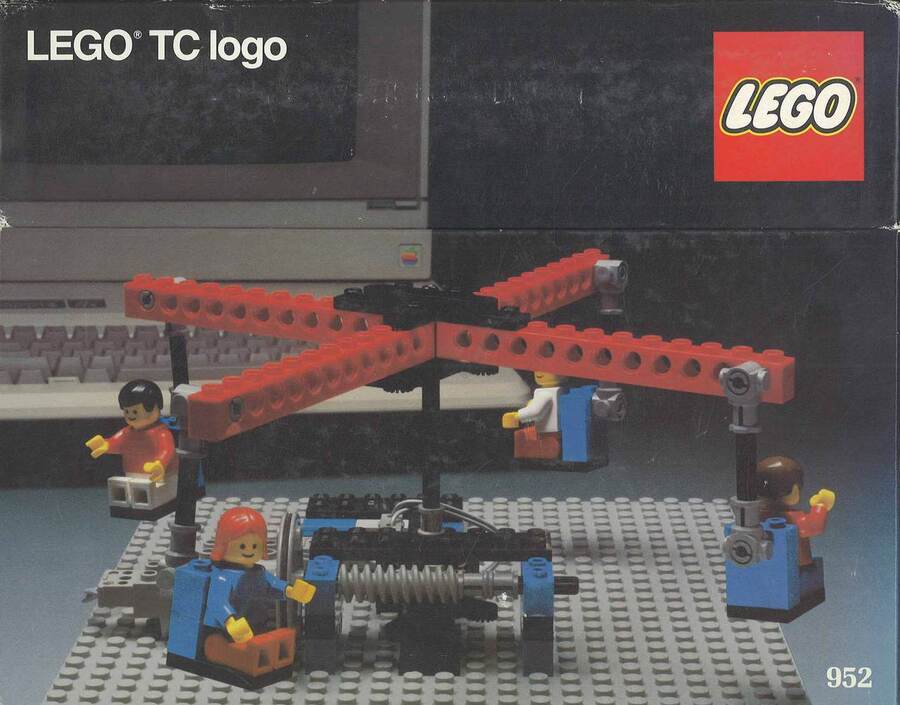
Literature and software pack for LEGO Technic Control 0, containing student and teacher guides among other things
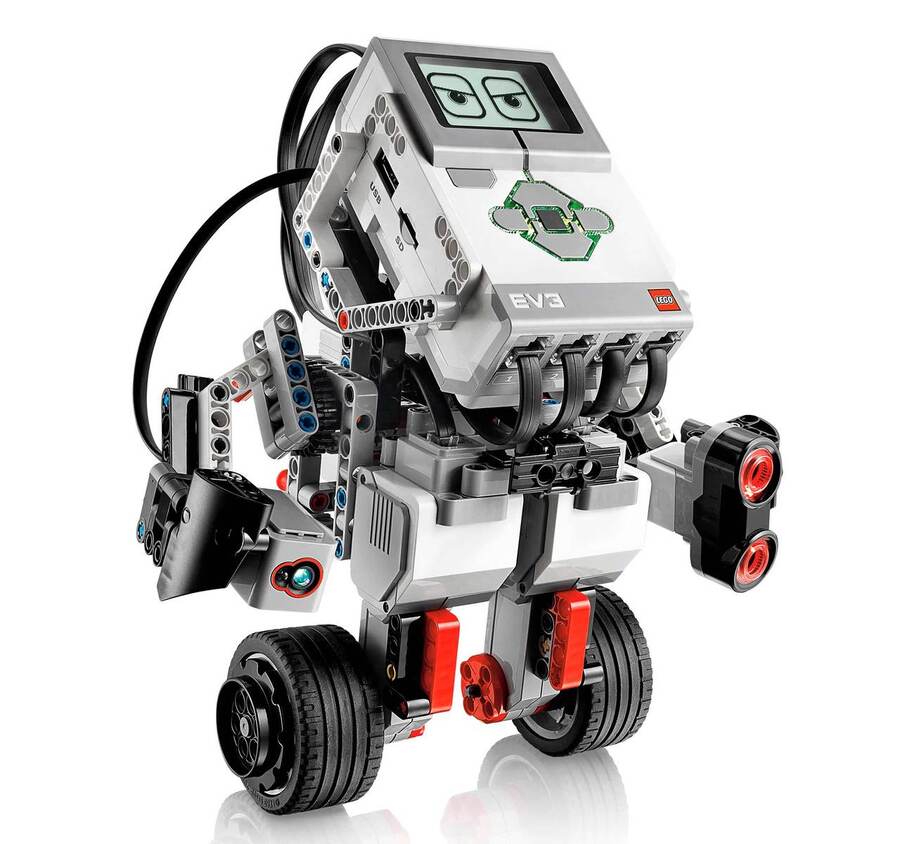
LEGO Education EV3 model
The toy has to be compact in its dimensions without limiting the free expression of imagination. It has to be reasonably priced. It has to be simple and durable and yet offer unlimited variety. It has to be suitable for children of all ages and for both boys and girls. It has to be classic in its presentation, i.e. a classic among toys, needing no renewal. It has to be easily distributed.
LEGO positions itself not as providing a single-play experience but as a platform for imagination, where the consumer becomes the co-creator. This positions the brand powerfully against passive, screen-based entertainment, offering a tangible, hands-on alternative that delivers a sense of accomplishment.
The LEGO Brand Framework
1.2.Target Audience
Primary Consumers (The Users): Children aged 3-12. This group is segmented by age and skill level, from the large, safe bricks of LEGO DUPLO for toddlers, to the complex, themed sets of LEGO City, Friends, and Technic for older children. The communication to this group must be vibrant, action-oriented, and driven by the fantasy and narrative of the play themes (e.g., being a ninja in NINJAGO or a Jedi in Star Wars).
Record Player with Flowers
Secondary Consumers (The Purchasers): Adults, primarily parents and gift-givers, but also a significant and growing segment of Adult Fans of LEGO (AFOLs). The brand’s communication to parents masterfully leverages the tension between «screen time» and «creative time», positioning LEGO as an investment in a child’s development rather than just an expense.
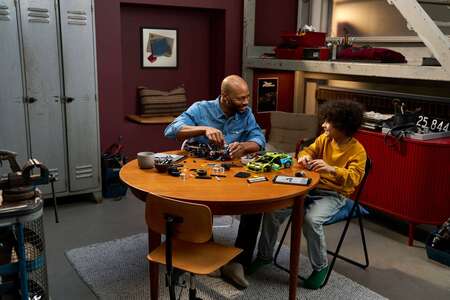
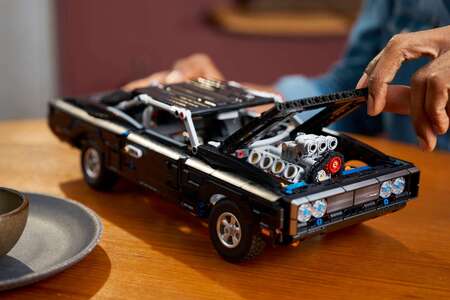
Fast and Furious Dodge Charger R/T Car
For AFOLs, communication shifts to complex product design, intricate display sets (like the Botanical Collection or UCS Star Wars series), and powerful nostalgia, a concept known in communication theory as collective memory. LEGO creates a «transgenerational appeal», uniting grandparents, parents, and children through a shared, tactile language.
Lionel Messi — Soccer Highlights
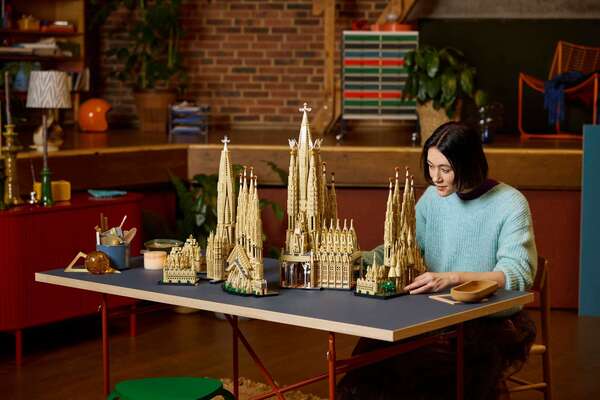
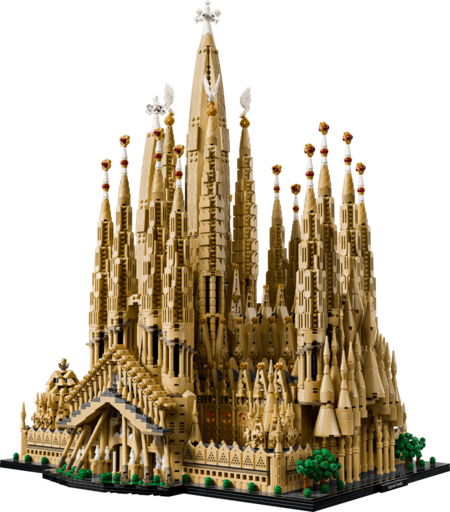
Sagrada Família
2.Communication Channels
LEGO operates a sophisticated, integrated marketing communications (IMC) strategy where every channel is carefully orchestrated to reinforce the brand’s core narrative of creativity. Their public field is not a monologue but a co-creative ecosystem, heavily leveraging earned, owned, and shared media. LEGO treats each social media platform as a distinct channel for a specific audience and content format, avoiding a «one-size-fits-all» approach.
YouTube (Owned & Shared Media): The brand’s most potent communication hub. LEGO uses it mostly for storytelling. Content includes animated series (NINJAGO, Monkie Kid, Friends), «Let’s build» tutorials and shows (Brick Click, Brickventures), fan creations, and stop-motion films. This strategy directly applies the uses and gratifications theory: children watch, learn new ways to play, satisfying their need for inspiration and skill development.
Instagram* (Owned & Shared Media): The primary channel for AFOLs and aesthetic-driven communication. The content strategy is a masterclass in agenda-setting. Instead of simply advertising any set, LEGO posts visually stunning, often surreal brick-built objects (a life-sized typewriter, a garden of brick flowers). This sets the agenda that LEGO is an art form and a sophisticated adult hobby, building desire through visual awe. Participation in bright collaborations, for example current series of reels with big footballing names (Ronaldu, Messi, Mbappe) dedicated to worldcup.
TikTok (Shared & Earned Media): Targets Gen Z and younger Millennials with fast-paced, humorous, and trend-jacking content. The tone is self-aware and playful, often featuring «brick-breaking» POVs or designers revealing «Easter eggs» in new sets. It leverages two-step flow communication, where popular TikTok creators (not just official brand accounts) act as opinion leaders, reviewing sets and starting building trends that then cascade to their followers, lending the message peer-to-peer credibility that the brand alone cannot achieve.
*Meta’s activities (Facebook and Instagram social networks) are prohibited in Russia as extremist
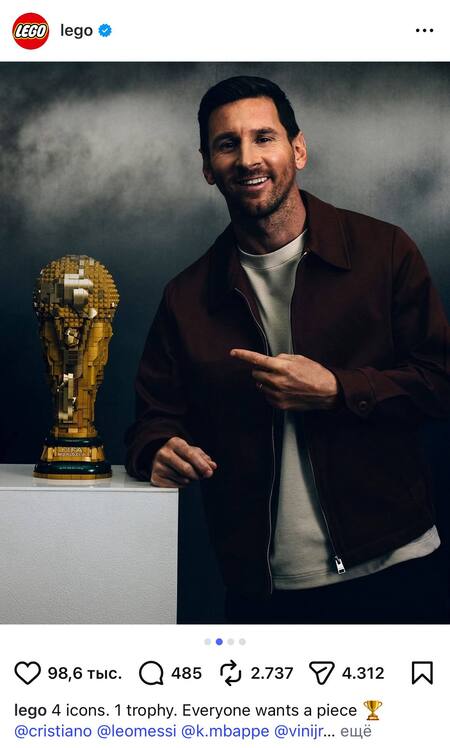
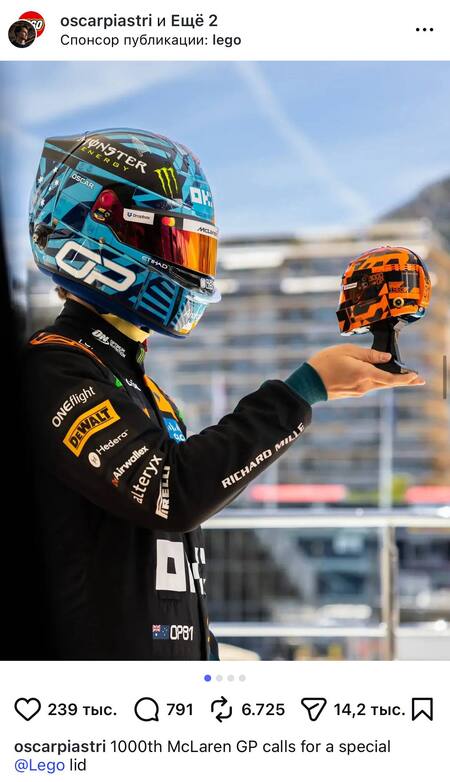
Everyone wants a piece Worldcup collaboration // LEGO and Oscar Piastri
2.1.PR Strategies
LEGO’s PR strategy is built on stakeholder engagement and the creation of cultural moments, moving far beyond simple product launches. Stunt-Driven and Experiential PR: LEGO engineers massive, headline-grabbing stunts to generate global earned media. Building a life-sized, driveable Bugatti Chiron or a 100-foot-tall tower uses the signal theory, communicating product precision, engineering excellence, and brand playfulness in a single, unignorable act. These stunts are covered by both toy-industry and general news media, dramatically extending reach.
LEGO driveable Bugatti Chiron
Community Co-Creation (Earned & Shared Media): The LEGO Ideas platform is PR and innovation tool that embodies pure participatory culture. Fans submit their own designs, others vote, and the winners become official retail products, with the creator receiving a percentage of sales. This strategy generates continuous, passionate earned media discussion for months, fosters intense brand loyalty, and serves as a credible PR narrative that LEGO is a brand «by the fans, for the fans,» effectively countering any corporate, monolithic image.
Corporate Social Responsibility (CSR) with Strategic Narrative Alignment: LEGO’s CSR communication, via the LEGO Foundation and Planet Promise (investments in sustainable materials and renewable energy), is deeply integrated with its brand purpose. They do not frame sustainability as a separate, altruistic act but as a logical extension of «Learning through Play» — a healthy planet for future generations of builders. This builds a reputational shield, generating positive public goodwill and framing the brand as ethically driven, which is increasingly critical for Gen Z parents and future consumers.
3.Lego’s communication practices. Theoretical framework
To analize brand’s success we should turn to the next theoretical lenses: Affordance Theory and Dialogic Theory of Public Relations.
Viewed through these frameworks, LEGO’s communication strategy is notable because it shifts consumers from passive recipients of advertising to active co-creators of the brand experience.