
Introduction
Marimekko is a Finnish design house founded in 1951, known for its bold prints, vibrant colors, and timeless textile designs. The brand originally emerged in post-war Finland as a reaction against minimalism and muted aesthetics, offering instead a visual language built on optimism, individuality, and expressive patterns.
Today, Marimekko operates globally across fashion, home textiles, accessories, and interior design. Its visual identity is strongly associated with iconic floral and geometric prints, most famously the Unikko (poppy) pattern, designed by Maija Isola in 1964.
Marimekko describes its philosophy as centered on «bringing joy to everyday life through bold prints and colors» (Marimekko official brand statement).

Unikko (poppy) pattern by Maija Isola
Marimekko’s positioning can be defined as: «A premium lifestyle design brand that combines art, functionality, and expressive print culture».
Unlike trend-driven fashion brands, Marimekko focuses on timelessness. Its design system is built on strong visual identity rather than seasonal reinvention.
Key elements of positioning:
- Strong emphasis on print-led design identity - Balance between artistic expression and everyday usability - Commitment to sustainability and long product lifecycle - Heritage-driven Scandinavian design with a contemporary global audience
Marimekko’s target audience is global and relatively niche, defined less by age and more by values and aesthetic preferences.
Primary audience: — Creative professionals (designers, architects, artists) — Urban consumers with interest in Scandinavian design — Consumers aged approximately 25–55 — People who value individuality, creativity, and visual expression
Psychographic profile: — Appreciates bold but thoughtful aesthetics — Prefers long-lasting, high-quality products over fast fashion — Interested in design heritage and storytelling — Values sustainability and responsible consumption
Secondary audience: — International design enthusiasts attracted by Nordic culture — Collectors of iconic prints and design objects — Lifestyle consumers buying home decor and accessories
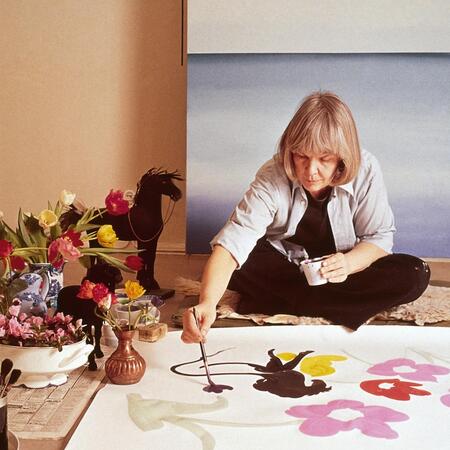
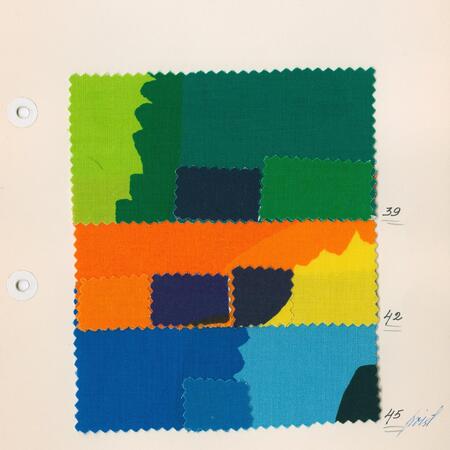
Maija Isola and print production for marimekko
Marimekko’s audience is often described as:
«people who want to express personality through everyday objects» (design commentary, Nordic design studies)
Communication channels
Marimekko uses an integrated marketing communications strategy. This means that the brand presents one clear identity through different channels, including its website, online journal, application, physical stores and social media. Its official platforms include Instagram*, TikTok, Facebook*, Pinterest, LinkedIn and YouTube.
The website gives detailed information about products, design history, sustainability and collaborations. This system can also be explained through the PESO model: Marimekko uses owned media, such as its website and application; shared media, such as social networks; and earned media, such as articles published by independent magazines.
*Recognized as extremist organizations and banned on the territory of the Russian Federation.
illustration of the social media presence
*Instagram and Facebook are recognized as extremist organizations and banned on the territory of the Russian Federation.
One of Marimekko’s main PR strategies is corporate heritage branding. This strategy uses the history of a company as an active part of its modern identity.
Historical patterns, designers and stories are regularly presented in new collections, exhibitions and digital content. Unikko is the clearest example. The pattern was created by Maija Isola in 1964, but it is still used as one of the main symbols of Marimekko. Anniversary campaigns and historical articles give the pattern cultural value and make the brand appear authentic and stable. At the same time, new colours and products keep it visually modern.
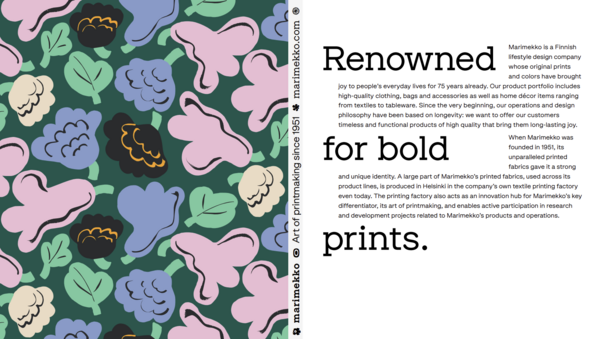
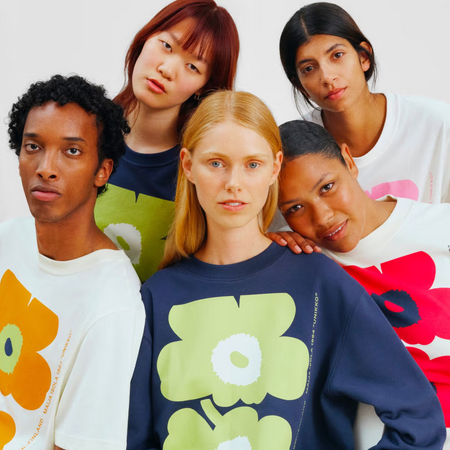
Marimekko also uses country-of-origin positioning, which means that the identity of the brand is connected with the image of its home country. The company regularly presents itself as a Finnish design house, and its communication connects Marimekko with bold prints, practical design and everyday creativity.
The store at Helsinki Airport is an important example because it introduces the brand to international visitors at one of the main entrances to Finland. Finavia describes Marimekko through «Finnish design classics», iconic patterns and a Finnish success story. The store also works as experiential retail PR because travellers can directly enter the brand’s visual world. In this case, Marimekko becomes not only a fashion company but also a visible symbol of Finnish design and national culture.
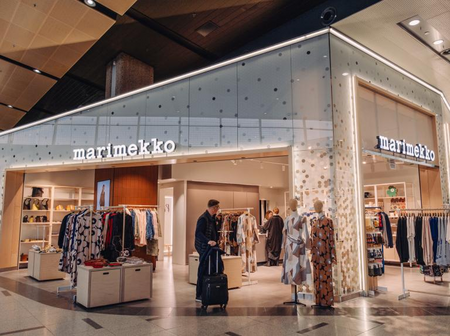
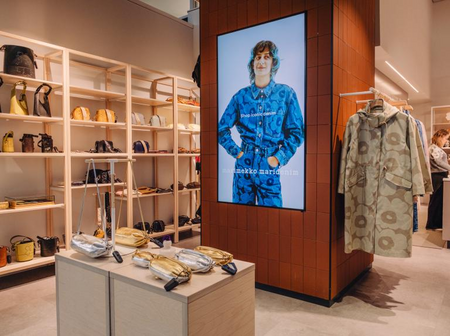
Helsinki Airport store
One of Marimekko’s most active modern PR strategies is co-branding. Co-branding happens when two independent brands create a shared collection and combine their visual identities, audiences and reputations. Marimekko has collaborated with companies from fashion, footwear, technology, furniture and home design. These include UNIQLO, Crocs, adidas, Samsung, IKEA, Artek, CASETiFY and other brands. Because collaborations appear regularly and across many product categories, they should be understood as a long-term strategic brand alliance programme rather than separate advertising events.
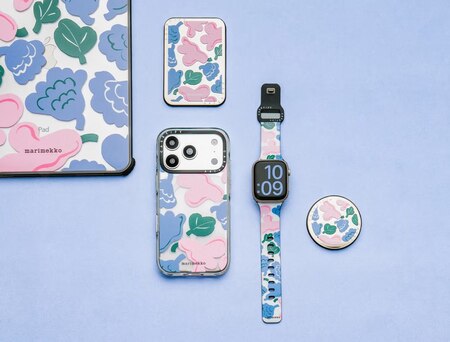
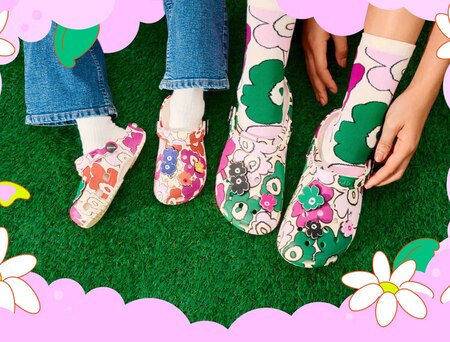
collaborations with CASETiFY and Crocs
Collaborations also support earned media, which is publicity created by independent newspapers, magazines and online publications rather than directly controlled by the brand. This type of coverage gives the collaboration additional visibility and can appear more independent than normal advertising. It also supports brand rejuvenation, a strategy that keeps an established brand interesting for younger and international audiences without removing its historical identity. Modern collaborations, limited editions and media coverage help the company remain culturally relevant, enter new markets and introduce its design language to people who may not know the brand yet.
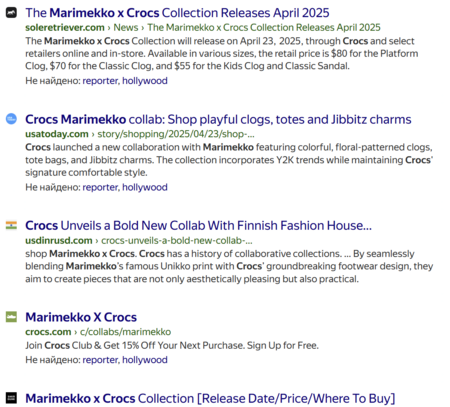
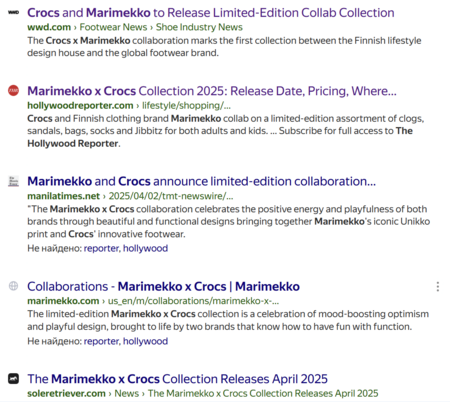
an illustration of the fact that news headlines about collaborations bring additional fame
Theoretical Framework
To study Marimekko’s communication, we use two theories that focus on different parts of the relationship between the brand and its audience.
The Elaboration Likelihood Model helps us understand how the brand persuades people through visual impressions and detailed information. Dialogic Communication Theory helps us analyse how Marimekko communicates with users through its website, membership programme, application and social media.
These theories work well together because Marimekko’s communication has both an emotional and a practical side. The brand uses colours, patterns and positive images to attract attention, but it also provides product information, care advice and different ways to take part in its community. The theories allow us to study not only what Marimekko communicates, but also how users may understand these messages and what kind of relationship the brand creates with them.
PERSUASION: THE ELABORATION LIKELIHOOD MODEL
The Elaboration Likelihood Model describes two routes of persuasion: the central route and the peripheral route.
The central route is based on careful thinking. It becomes important when a person is strongly interested in a product and wants to study its material, quality, function, price or production. The peripheral route is based on faster visual and emotional reactions. In this case, people respond to colour, familiar symbols, positive mood, brand reputation or a feeling of belonging to a group. The choice of route depends on the user’s motivation and ability to process information. A person may first notice a Marimekko pattern while scrolling through social media and later study the product more carefully on the website. This means that both routes can work together: visual communication attracts attention, while facts and explanations help support the final decision.
RELATIONSHIP-BUILDING: DIALOGIC COMMUNICATION THEORY
Dialogic Communication Theory focuses on whether a brand only sends messages or creates a real two-way relationship with its audience. Social media and websites may look interactive because users can click, comment, share or join programmes, but these functions do not always create real dialogue. Important ideas in this theory include the dialogic loop, usefulness of information, return visits, ease of interface and conservation of visitors. The dialogic loop means that users can ask questions and receive meaningful answers. Usefulness of information means that the brand provides content that helps its audience. Return visits and conservation of visitors describe how the brand encourages people to return and stay inside its digital environment.
The theory also helps us separate participation from reciprocity. Users may take part in brand activities, but this does not always mean that they can influence the communication.
screenshot of the marimekko website
Analysis
The previous screenshot shows how Marimekko combines a powerful visual image with information about its design history. The large pink and red Unikko flowers immediately attract attention because of their bright colours, simple shapes and large scale. These elements work through the peripheral route because users can recognise the pattern and feel its positive mood without reading the text.
At the same time, the page presents Unikko as part of Marimekko’s history and connects it with designer Maija Isola. The text about the visible brush strokes makes the pattern feel more personal and artistic. This information supports the central route because it gives the image an author, a story and cultural value and shows that Marimekko does not present Unikko only as decoration. The pattern becomes a symbol of creativity, confidence and Finnish design, which makes it more valuable for the audience.
screenshot of the marimekko website
The product page shows how the central and peripheral routes work together during the shopping process. The large image of the yellow and pink dress creates the first emotional reaction. The bright colours and repeated Unikko flowers make the product easy to recognise and connect it with Marimekko’s visual identity. This is an example of peripheral persuasion.
However, the text on the right gives more detailed information about the dress. It explains the shape, sleeves, pockets, belt and fit, and it states that the product is made of 100% silk. It also connects the pattern with creativity and Maija Isola. This information allows the user to study the product more carefully and decide whether it is worth the price. The visual image creates desire, while the product description reduces uncertainty. Marimekko therefore uses emotion to attract the user and facts to support a more serious purchase decision.
screenshot of the marimekko website
The Care Guide is a strong example of usefulness of information. The page does not only advertise Marimekko products. It gives customers practical advice about how to care for clothing, bags, accessories and home items. The text explains that good care can help products last longer and can reduce the need to buy new things. This supports the central route because the brand gives users a practical reason to see its products as long-term purchases.
The page also makes the sustainability message more believable. Instead of using only general words about responsibility, Marimekko explains what the customer can do in everyday life. The four clear categories also make the page easy to use and help users find the right information. At the same time, the brand invites customers to «play their part», which presents sustainability as a shared activity between Marimekko and its audience.
screenshot of the marimekko website
screenshot of the marimekko website
Brand’s website shows how Marimekko builds a community and encourages users to return. The first page describes members as «Friends» and as part of a community that celebrates creativity and colour. This language makes the programme feel warmer and more personal than a standard loyalty system. The benefits page shows the commercial structure behind this community.
Members receive Unikko points, free shipping, birthday vouchers, discounts and invitations to events. These rewards create clear reasons to return, continue shopping and move to higher programme levels. The application supports the same system by connecting products, personal favourites, behind-the-scenes content and new ways to collect points.
screenshot of the marimekko website
From the perspective of Dialogic Communication Theory, these features support return visits and conservation of visitors because users stay inside the Marimekko digital environment. However, this relationship is mainly based on rewards and activity organised by the brand. It creates participation, but it does not fully prove that users can influence communication.
screenshot of Instagram* post
*Recognized as extremist organization and banned on the territory of the Russian Federation
This example of social media publication helps us study the difference between technical interactivity and real dialogue. The post has thousands of likes and several comments, so the audience clearly has an opportunity to react and express interest. One user says that the products look beautiful, while another hopes that they will be available in the United States. These comments show participation and worldwide interest in the brand.
However, there is no visible answer from Marimekko in the screenshot. Because of this, the post does not show a strong dialogic loop. Users can speak, but the brand’s response is not visible, so the communication remains mostly one-way. The caption also directs users to the Marimekko website, which shows that social media works mainly as a promotional channel leading to shopping. This example supports the idea that Marimekko creates an active audience, but activity and engagement are not always the same as a real two-way conversation.
Conclusion & Recommendations
Marimekko’s communication strategy is effective because it connects a strong visual identity with useful information, design history and international PR activity. The Unikko pattern, bright colours and positive mood attract attention through the peripheral route, while product details, care guides and sustainability information support more careful decision-making through the central route. Corporate heritage branding and country-of-origin positioning strengthen trust and make Marimekko a recognisable symbol of Finnish design. At the same time, collaborations with brands such as UNIQLO and Crocs help the company reach new audiences, create media attention and keep a historical brand culturally relevant.
However, Marimekko’s communication is more participatory than fully dialogic.
The brand could improve its strategy by responding more regularly to comments and criticism, showing how customer feedback influences decisions and creating more co-creation projects with its community. Marimekko should also continue using collaborations, but carefully choose partners whose values support its identity, while providing more specific evidence for sustainability claims.
Marimekko — Finnish Design House — Official Website // marimekko.com. — URL: https://www.marimekko.com/us_en (date of request: 12.06.26)
Marimekkos_year_2025 // company.marimekko.com. — URL: https://company.marimekko.com/app/uploads/2026/03/Marimekkos_year_2025.pdf (date of request: 14.06.26)
Marimekko strategy period 2023 — 2027 // company.marimekko.com. — URL: https://company.marimekko.com/app/uploads/2022/09/Marimekko_CMD_2022_presentations-1.pdf (date of request: 14.06.26)
https://www.marimekko.com/us_en (date of request: 12.06.26)
https://www.instagram.com/marimekko/ (date of request: 12.06.26) * Recognized as extremist organization and banned on the territory of the Russian Federation