Introduction
Index
ConceptHistorical Context: Characteristics of CartoonistsTime and Space in Viewer PerceptionWinsor McCay: «Against the Assembly Line»Raoul Barré. Studios and ComicsPeers in the TradeConclusionBibliography and Image Sources
Concept
All visual mediums are closely interrelated and often borrow techniques from one another to complement existing works. Moreover, professionals working in these fields can easily pivot their focus—for instance, moving from film to photography, or vice versa. However, today’s discussion won’t center on photography. Perhaps film? No. Rather, it will focus on animation, specifically comics and animated films. The key is not to get confused.
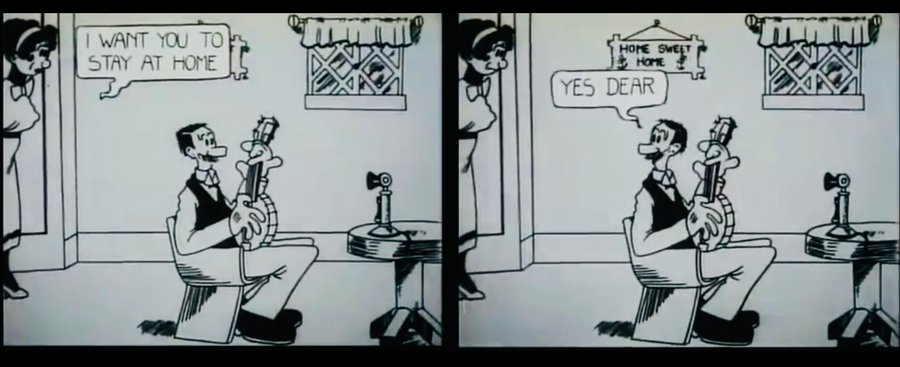
Mutt and Jeff Cast — Domestic Difficulties (1916) by Bud Fisher
The beginning of the 20th century can be described as an era of visual culture transformation.The first steps in animation were taken by artists coming from the fields of newspaper comics or experimentalists. Early animators positioned themselves as caricature artists or «cartoonists» (hereafter I will also refer to them as «cartoonists»). The creators translated patterns, which they were already accustomed to using in newspaper supplements or personal illustrated projects, onto paper. However, they encountered fundamentally new characteristics: time and the illusion of movement. Frames behave very differently on film than they do on paper, and the principles of storytelling in film differ from the comic book industry. This research focuses on analyzing how early animation creators borrowed foundations from comics and how, under the influence of cinema, they transformed these elements into an independent visual language.
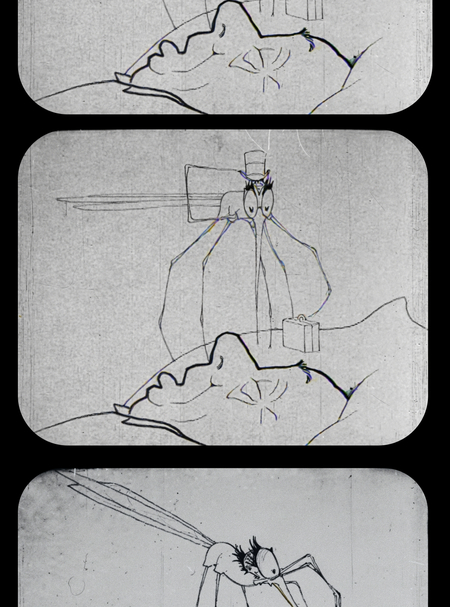
Excerpt. «Alice in Wonderland.» Winsor McCay (1905–1910)
Hypothesis: Although early animation was technologically and visually derived from the language of comics (from the graphical conventions of early animation, starting with similar storyboards to techniques using text bubbles before sound existed in animated films), it transcended staticity through the invention of specific animation principles.I believe that many creators of that era did not view their goal as creating animation per se; rather, they recognized the potential of this medium. As they encountered production challenges, they devised new solutions, which gradually helped to define the boundaries between the comic and future animation.Research Goal: To identify and compare the visual and narrative techniques that early animation inherited from early 20th-century newspaper comics, and to analyze how these techniques were transformed under the influence of movement. I also want to separately examine how the concept of time within a comic differs from the concept of time in animation from the viewer’s perspective.Sources were selected at the intersection of two media forms: on one hand, the theory and history of the comic were analyzed, and on the other, visual examples of early animation were studied, along with their technological characteristics and what is known about them.
Historical Briefing: Characteristics of Cartoonists
Time and Space in Viewer Perception
Winsor McKey: «Against the Assembly Line»
Raoul Barré: Studios and Comics
Fellow peers
Conclusion