Данный проект является учебной работой студента Школы дизайна или исследовательской работой преподавателя Школы дизайна. Данный проект не является коммерческим и служит образовательным целям
Проект принимает участие в конкурсе

Contents

Introduction Communication Channels Theoretical Framework Analysis Conclusion and Recommendations Literature and Image Sources

Introduction
Исходный размер 3680x2390

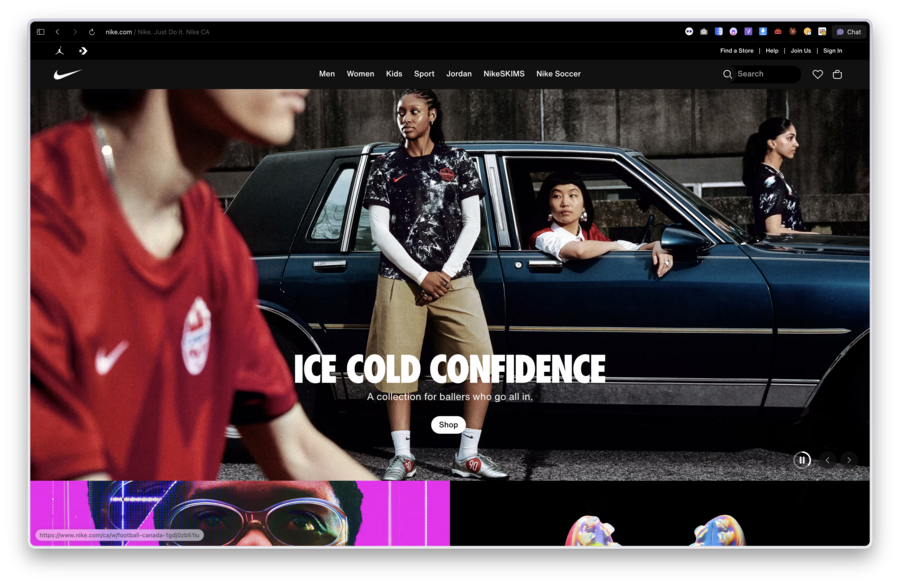
Nike is one of the world’s largest sportswear companies. The brand positions itself as a source of inspiration and innovation for athletes of all levels. Through its products, campaigns, and digital ecosystem, Nike promotes self-improvement, performance, and personal achievement.
Исходный размер 3680x2390

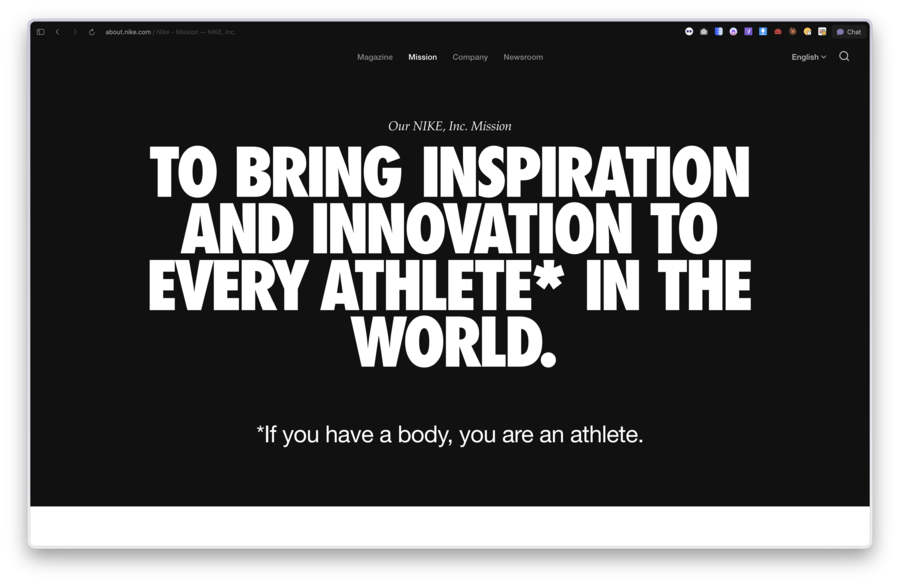
Nike Mission

Today, our mission comes to life through key focus areas: We work to ensure each NIKE employee and future talent has what they need to succeed. We are redefining sport for the next generation, so all youth have an opportunity to play and achieve their greatest potential. We are innovating and scaling more sustainable solutions to help protect our planet. And we champion a transparent, responsible supply chain so people can thrive.

Исходный размер 3680x2390

Target Audience

Nike targets a broad audience that includes professional athletes, fitness enthusiasts, and consumers who identify with sports culture and an active lifestyle. While performance remains a core aspect of the brand, Nike also appeals to people who view sport as a form of self-expression, personal growth, and identity.

Исходный размер 876x1056

The brand communicates with different audience segments through specialized product categories such as Running, Basketball, Training, and Women. This segmentation allows Nike to address specific needs while maintaining a consistent brand message centered on motivation, achievement, and innovation.

Исходный размер 3200x1754

Nike Basketball

Psychographically, Nike’s audience values self-improvement, ambition, and perseverance. Consumers are attracted not only to the functional benefits of Nike products but also to the symbolic meaning associated with the brand and its community of athletes.

Исходный размер 3418x1596

Nike Training

Communication Channels

Nike operates a highly integrated communication ecosystem that combines owned media platforms, social media channels, mobile applications, and large-scale brand campaigns. Rather than relying on a single communication channel, the brand maintains a consistent presence across multiple touchpoints, allowing it to engage consumers throughout different stages of their journey.

Social Media

Social media platforms such as Instagram, TikTok, and YouTube play a central role in Nike’s communication strategy. These channels are used to distribute campaign content, showcase athletes, promote products, and strengthen the emotional connection between the brand and its audience.

Исходный размер 3680x2390

At the same time, Nike’s owned platforms, including its website, Nike App, SNKRS, and Nike Run Club, provide personalized experiences that support long-term engagement and community building.

Исходный размер 3228x1390

Nike App

Исходный размер 3418x1780

Nike SNKRS

Исходный размер 3234x1594

Nike Train Club App

PR Strategy

In addition to digital communication, Nike actively employs PR strategies based on athlete partnerships, cultural storytelling, and purpose-driven campaigns. Through this combination of channels and communication practices, the brand maintains a strong global presence while remaining relevant to diverse audience segments.

Исходный размер 2018x1812

LeBron James x Nike Basketball

Исходный размер 2006x1806

Serena Williams x Nike

Theoretical Framework

This analysis uses two theories from the course: the Elaboration Likelihood Model and Social Identity Theory.

The Elaboration Likelihood Model, developed by Richard Petty and John Cacioppo, explains how persuasive messages influence audience attitudes through two routes. The Central Route appears when people are motivated to think carefully and evaluate strong arguments, while the Peripheral Route works through simple cues such as emotional appeal, popularity, celebrity endorsement, visual attractiveness, or brand familiarity

Исходный размер 3731x1958

Nike Mission: «If you have a body, you are an athlete»

Social Identity Theory, developed by Henri Tajfel and John Turner, explains how people define themselves through belonging to social groups. In brand communication, this theory helps analyze how a company creates a sense of community and makes consumers feel that the brand represents «people like them». For Nike, this is especially important because the brand does not speak only to professional athletes. Its communication expands the idea of athletic identity to anyone who wants to move, improve, compete, or belong to the culture of sport

Analysis

Central Route

According to the Elaboration Likelihood Model, central-route persuasion occurs when consumers carefully evaluate information before making a decision. Nike encourages this type of processing through detailed product descriptions, performance-focused messaging, and explanations of proprietary technologies.

Исходный размер 3234x1532

By providing functional evidence and technical specifications, the brand allows consumers to assess the practical value of its products and make informed purchasing decisions.

Social Identity Theory

From the perspective of Social Identity Theory, Nike’s communication works by transforming sport into a shared identity rather than a narrow professional category. The brand’s mission — «If you have a body, you are an athlete» — expands the meaning of being an athlete and lowers the psychological barrier to belonging. A consumer does not need to be a professional runner, basketball player, or gym expert to identify with Nike. The brand makes athletic identity emotionally available to almost everyone.

This creates a broad in-group united by values such as discipline, ambition, progress, resilience, and self-improvement. Nike’s audience is not addressed only as buyers of shoes or sportswear, but as members of a global community of people who move, train, overcome limits, and define themselves through action. The slogan «Just Do It» supports this identity because it functions less as a product message and more as a behavioral command: to act, to start, to continue, and to prove something to oneself

Исходный размер 3725x1708

Nike Run Club: community challenges and shared athletic identity

At the same time, Nike divides this large identity into smaller subgroups: runners, basketball players, women athletes, sneaker collectors, training communities, and lifestyle consumers. Each group receives its own visual language and communication channel, but all of them remain connected to the same larger Nike identity. This allows the brand to be both universal and specific: it speaks to everyone, while still making each audience segment feel personally recognized.

Nike’s apps strengthen this identity in everyday practice. Nike Run Club and Nike Training Club turn the brand from a product label into a system of repeated action: challenges, guided runs, workouts, progress tracking, and shared goals. Through these tools, the user does not simply wear Nike — they perform Nike’s values through regular movement. This makes brand identification more stable because it becomes connected to habit, personal progress, and community participation

Inclusive Identity Through Campaigns

Nike’s social identity strategy is also visible in its large-scale campaigns. Instead of presenting sport as a space for a limited group of ideal bodies, Nike often frames sport as a universal cultural language that can include different genders, ages, nationalities, abilities, and social backgrounds. This approach helps the brand expand the boundaries of the in-group and make more consumers feel represented inside the Nike community.

The «You Can’t Stop Us» campaign is a clear example of this mechanism. Its split-screen montage connects athletes from different sports and backgrounds into one continuous visual rhythm. The editing suggests that all these bodies belong to the same larger movement, even when they differ by discipline, gender, race, or context. In terms of Social Identity Theory, the campaign reduces distance between separate subgroups and turns them into one symbolic in-group: people who keep moving despite external obstacles

Исходный размер 2792x1397

Nike «You Can’t Stop Us»: different athletes united into one visual rhythm

This is why Nike’s communication is effective beyond direct product promotion. The audience is not only invited to buy sportswear, but also to identify with a collective story of resilience and progress. By repeatedly showing athletes as members of a shared emotional community, Nike strengthens the consumer’s feeling that choosing the brand means joining a wider culture of motivation and overcoming

Conclusions & Recommendations

Nike’s communication strategy is highly effective because it combines emotional inspiration, strong product credibility, and a clear identity system. Through the Elaboration Likelihood Model, the brand works on both levels: it uses powerful emotional cues, celebrity athletes, visual storytelling, and memorable slogans for the peripheral route, while also supporting the central route through product innovation, performance benefits, training tools, and transparent digital services.

From the perspective of Social Identity Theory, Nike’s greatest strength is its ability to make athletic identity feel inclusive. The brand does not limit the idea of an athlete to professionals. Instead, Nike builds a global in-group around movement, ambition, resilience, and self-improvement. Nike Run Club, Nike Training Club, SNKRS, athlete partnerships, and purpose-driven campaigns all help consumers feel that they are not only buying products, but joining a community and performing a recognizable identity

Исходный размер 2740x1306

Nike Membership: the brand turns communication into an ecosystem of benefits and experiences

However, Nike’s communication can become too broad. Because the brand speaks to almost everyone, some audiences may experience the identity as inspiring but not personally specific enough. The company already has strong global campaigns and app-based ecosystems, but it could strengthen emotional loyalty by creating more local and beginner-friendly community layers inside its digital platforms

Recommendation 1 — Local Beginner Communities

One recommendation is to strengthen local beginner communities inside Nike Run Club and Nike Training Club. Nike already has a strong global identity, but for many users this identity may feel too large and abstract. A beginner runner or a person returning to sport after a long break may admire elite athletes, but still feel distant from them. Nike could solve this by creating more specific community layers based on city, level, goal, and lifestyle.

For example, the app could introduce groups such as «First 5K in Moscow», «Beginner Runners», «Women Night Runs», «Student Training Crew», or «Back to Sport Challenge». These groups would make the Nike identity more personal and socially concrete. Users would not only belong to the symbolic global community of athletes, but also to a visible group of people with similar fears, schedules, goals, and physical level

Исходный размер 2728x1412

Nike Run Club: local challenges could make the global Nike identity more personal

This recommendation fits Social Identity Theory because it makes group belonging easier to experience. Instead of identifying only with famous athletes, users could identify with people close to their own situation. It would also support the Central Route by giving practical training guidance, and the Peripheral Route by creating emotional motivation through badges, group names, shared progress, and social recognition

Recommendation 2 — Personalized Identity Paths

Nike could also strengthen its communication by creating more personalized identity paths inside its digital ecosystem. At the moment, Nike already offers separate platforms and categories such as Nike Run Club, Nike Training Club, SNKRS, Nike By You, Basketball, Running, Training, and Women. However, these experiences could be connected more clearly into individual user profiles based on motivation, skill level, sport interests, and personal goals.

For example, a user could choose an identity path such as «First-Time Runner», «Sneaker Collector», «Home Training Beginner», «Basketball Progress», or «Wellness Routine». Each path could combine relevant app content, product recommendations, challenges, athlete stories, and visual badges. This would make Nike’s communication feel less like a general motivational message and more like a personal development system

Исходный размер 3723x1721

Nike By You: personalization can turn brand identity into self-expression

This recommendation fits both Social Identity Theory and the Elaboration Likelihood Model. On the identity level, users would feel that Nike understands their specific subgroup and personal stage. On the central route, they would receive useful and relevant information connected to their goals. On the peripheral route, badges, profile titles, visual progress, and personalized design elements would create emotional attachment and make the experience more memorable

Recommendation 3 — Body, Mind and Life Communication

Nike could further develop communication around holistic fitness: not only performance, speed, and visible progress, but also recovery, rest, mental balance, nutrition, and everyday well-being. This direction already exists in Nike Well Collective, but it could be integrated more clearly into the brand’s app ecosystem and campaign language.

For example, Nike could create a «Body, Mind and Life» section inside Nike Training Club that connects workouts with recovery routines, breathing practices, short mindfulness sessions, sleep recommendations, and motivational content from athletes who discuss burnout, injury, fear, or returning to sport after a break. This would make Nike’s communication more emotionally sustainable and relevant for users who do not identify with constant achievement or competitive performance

Исходный размер 1608x1062

Nike Well Collective: holistic fitness across body, mind and life

This recommendation is especially important for broadening the brand’s social identity. If Nike only communicates strength, victory, and overcoming limits, some users may feel excluded when they are tired, injured, anxious, or just beginning. A stronger wellness layer would show that belonging to the Nike community is not limited to peak performance. It can also include recovery, self-care, and long-term consistency

Conclusion

Overall, Nike already has a strong communication strategy because it connects product performance, emotional storytelling, and community identity. The brand’s ecosystem — Nike App, Nike Run Club, Nike Training Club, SNKRS, and Membership — allows Nike to communicate with users not only at the moment of purchase, but also during training, self-expression, and everyday lifestyle choices.

The main recommendation is to make this community structure more specific and personally relevant. Local beginner groups, personalized identity paths, and stronger body-mind-life communication would help users find smaller and more relatable groups inside the global Nike identity. This would support the Central Route through useful guidance and the Peripheral Route through badges, emotional motivation, and visual progress, while strengthening the user’s feeling of belonging

Библиография
1.

Petty, R. E., Cacioppo, J. T. Communication and Persuasion: Central and Peripheral Routes to Attitude Change. New York: Springer, 1986

2.

Tajfel, H., Turner, J. C. «An Integrative Theory of Intergroup Conflict». In The Social Psychology of Intergroup Relations, edited by W. G. Austin and S. Worchel. Monterey, CA: Brooks/Cole, 1979

3.

Nike. «Nike Mission». URL: https://about.nike.com/en/mission/ (accessed: 14.06.2026)

4.

Nike. «Nike Membership». URL: https://www.nike.com/membership (accessed: 14.06.2026)

5.

Nike. «Nike Run Club App». URL: https://www.nike.com/nrc-app (accessed: 14.06.2026)

6.

Nike. «Nike SNKRS App». URL: https://www.nike.com/snkrs-app/ (accessed: 14.06.2026)

7.

Nike. «Nike By You». URL: https://www.nike.com/Nike-by-you/ (accessed: 14.06.2026)

8.

Nike. «Nike Well Collective». URL: https://about.nike.com/en/newsroom/releases/nike-well-collective (accessed: 14.06.2026)

9.

Nike, Inc. Annual Report 2024. URL: https://www.sec.gov/Archives/edgar/data/320187/000032018724000044/nke-20240531.htm (accessed: 14.06.2026)

Источники изображений
1.2.

Nike Run Club App — https://www.nike.com/nrc-app

3.

Nike «You Can’t Stop Us» campaign — https://www.nike.com/you-cant-stop-us

4.5.

Nike Membership — https://www.nike.com/membership

6.7.
Загрузка...
Мы используем файлы cookies для улучшения работы сайта и большего удобства его использования. Более подробную информац...
Показать больше