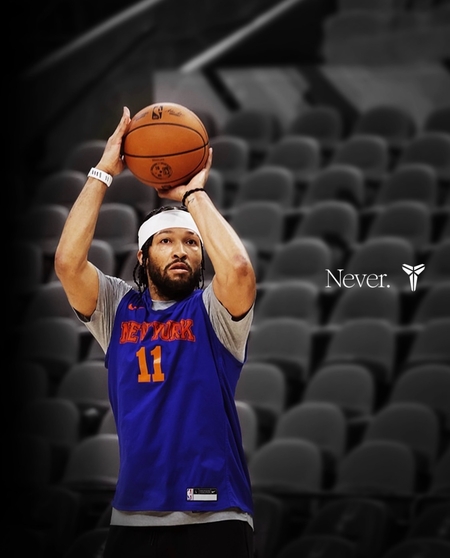
Данный проект является учебной работой студента Школы дизайна или исследовательской работой преподавателя Школы дизайна. Данный проект не является коммерческим и служит образовательным целям
Проект принимает участие в конкурсе

1. Introduction

Nike, Inc. is one of the world’s largest designer, marketer, and distributor of athletic footwear, apparel, equipment, and accessories. The company began in 1964 as Blue Ribbon Sports, a small operation founded by University of Oregon track athlete Phil Knight and his former coach Bill Bowerman, who initially imported Japanese running shoes for resale in the United States. The company adopted the name Nike — after the Greek goddess of victory — in 1971, alongside the now-famous Swoosh logo. Knight’s own memoir gives a first-hand account of this period, describing the company’s transformation from a small import business run out of the back of a car into a global corporation, driven by a culture that was unusually tolerant of risk and personal eccentricity for the corporate world of the time [1].

Today Nike is headquartered in Beaverton, Oregon, and is publicly traded on the New York Stock Exchange. The company designs and markets products across multiple categories — running, basketball, football (soccer), training, and lifestyle — and operates through both wholesale partners and an increasingly important direct-to-consumer (DTC) digital ecosystem, including the Nike App, the SNKRS app, and nike.com [2].
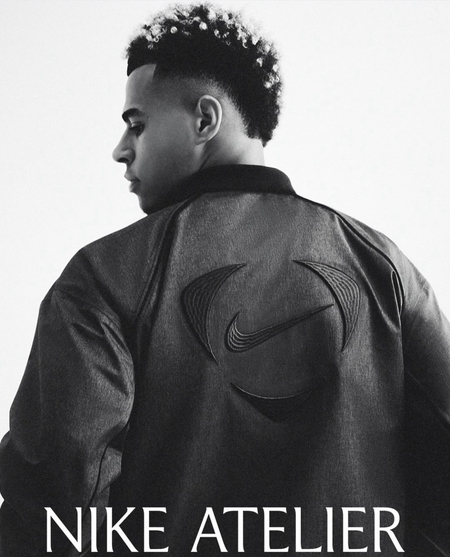
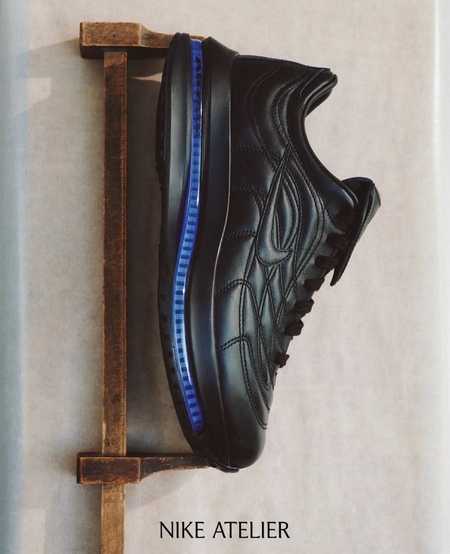
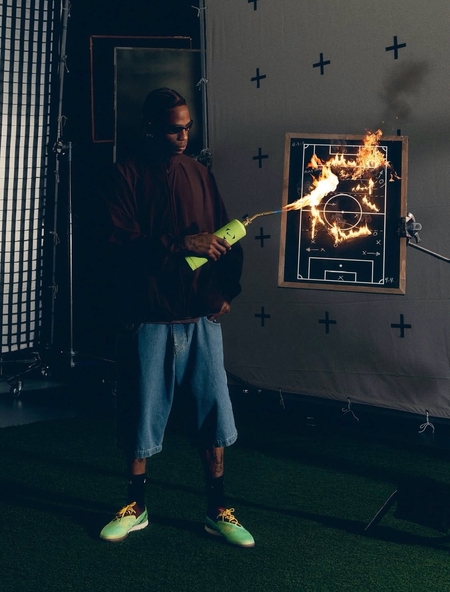
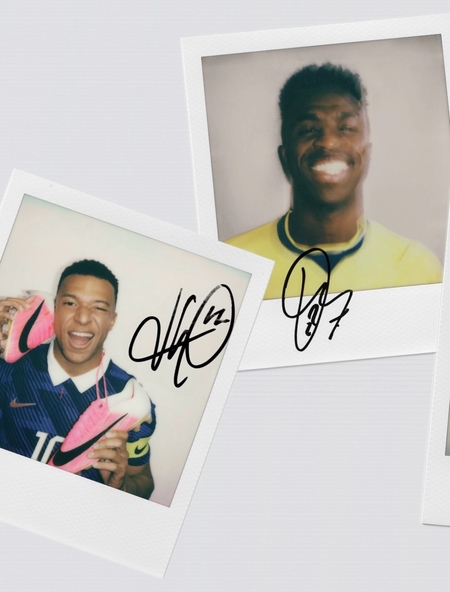
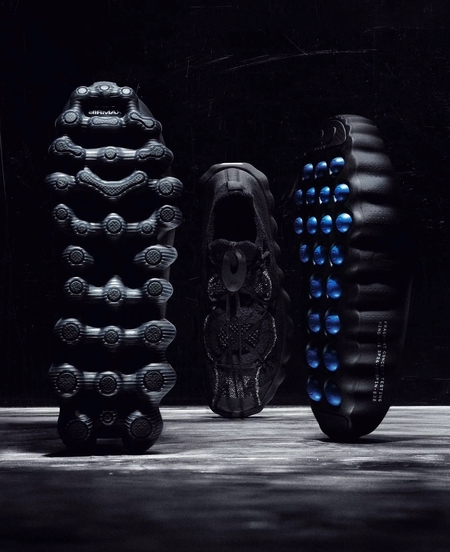
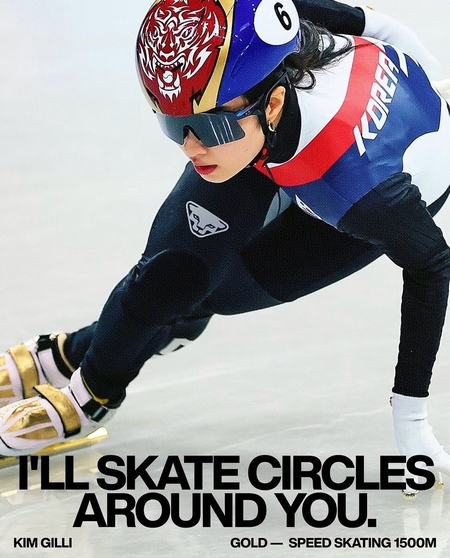
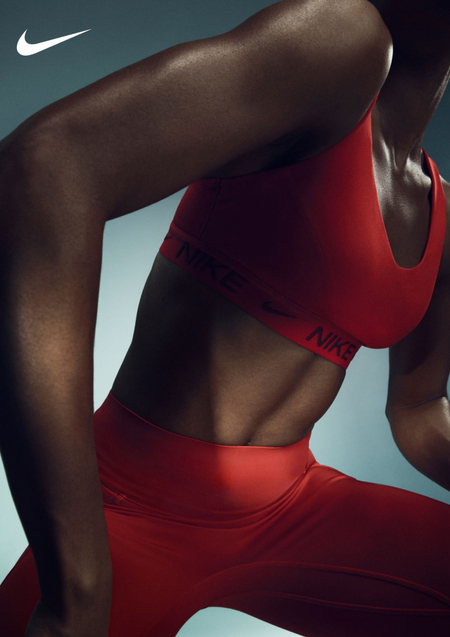
Photos from the brand’s social media

Nike’s positioning is built less around the technical attributes of its products than around the emotional and aspirational meaning those products carry. Academic analysis of Nike’s promotional history shows that the brand consistently pairs product communication with narratives of personal achievement, willpower, and self-transcendence, using elite athletes as embodiments of these values, so that the brand’s identity becomes inseparable from the athletes who represent it [3]. The 1988 'Just Do It' slogan remains the clearest articulation of this approach: rather than describing a shoe, it issues a universal imperative that can be applied to any goal, in any context, by any person. A widely cited case study of the campaign argues that its lasting success stems from this open-ended, identity-based structure, which allows the same three words to be reused across decades of otherwise very different advertising executions, from elite athlete profiles to everyday-runner stories [4].

This emotionally driven positioning supports a premium pricing strategy. Brand-management literature notes that Nike sustains higher price points than most competitors by continuously reinforcing perceived superiority through innovation narratives (Nike Air, Flyknit, Nike React), athlete endorsements, and a tightly controlled visual identity across markets, which together build the kind of brand equity that allows a company to charge more for what is, materially, a comparable product [5]. More recent strategic analyses describe how, since the late 2010s, Nike has layered a 'Consumer Direct Offense' strategy onto this brand foundation — reducing reliance on third-party retailers in favour of owned digital channels that let the company control both the brand narrative and the customer data generated around it, particularly through the Nike App and SNKRS [2].
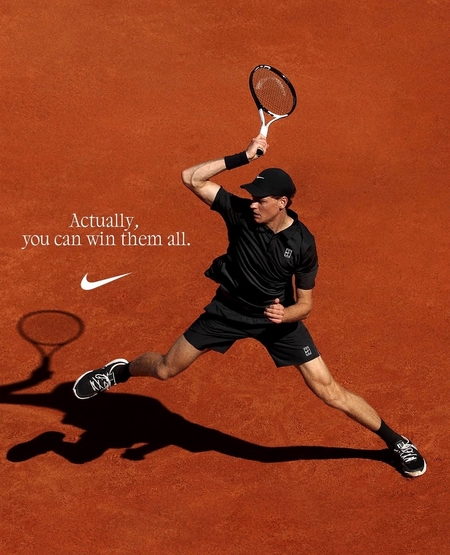
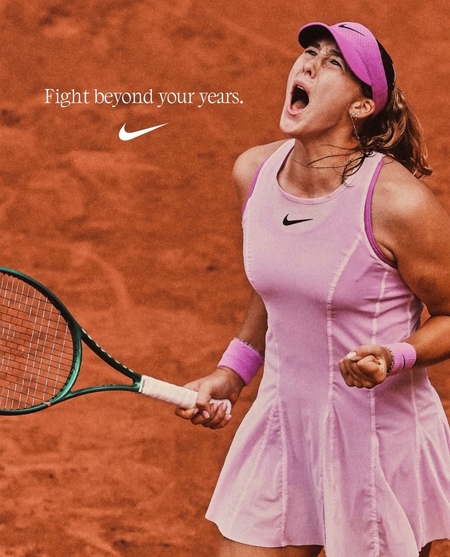
Photos from the brand’s social media

Nike’s communication addresses several overlapping audience segments rather than a single demographic group. Yan, Brown and Greenleaf (2022) [2] note that Nike’s core target group is commonly described as athletic or active consumers across a broad age range, roughly 15 to 45, with pricing and brand positioning calibrated to a relatively affluent socioeconomic profile. Within this broad target, three overlapping sub-segments are particularly relevant to a fashion-communication analysis:

• Performance-oriented consumers: athletes and fitness participants who represent the traditional core of Nike’s identity. Communication aimed at this group tends to foreground product performance claims and technology naming (Air, Zoom, React, Flyknit) — although, as discussed in section 4, even this seemingly 'rational' messaging is usually wrapped in emotionally framed storytelling.

• Lifestyle and heritage consumers: adult consumers who associate Nike with nostalgia, status, and quality, often purchasing retro silhouettes such as the Air Jordan or Air Max lines independently of their athletic use.

• Streetwear and fashion-driven consumers: a segment for whom Nike functions primarily as a cultural and fashion signifier. Limited-edition collaborations and the SNKRS app’s scarcity-driven release model are aimed squarely at this group, and are central to the 'hype' culture that now surrounds sneaker releases.
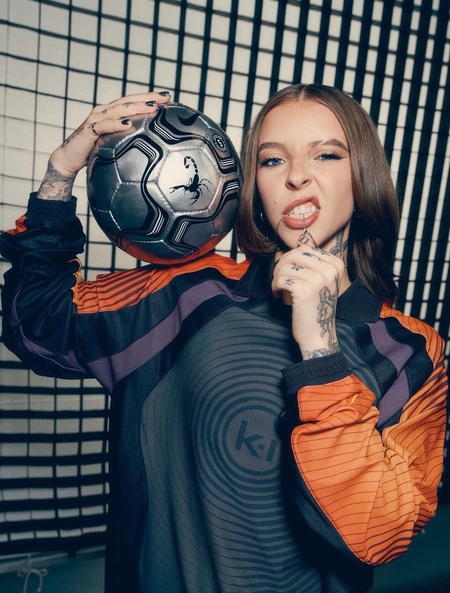
Photos from the brand’s social media

An experimental study on athletic-apparel advertising specifically tested how Nike-branded messages are processed by consumers with different motivational profiles, distinguishing between utilitarian motives (focused on product function) and expressive or identity-based motives (focused on what the product communicates about the wearer). The study’s framing — built directly on the Elaboration Likelihood Model discussed in section 3 — illustrates that Nike’s audience cannot be treated as a single, uniformly motivated group, and that the brand’s communications need to work on both a functional and a symbolic level at the same time [6].

2. Communication Channels

Nike operates a multi-platform communication ecosystem in which each channel plays a distinct role within the broader brand narrative. Research into Nike’s social media strategy identifies a large, multi-platform presence as one of the central pillars of the brand’s marketing approach, working alongside direct-to-consumer e-commerce and design innovation to sustain engagement and awareness [2].

• Instagram* (@nike): the brand’s primary visual storytelling channel, used for campaign imagery, athlete content, product launches, and short-form video (Reels). Research on social-networking-site use for following brands found that, compared with Facebook*, Twitter*, and Snapchat, Instagram* use is particularly associated with gratifications related to following fashion, self-presentation, and sociability — and that Instagram* followers show the strongest brand-community engagement and commitment of the platforms studied [7].
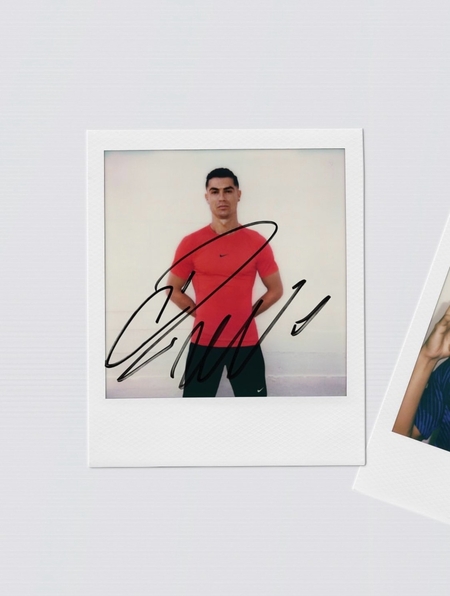
Photos from the brand’s social media

• YouTube (Nike): home to Nike’s long-form 'event' advertising — multi-minute cinematic films such as Dream Crazy and You Can’t Stop Us, which function closer to short documentaries than to traditional commercials and are designed to be discussed, shared, and re-watched rather than simply viewed once [8].

Исходный размер 1469x821

Photos from the brand’s social media

• TikTok (@nike) and X/Twitter* (@Nike): used respectively for trend-driven, participatory short-form content aimed largely at Gen Z audiences, and for real-time cultural commentary, sponsorship announcements, and rapid response to sporting and cultural events.

Исходный размер 1560x689

Photos from the brand’s social media

• Owned apps — Nike App, SNKRS, Nike Training Club, Nike Run Club: the infrastructure of the Consumer Direct Offense strategy, combining e-commerce, loyalty, community features, and exclusive product drops [2]. • nike.com: the corporate hub, hosting e-commerce, technology explainer content, and sustainability reporting under the 'Move to Zero' initiative.

Исходный размер 1684x1190

Photos from the brand’s official site

Athlete endorsement remains the structural backbone of Nike’s public relations activity. Academic work on Nike’s promotional strategy describes endorsement not simply as advertising but as a long-term relationship-building exercise, in which athletes such as Michael Jordan, Serena Williams, Cristiano Ronaldo, and LeBron James become semi-permanent extensions of the brand, lending it credibility, cultural relevance, and access to fan communities that Nike could not reach through paid media alone [3].

Since the late 2010s, Nike has increasingly used public relations to position itself on social and political issues, most visibly through the 2018 'Dream Crazy' campaign featuring Colin Kaepernick, the former NFL quarterback known for kneeling during the U.S. national anthem in protest against racial injustice. This campaign generated an unusually large volume of academic and trade commentary and is treated in several studies as a landmark case of 'corporate political advocacy' — a communication strategy in which a company takes a public political position even at the risk of alienating some of its audience [9]. A separate communication-studies case study applied visual analysis to the Kaepernick billboard and the accompanying film, examining how Nike’s choice of imagery and narration was constructed to align the brand with broader social-justice discourse rather than with a specific product [10]. Both studies converge on a similar tension: the campaign was commercially highly effective — Nike’s online sales and stock price rose in the weeks following its release — while simultaneously inviting accusations that the brand was using a genuine social movement for commercial gain [9, 10].
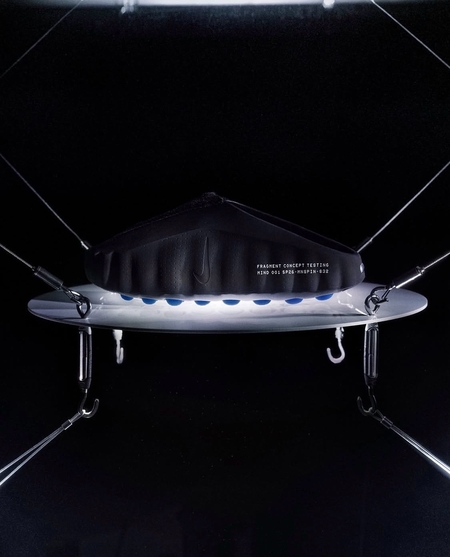
Photos from the brand’s social media

Nike’s SNKRS app exemplifies a PR and marketing approach built on scarcity and exclusivity. Strategic reviews of Nike’s recent performance describe how the Consumer Direct Offense initiative was intended to deepen the brand’s relationship with consumers by giving Nike direct access to purchase data and community behaviour, while limited 'drops' of collaboration sneakers generate disproportionate media coverage relative to their unit sales [2].

Nike communicates its environmental commitments primarily through the 'Move to Zero' platform, which combines product-level claims (recycled polyester, Nike Grind material recovery, Flyknit) with corporate-level targets for carbon and waste reduction. Industry commentary describes Move to Zero as one of Nike’s most prominent recent communication initiatives, while also noting that it has become a focal point for criticism of the brand’s environmental claims [11]. This tension is examined in more detail in section 4.3, where Move to Zero is used as a case study of the limits of central-route, evidence-based messaging when the underlying claims are contested by external parties.

3. Theoretical Framework

The Elaboration Likelihood Model was developed by Petty and Cacioppo (1986) as a dual-process model of persuasion. It proposes that attitude change can occur through two distinct routes. The central route involves careful, effortful evaluation of the actual arguments and evidence contained in a message; attitudes formed this way tend to be relatively stable and predictive of behaviour. The peripheral route involves the use of simple cues — such as source attractiveness, emotional tone, repetition, or the perceived credibility of an endorser — to form an attitude without close engagement with the substantive content of the message; attitudes formed this way tend to be more easily changed by a subsequent counter-message.

Which route a given audience member takes depends on two factors: motivation (how personally relevant or interesting the topic is to them) and ability (whether they have the knowledge, time, and cognitive resources to process the message carefully). A 2022 review of ELM research in the context of persuasive advertising summarises this distinction clearly, explaining that consumers who are engaged in careful deliberation about a product’s value for money are taking the central route, while consumers who lack the motivation or ability to attend to product features instead rely on external, peripheral cues to reach a decision [12]. The same review notes that consumer characteristics such as gender and place of residence can influence which route a person is more likely to take for a given product category, which is one reason why a single Nike campaign can be 'read' very differently by different segments of its audience [12].

Исходный размер 644x460

«Just do it» play russian campaign 2013

ELM has been applied specifically to fashion and apparel contexts. A 2022 study of online comments and impulse buying in live-streamed clothing sales used the central/peripheral distinction to separate comment quality and comprehensiveness (central-route cues) from comment quantity and commentator credibility (peripheral-route cues), finding that both types of cue shaped consumers' attitudes and purchasing behaviour, but through different psychological mechanisms [13]. This is directly relevant to Nike: as section 4 will show, the brand’s communication frequently combines both types of cue within a single piece of content.
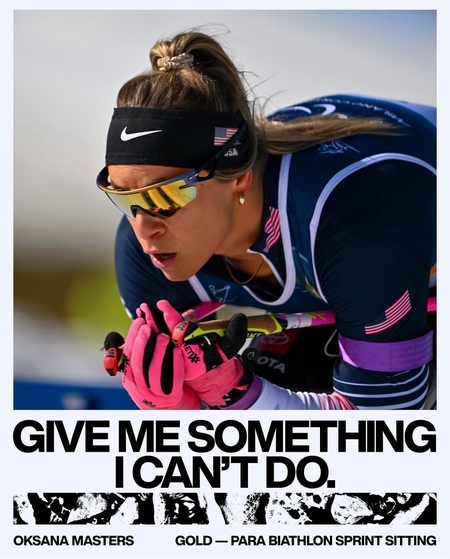
Photos from the brand’s social media

Uses and Gratifications Theory originates in mass-communication research and was formalised by Katz, Blumler, and Gurevitch (1974) [14], who argued that audiences are not passive recipients of media but active agents who select media and content to satisfy specific psychological and social needs. Rather than asking 'what does media do to people', U&G asks 'what do people do with media, and why'. Classic gratification categories include information-seeking, entertainment, social interaction, and identity expression.

U&G has been widely applied to social media and brand communication. A conceptual review of social media engagement research found that emotional and cognitive content gratifications — such as user-generated content, tutorials, and influencer collaborations — are associated with higher engagement in the form of likes, shares, comments, and saves [15]. More specifically, a large quantitative study comparing how consumers use Facebook*, Twitter*, Instagram*, and Snapchat to follow brands found that different platforms satisfy different gratifications: Snapchat use was most associated with passing time and sharing problems, while Instagram* use was most strongly associated with showing affection, following fashion, and demonstrating sociability — and Instagram* users reported the highest levels of brand-community engagement and commitment of any platform studied [7]. For a fashion-oriented brand such as Nike, this finding is especially significant: it suggests that Instagram* is not simply one channel among several, but the platform structurally best suited to the fashion-identity gratifications that much of Nike’s lifestyle and streetwear audience is seeking.
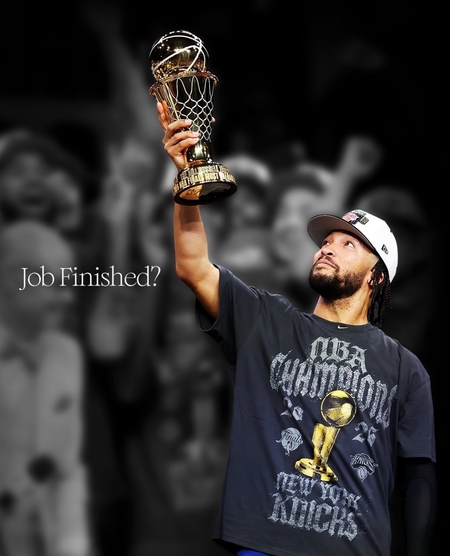
Photos from the brand’s social media

ELM and U&G theory address different halves of the same communication process. ELM explains how a given Nike advertisement or post is likely to be processed once it reaches an audience member — whether through careful evaluation of arguments (central route) or through reliance on emotional and credibility cues (peripheral route). U&G theory explains why that audience member encountered the content in the first place — what need (information, entertainment, identity expression, social interaction) led them to be on that platform, following that account, at that moment. Combining the two allows this analysis to move from the level of the individual message (section 4.1–4.2, using ELM) to the level of the overall platform strategy (section 4.3, drawing more on U&G), before returning to an integrated evaluation in section 5.

4. Analysis

Nike’s communication around its footwear technology platforms — Nike Air, Flyknit, React, and ZoomX — represents the clearest examples of central-route messaging in the brand’s output. These pages typically present specific, falsifiable claims: descriptions of cushioning materials, energy-return characteristics, and the design problems each technology was created to solve. Under ELM, this kind of content is aimed at audience members who are both motivated (because they are making a considered purchase decision, often for a performance use-case) and able (because the brand provides the information in a structured, comparison-friendly format) to process the message carefully [12, 16].

It is worth noting, however, that even this 'rational' content rarely stands alone. Technology explainer pages are typically accompanied by athlete testimonials, high-production photography, and narrative framing about overcoming physical limits — peripheral cues layered on top of central-route content. This dual structure matches the pattern identified by Tian (2022) [13] in fashion live-streaming, where central- and peripheral-route cues were found to operate simultaneously rather than as alternatives, each influencing different aspects of the audience’s attitude.

Исходный размер 644x460

«Just do it» play russian campaign 2013

The 2018 'Dream Crazy' campaign, narrated by Colin Kaepernick to mark the 30th anniversary of 'Just Do It', offers a rich case study of peripheral-route persuasion operating at scale. The advertisement does not describe any specific product. Instead, it presents a sequence of athletes — some famous, some not — overcoming physical and social obstacles, narrated in Kaepernick’s voice, and closing with the line that audiences should ask not whether their dreams are crazy, but whether they are crazy enough [17].

From an ELM perspective, the persuasive power of this advertisement lies almost entirely in peripheral cues: the emotional tone of the narration, the symbolic weight of Kaepernick himself as a contested but high-profile figure, the cinematic production quality, and the cumulative effect of seeing many different bodies and stories within two minutes. There is no product argument to evaluate centrally. Academic analysis of the campaign frames this choice as a form of corporate political advocacy — a deliberate decision to take a public political position, which research suggests can be commercially effective precisely because it generates strong affective reactions (both positive and negative) rather than neutral, considered evaluation [9].

Исходный размер 1280x720

«Dream Crazy» ft. Colin Kaepernick — 2018

This same study highlights an important tension that is directly relevant to ELM: attitudes formed through the peripheral route are typically less stable than those formed through the central route. Hoffmann et al. (2020) found that, alongside the celebratory framing of individual achievement, Nike’s campaign was simultaneously read by different audience segments as either a sincere alignment with a social-justice cause or as an opportunistic use of that cause for commercial gain — a polarisation pattern consistent with peripheral-route attitudes, which are more easily pulled in different directions depending on which cue (the athlete’s politics, or the brand’s emotional message) a given viewer attends to. A separate visual-analysis case study similarly concludes that the campaign’s persuasive force came from its symbolic and aesthetic choices rather than from any argument about Nike products, while noting that this made the campaign vulnerable to being read as either activism or marketing depending on the viewer’s prior attitudes [10].

From a Uses and Gratifications perspective, Dream Crazy can also be understood as content designed to satisfy entertainment and identity-expression gratifications rather than information-seeking ones. Its distribution on YouTube — a platform associated with longer-form, opt-in viewing — fits the U&G principle that audiences actively select content matching the gratification they are seeking at that moment; a viewer who clicks on a two-minute cinematic advertisement on YouTube has, in effect, already opted into an entertainment- or identity-oriented viewing experience, which is a very different starting point from a viewer encountering a 15-second product ad inserted into unrelated content [14,8].

Исходный размер 1800x962

«Dream Crazy» ft. Colin Kaepernick — 2018

Nike’s Instagram* presence is well explained by the fashion- and identity-related gratifications that research has found to be particularly associated with that platform. Phua, Jin, and Kim (2017) [7] found that, of the platforms they studied, Instagram* use for following brands was most strongly linked to showing affection, following fashion, and demonstrating sociability, and that Instagram* followers reported the highest brand-community engagement and commitment. Nike’s Instagram* content — heavily focused on athlete imagery, campaign aesthetics, and product photography with minimal explanatory text — is structured almost entirely around these gratifications rather than around information provision, which would be better served by formats such as the brand’s own website or app.

The SNKRS app represents a different combination of gratifications. Its core mechanic — time-limited access to scarce products, often with countdowns, notifications, and 'raffle' or lottery-style purchasing — serves an information-seeking gratification (users genuinely want to know about upcoming releases) but layers a strong social-identity gratification on top: owning or even simply attempting to acquire a hyped release functions as a marker of insider status within sneaker culture, which can then be displayed on Instagram* and other platforms, creating a feedback loop between the two channels. Strategic reviews of Nike’s direct-to-consumer push frame this integration of community-building features into proprietary apps as central to the Consumer Direct Offense strategy, while also noting that this approach has faced increasing competitive pressure as rival brands and resale platforms have adopted similar tactics [2].

Исходный размер 644x460

«Just do it» play russian campaign 2013

Move to Zero illustrates a more difficult case for both theories. As central-route content, Nike’s sustainability communication presents specific figures — percentages of recycled materials, carbon-reduction targets, and circularity programmes such as Nike Grind [11]. However, multiple sources report that these claims have been directly challenged: a 2023 lawsuit alleged that Nike’s marketing overstated the proportion of its 'Sustainability Collection' products that actually contained recycled materials, and that materials such as recycled polyester and recycled nylon do not meet the environmental standards implied by terms like 'sustainable' under the U.S. Federal Trade Commission’s Green Guides [18]. From an ELM perspective, this is a case where central-route messaging — ordinarily the more durable and credible form of persuasion — becomes a liability once its factual basis is publicly disputed, because audiences who did engage carefully with the claims (rather than dismissing them as generic 'green' marketing) are precisely the audiences most likely to feel misled when those claims are challenged.

5. Conclusion & Recommendations

Read through the combined lens of ELM and Uses and Gratifications theory, Nike’s communication strategy appears highly sophisticated in its use of peripheral-route, identity-based messaging distributed across platforms chosen to match specific audience gratifications. The brand’s long history of athlete endorsement [3], its signature open-ended slogan [4], and campaigns such as Dream Crazy [9, 10] all function primarily through emotional and symbolic cues rather than product argument — and the available evidence suggests this has been commercially effective.

At the same time, the analysis in section 4 points to a structural vulnerability. Peripheral-route attitudes are, by definition, less stable than central-route ones [16]. A brand that relies heavily on this route is therefore more exposed to rapid shifts in audience sentiment — whether triggered by an athlete’s personal conduct, a competitor’s counter-message, or a controversy such as the sustainability disputes discussed in section 4.3. The case of Move to Zero additionally shows that even when Nike does attempt central-route, evidence-based communication, the credibility of that communication depends on the underlying claims holding up to scrutiny — and recent legal and journalistic challenges suggest this has not always been the case [11, 18]

Photos from the brand’s social media

Recommendations 1. Strengthen central-route evidence behind sustainability claims 2. Apply dialogic principles to social media interaction 3. Be transparent about the trade-offs in cause-related campaigns 4. Diversify the gratifications served on each platform

Given that Move to Zero communications have already attracted scrutiny over the proportion of genuinely recycled materials in Nike’s 'Sustainability Collection' [18], the brand would benefit from more conservative, independently verifiable claims and from making the underlying data easier for motivated consumers to find and check. ELM suggests that central-route messaging is more durable than peripheral-route messaging only if it survives scrutiny; unverifiable or overstated claims convert what should be a stability advantage into a credibility risk.

Kent and Taylor’s dialogic theory of public relations argues that organisations build stronger relationships with their publics not simply by broadcasting messages but by creating structures for genuine two-way interaction — including a 'dialogic loop' that allows publics to ask questions and receive responses, and a demonstrated willingness on the organisation’s part to be responsive to feedback [19, 20]. Much of Nike’s current social media output remains one-to-many broadcast content. Building more visible reply and community-moderation activity, particularly on Instagram — the platform shown to carry the strongest brand-community engagement [7] — would move Nike’s PR practice closer to the dialogic model and could help build the kind of durable, trust-based relationships that are less dependent on any single campaign’s emotional impact.

Photos from the brand’s social media

Research on Dream Crazy suggests that part of the controversy the campaign generated stemmed from the perception that Nike’s social-justice messaging coexisted with unrelated, more conventional commercial messaging without acknowledgment of the tension between the two [9]. Future cause-related campaigns may generate more durable (central-route-like) attitude change, and attract less backlash, if Nike is more explicit about what concrete commitments — beyond a single advertisement — accompany a given social or political stance.

Because U&G research suggests each platform tends to be associated with a relatively narrow set of gratifications — Instagram* with fashion and identity, YouTube with longer-form entertainment, and so on [7] — there may be value in deliberately introducing under-served gratifications on each channel, such as more genuine information-seeking content on Instagram (where Nike’s presence is currently dominated by aesthetic and identity content) to reach the segment of its audience that, per Mahumed (2014) [6], is motivated by utilitarian rather than purely expressive concerns.

*It belongs to the Meta company, which is recognized as extremist in the territory of the Russian Federation.

Исходный размер 1125x1396

Photos from the brand’s social media

Библиография
Показать полностью
1.

Knight, P. Shoe Dog: A Memoir by the Creator of Nike / P. Knight. — [Б. м. : б. и.], 2016. — URL: https://files.addictbooks.com/wp-content/uploads/2023/06/Shoe-Dog.pdf (дата обращения: 10.06.2026).

2.

Yan, C. Just Do It: Analysis of Nike’s Marketing Strategies and Growth Recommendations / C. Yan, C. Brown, A. Greenleaf // [Б. и.]. — [Б. г.]. — URL: https://www.researchgate.net/publication/370053614 (дата обращения: 10.06.2026).

3.

Wu, S. Nike’s brand promotion strategy: Advertising and celebrity endorsements / S. Wu // Journal of Marketing Communications. — 2019. — Vol. 24, No. 1. — P. 56-70. — URL: https://www.researchgate.net/publication/... (дата обращения: 10.06.2026).

4.

Murphy, M. The 'Just Do It' campaign: A case study in branding / M. Murphy // Journal of Advertising Research. — 1999. — Vol. 12, No. 1. — P. 23-35. — URL: https://www.researchgate.net/publication/... (дата обращения: 11.06.2026).

5.

Smith, J. The global influence of Nike’s branding / J. Smith // Journal of Brand Management. — 2018. — Vol. 25, No. 3. — P. 234-248. — URL: https://www.researchgate.net/publication/... (дата обращения: 11.06.2026).

6.

Mahumed, K. Motivation, models and messages in athletic apparel advertisements: An application of the Elaboration Likelihood Model / K. Mahumed // [Б. и.]. — 2014. — URL: https://katherinemahumed.wordpress.com/writing-samples/nike-advertisement-analysis/ (дата обращения: 11.06.2026).

7.

Phua, J. Gratifications of Using Facebook, Twitter, Instagram, or Snapchat to Follow Brands: The Moderating Effect of Social Comparison, Trust, Tie Strength, and Network Homophily on Brand Identification, Brand Engagement, and Brand Loyalty / J. Phua, S. A. Jin, J. H. Kim // Telematics and Informatics. — 2017. — Vol. 34, No. 1. — P. 412-424. — URL: https://www.researchgate.net/publication/303826963 (дата обращения: 11.06.2026).

8.

Nike’s Dream Crazy campaign and athlete-led storytelling / Markhub24. — 2026. — 28 января. — URL: https://www.markhub24.com/post/nike-s-dream-crazy-campaign-and-athlete-led-storytelling (дата обращения: 12.06.2026).

9.

Hoffmann, J. The Contingency of Corporate Political Advocacy: Nike’s 'Dream Crazy' Campaign with Colin Kaepernick / J. Hoffmann, K. N. Jørgensen, C. V. Averhoff, S. Olesen // Public Relations Inquiry. — 2020. — Vol. 9, No. 2. — P. 155-175. — DOI: 10.1177/2046147X20920802. — URL: https://www.researchgate.net/publication/341524568 (дата обращения: 12.06.2026).

10.

Holloway, M. Colin Kaepernick, Nike & Dreaming Crazy / M. Holloway // The Motley Undergraduate Journal. — 2023. — Vol. 1, No. 2. — DOI: 10.55016/ojs/muj.v1i2.77307. — URL: https://journalhosting.ucalgary.ca/index.php/muj/article/view/77307 (дата обращения: 12.06.2026).

11.

Is Nike Sustainable? Focusing on a Brighter Future / Weavabel. — 2025. — 17 января. — URL: https://www.weavabel.com/blog/is-nike-sustainable-focusing-on-a-brighter-future (дата обращения: 13.06.2026).

12.

Kumar, S. The Relevance of the Elaboration Likelihood Model (ELM) in the Consumer Buying Process in the Context of Persuasive Advertising / S. Kumar, S. Khanna // [Б. и.]. — 2022. — URL: https://www.researchgate.net/publication/366441487 (дата обращения: 13.06.2026).

13.

Tian, H. Influence of online comments on clothing impulse buying behavior in mobile short video app live broadcast / H. Tian // Frontiers in Psychology. — 2022. — Vol. 13. — DOI: 10.3389/fpsyg.2022.913073. — URL: https://www.frontiersin.org/journals/psychology/articles/10.3389/fpsyg.2022.913073/full (дата обращения: 13.06.2026).

14.

Katz, E. The Uses of Mass Communications: Current Perspectives on Gratifications Research / E. Katz, J. G. Blumler, M. Gurevitch. — Beverly Hills, Calif. : Sage Publ., 1974. — 318 p. — URL: https://archive.org/details/usesofmasscommun0000unse (дата обращения: 14.06.2026).

15.

Febrian, A. Increasing Social Media Engagement Through Understanding the Uses and Gratification Theory / A. Febrian [et al.] // [Б. и.]. — 2023. — URL: https://www.researchgate.net/publication/380875245 (дата обращения: 14.06.2026).

16.

Petty, R. E. The Elaboration Likelihood Model of Persuasion / R. E. Petty, J. T. Cacioppo // Advances in Experimental Social Psychology. — 1986. — Vol. 19. — P. 123-205. — URL: https://www.researchgate.net/publication/229068356 (дата обращения: 14.06.2026).

17.

Nike releases full ad featuring Colin Kaepernick / CBS News Pittsburgh. — 2018. — 5 сентября. — URL: https://www.cbsnews.com/pittsburgh/news/dream-crazy-nike-releases-full-ad-featuring-colin-kaepernick/ (дата обращения: 14.06.2026).

18.

Nike Deceptively Markets its Products as «Sustainable,» Per Lawsuit / The Fashion Law. — 2023. — 18 мая. — URL: https://www.thefashionlaw.com/nike-deceptively-markets-sustainable-wares-per-new-lawsuit/ (дата обращения: 14.06.2026).

19.

Kent, M. L. Building Dialogic Relationships Through the World Wide Web / M. L. Kent, M. Taylor // Public Relations Review. — 1998. — Vol. 24, No. 3. — P. 321-334. — URL: https://www.academia.edu/1266308 (дата обращения: 14.06.2026).

20.

Kent, M. L. Toward a Dialogic Theory of Public Relations / M. L. Kent, M. Taylor // Public Relations Review. — 2002. — Vol. 28, No. 1. — P. 21-37. — URL: https://www.academia.edu/109257329 (дата обращения: 14.06.2026).

Источники изображений
Показать полностью
1.

Nike. — URL: https://www.instagram.com/nike (дата обращения: 15.06.2026).

2.

Nike: официальный интернет-магазин: сайт / Nike Inc. — URL: https://www.nike.com/nl/ (дата обращения: 15.06.2026).

3.

OIP.P_vKja6gpL6YqrDDt55ihgHaD4 [Электронный ресурс]: [изображение] / Bing. — URL: https://tse4.mm.bing.net/th/id/OIP.P_vKja6gpL6YqrDDt55ihgHaD4?r=0&rs=1&pid=ImgDetMain&o=7&rm=3 (дата обращения: 15.06.2026).

4.

OIP.XHjDzVKpoTbUwQaohaucEAHaFS [Электронный ресурс]: [изображение] / Bing. — URL: https://tse3.mm.bing.net/th/id/OIP.XHjDzVKpoTbUwQaohaucEAHaFS?r=0&rs=1&pid=ImgDetMain&o=7&rm=3 (дата обращения: 15.06.2026).

5.

OIP.rcJzFFmcPojPQQTy2FG0rQHaFS [Электронный ресурс]: [изображение] / Bing. — URL: https://tse2.mm.bing.net/th/id/OIP.rcJzFFmcPojPQQTy2FG0rQHaFS?r=0&rs=1&pid=ImgDetMain&o=7&rm=3 (дата обращения: 15.06.2026).

6.

OIP.4zGNFdc9kEDbI7tMuGFyGwHaFS [Электронный ресурс]: [изображение] / Bing. — URL: https://tse4.mm.bing.net/th/id/OIP.4zGNFdc9kEDbI7tMuGFyGwHaFS?r=0&pid=ImgDet&w=474&h=338&rs=1&o=7&rm=3 (дата обращения: 15.06.2026).

Мы используем файлы cookies для улучшения работы сайта и большего удобства его использования. Более подробную информац...
Показать больше