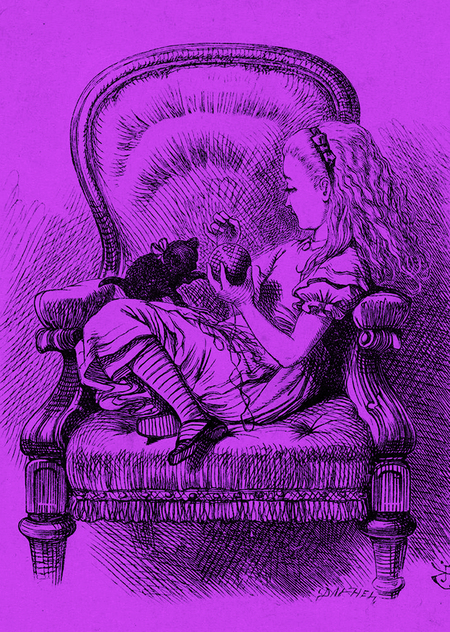
As an artist who dedicated much of his life to political satire, he created one of the most recognizable visual worlds in children’s literature and forever influenced how readers imagine Alice, the White Rabbit, the Cheshire Cat, and other characters from Wonderland.
Introduction
This study examines how one of the leading political cartoonists of Victorian England created a canonical image for children’s literature.
At first glance, political caricature and children’s book illustration seem unrelated. The former addresses societal problems, satirizes power, politicians, and human flaws. The latter, however, must convey a fantastical world, create an atmosphere of magic, and help the reader visualize the characters. Yet, it is the convergence of these two genres that allowed John Tenniel to forge a completely unique visual language.
As someone who did not specialize in children’s illustration, how was he able to create images familiar to people worldwide for over a century and a half? Why did his Alice become canonical, even though dozens of famous artists have worked on the story since?
John Tenniel was a unique figure. He didn’t simply illustrate literary works; he translated the language of political satire, theatrical expressiveness, and traditional engraving onto the printed page. His characters appear simultaneously fantastical and realistic. Even the most imaginary creatures possess recognizable human expressions, character, and behavior.
Tenniel’s main innovation lay not in creating unusual characters per se, but in how he employed the professional techniques of political caricature to construct an entire literary world. As a result, the illustrations ceased to be a mere supplement to the text and transformed into an autonomous part of the narrative.
Biography: From «High Art» to Punch Magazine
John Tenniel (1820–1914) was born in London. His father was a fencing and dance instructor. From an early age, John showed an interest in drawing, though his artistic education developed in a rather unconventional manner.
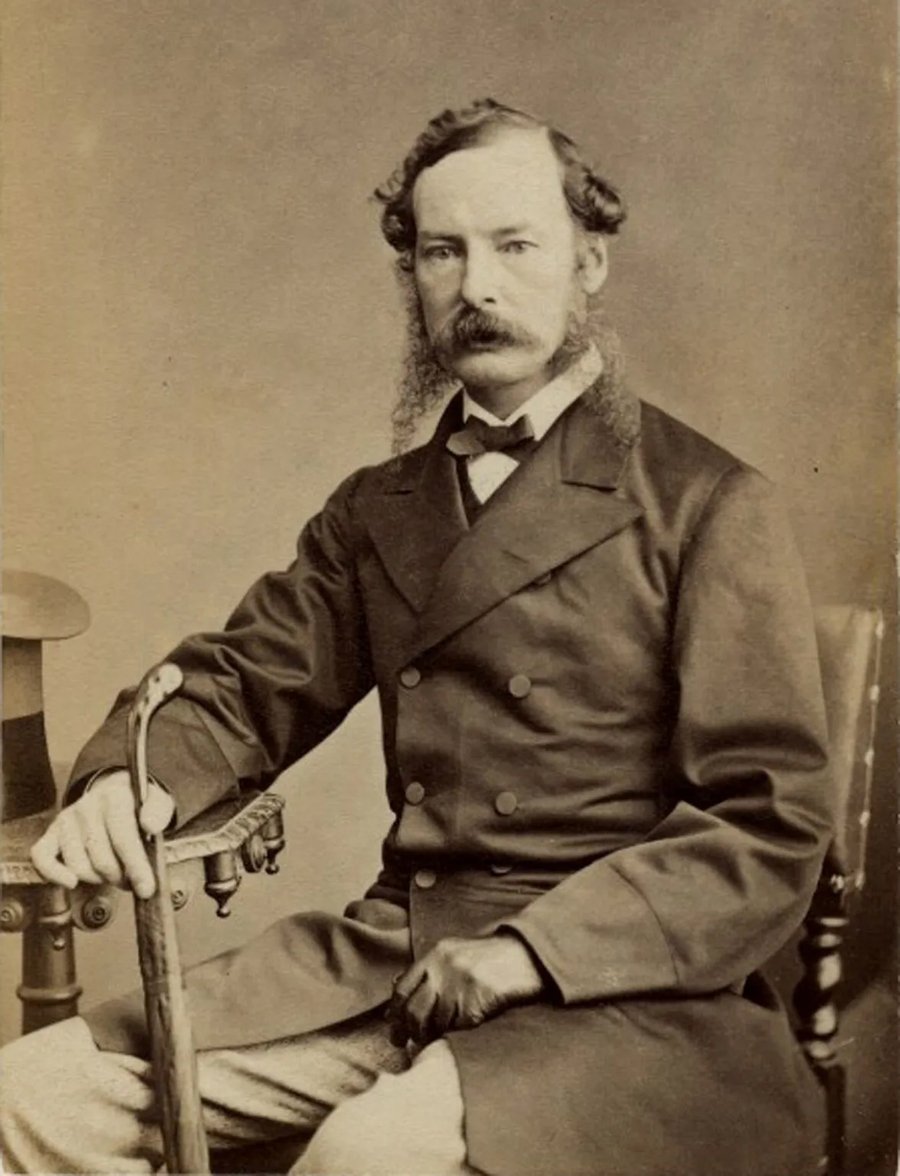
Sir John Tenniel. Photograph by the London Stereoscopic and Photographic Company, circa 1860–early 1870s.
Teniel attended classes at the Royal Academy of Arts but did not receive a complete, systematic academic education. He developed a significant portion of his professional skills independently. By age 16, he was already participating in an art exhibition, and later he worked on historical and decorative compositions. In 1845, the artist received a commission to create a fresco for a new building at the Westminster Palace.
This period is crucial for understanding his future style. Working on large historical compositions taught Teniel how to construct complex scenes, distribute numerous figures in space, and work with expressive poses. These skills would later be evident in his book illustrations.
A turning point came in 1850 when Teniel began collaborating with the British satirical magazine, Punch. The publication was known for its political caricatures, humorous drawings, and critique of social phenomena. The magazine’s artists did not simply illustrate events; they shaped society’s visual perception of what was happening.
Initially, Teniel worked alongside John Leach, one of the most renowned caricaturists of his time. Eventually, he became the leading artist for the publication and, in 1864, took the position of chief political caricaturist. He worked for Punch for over fifty years, creating thousands of drawings.
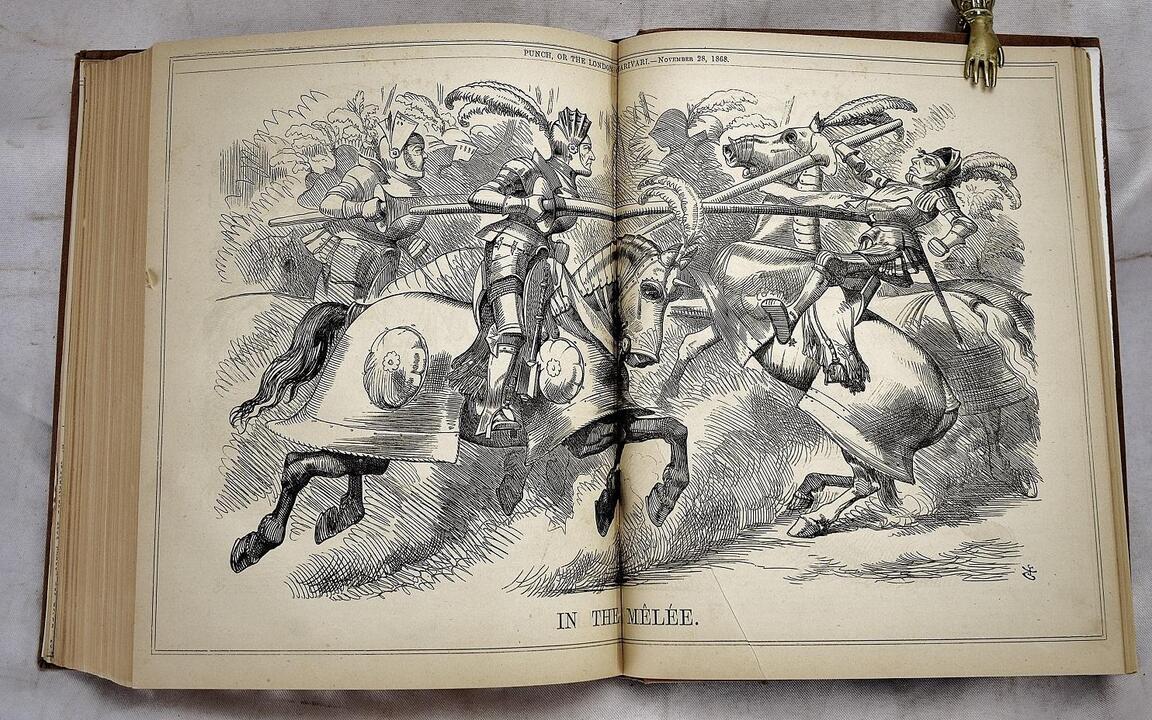
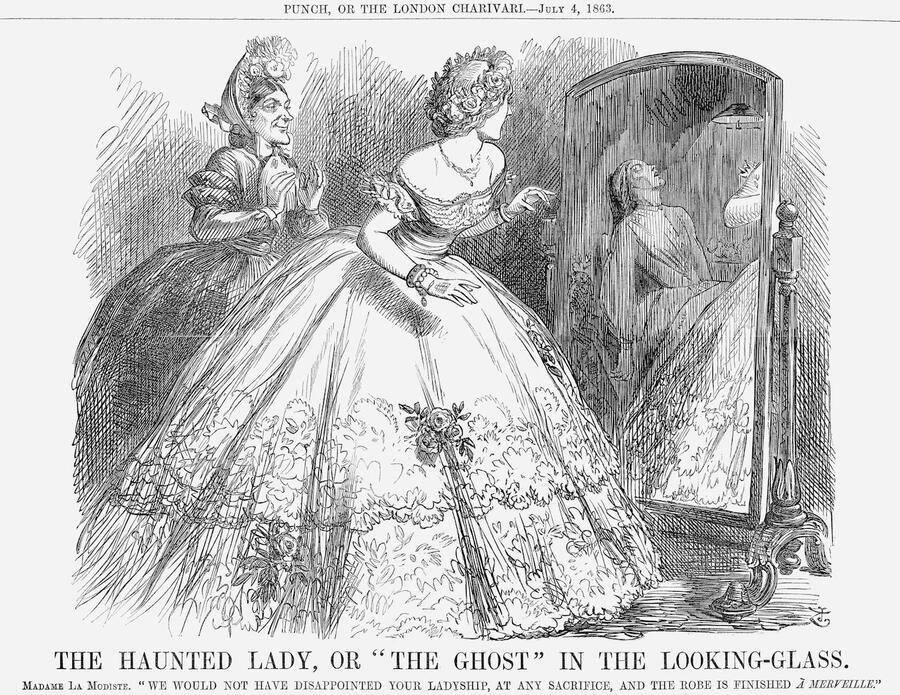
It was Punch that forged Tenniel’s recognizable artistic style. His drawings were characterized by precise details, expressive faces, complex compositions, and the ability to convey a person’s character through a few visual cues.Political caricature demanded a specific skill from an artist: the viewer had to instantly understand who the drawing depicted and what idea it was conveying. Therefore, Tenniel learned to pinpoint the most defining physical traits, exaggerate them, and transform them into visual symbols.This principle would later become one of the main tools in creating the characters for Alice in Wonderland.