INDEX
CONCEPT
CONCEPT
The clothing of Muslim women from the 19th to the 21st centuries evolved under the influence of tradition, social change, and fashion. Previously, women’s attire was determined by the country, local customs, and a woman’s social standing—different regions featured their own styles of dresses, head coverings, veils, and ornamentation. Over time, silhouettes, materials, and ways of styling clothing gradually changed. Today, traditional elements continue to be utilized, but they are often reinterpreted within contemporary fashion.
This research topic was chosen because it allows for a clear comparison of the images of Muslim women from the past and the present. It is particularly interesting to trace how traditional clothing has changed and which of its elements have entered the modern wardrobe. Furthermore, it is crucial to recognize that a single, uniform Muslim costume never existed: concepts of beauty, modesty, and appropriate dress varied depending on the region.
Research Objective — to demonstrate how the appearance of the Muslim woman has evolved from the 19th century to the present day, and to identify which features of traditional attire have survived in modern fashion.Research Question: How have cultural traditions, modernization, and the development of the global fashion industry influenced these changes?The research hypothesis is that throughout the 19th–21st centuries, the clothing of Muslim women has not only changed externally but has also become more varied in shape and manner of wear. In the historical representations examined, long veils and covered silhouettes played a significant role, whereas contemporary Muslim fashion features combinations of individual garments: dresses, skirts, pants, jackets, and headscarves. Furthermore, covered shapes, loose tailoring, and head coverings have not disappeared, but rather have acquired new interpretations influenced by social changes and global fashion.
The research is built upon historical photographs, museum pieces of clothing, fashion illustrations, editorial shoots, and contemporary collections. Comparing these materials allows us to trace changes in the length and silhouette of dresses, headwear, materials, and ornamentation. For instance, a traditional abaya can be compared with a modern designer variation, focusing on the cut, fabric, and function of the garment. The selection includes examples from Turkey, Egypt, Iran, Indonesia, and other countries where Muslim culture has significantly influenced women’s attire. This scope demonstrates the diversity of traditional costumes and tracks how local customs, lifestyles, and fashion trends have shaped the evolution of women’s appearance.
The study’s structure is organized thematically. Initially, the regional characteristics of traditional costume are examined; subsequently, the evolution of silhouettes and head coverings, and the integration of traditional and urban clothing are discussed. The concluding sections are dedicated to the area of modest fashion, showcasing collections from contemporary designers, fashion magazines, and advertising campaigns by global brands. This division enables a comparison between the past and the present within each theme, rather than merely listing events by century.
Images are selected based on quality, dating accuracy, and relevance to the research question. Museum and archival materials are used for historical examples, while official collection photographs and fashion magazine publications are used for contemporary examples. Each image will be accompanied by a caption detailing the author, title, and year, as well as a commentary on what has changed or remained the same in the clothing.Written sources include scholarly articles on the history of costume and culture, museum studies, and publications on contemporary Muslim fashion.The main objective of this study is to trace how the clothing of Muslim women has evolved throughout the 19th–21st centuries, based on historical photographs and modern fashion looks—identifying which elements of traditional costume have been preserved, which have changed, and how cultural traditions, societal transformations, and the development of global fashion have influenced these changes.
IN THE LENS OF THE PAST:
how Muslim women dressedOTTOMAN EMPIRE
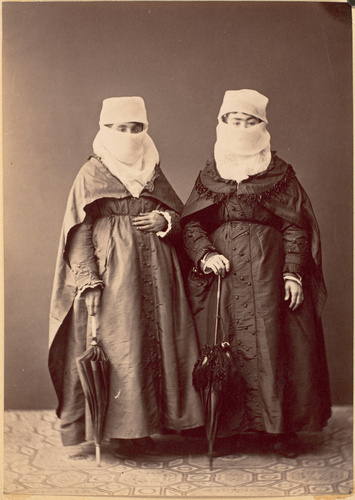
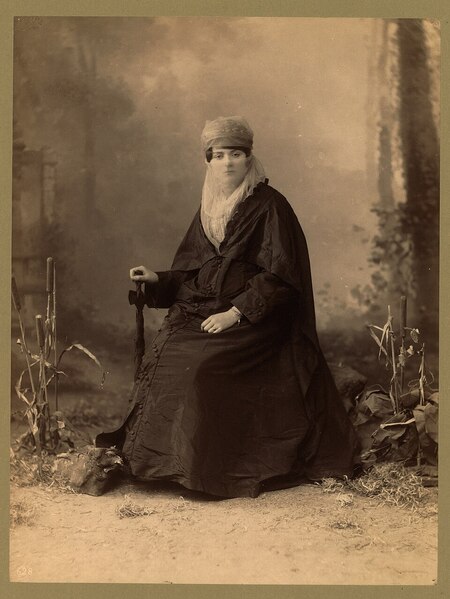
Pascal Sebah. «Two Women in Blankets, ” circa 1870. Musée d’Orsay. Abdullah Ferrer Studio. „Turkish Woman with an Umbrella, ” 1880–1900. Library of Congress, USA.
The photographs display examples of women’s outerwear common in the Ottoman Empire during the second half of the 19th century. Long, flowing silhouettes are combined with head and face coverings. Notable differences are visible in these images—from the shape of the veil to the details of the outer garments and accessories. While these photographs allow us to examine the appearance of individual women of that era, they do not reflect the full diversity of Ottoman costume.
EGYPT: Daily Life and Urban Fashion
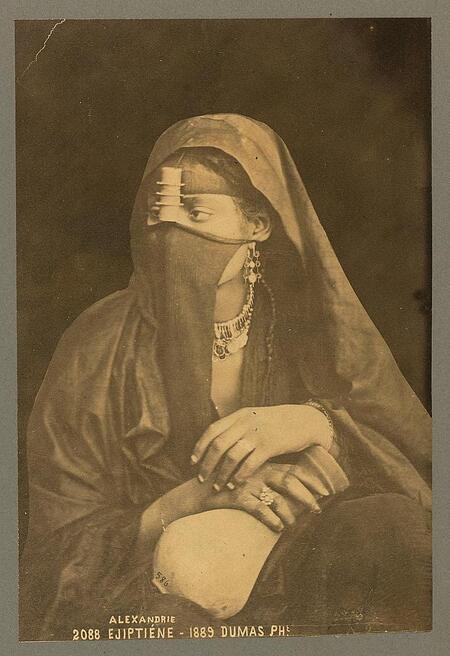
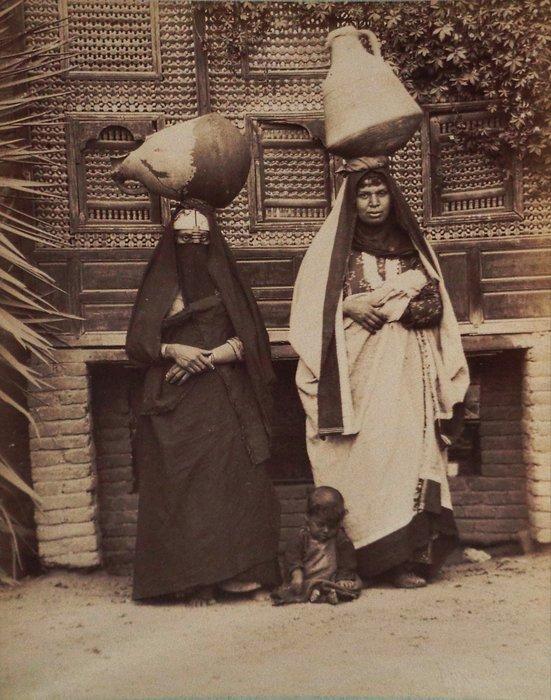
Théodore Dumas. «Egyptian Woman, Alexandria, ” 1889. Library of Congress, USA. Théodore Dumas. „Egyptian Women of Cairo, ” 1860–1900. Library of Congress, USA.
The photographs showcase various styles of women’s attire in 19th-century Egypt. The first image details the head and face coverings, while the second displays the long garments women wore for daily activities. These images illustrate the differences between individual urban styles and demonstrate that female dress was influenced not only by tradition but also by living conditions.
IRAN: The Female Figure of the Qajar Era
Unknown artist. «Group of Women in Veils with Child, ” Iran, late 19th century. Brooklyn Museum.
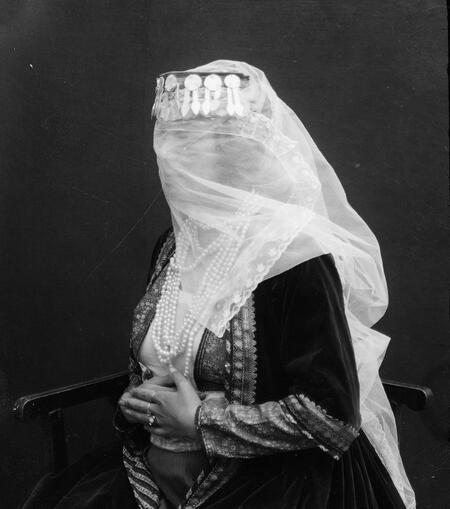
In 19th-century Iran, women’s attire varied depending on whether it was intended for home or for public outings. In public spaces, women wore wraps that concealed the figure, while their home and festive garments might incorporate ornamentation and a wider variety of fabrics.
The pearl jewelry and delicate veil on Antoine Savrigen’s portrait are particularly striking. However, since this is a staged photograph, it should not be considered an accurate depiction of the daily appearance of all Iranian women.
Antoine Savrigen. «Woman in a Veil with Pearls, ” Iran, 1890–1900. Smithsonian Institution National Museum of Asian Art Archives.
MOROCCO
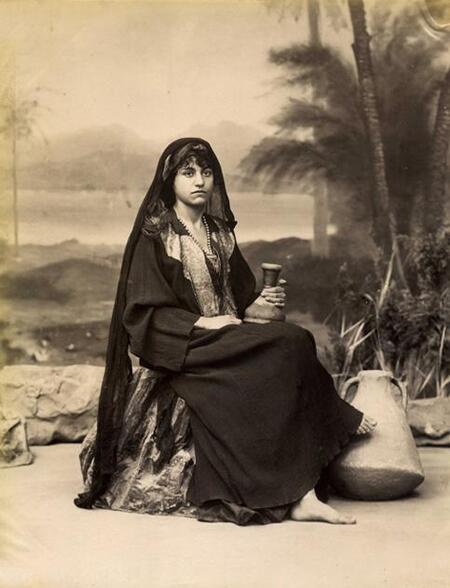
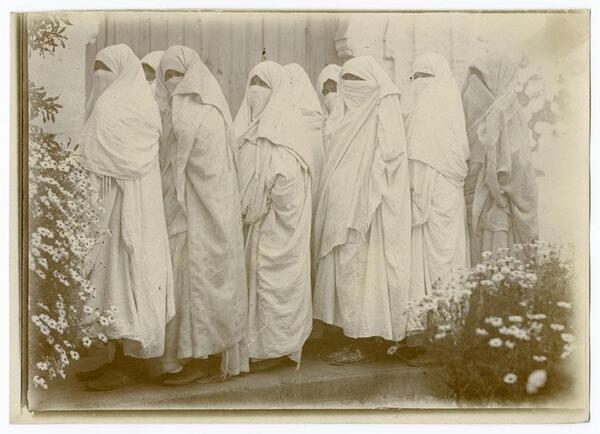
Unknown photographer. «Young Moroccan Woman, ” circa 1880. Photography studio, Marrakech. Gaëtan Gasjean de Clermont. Women in haiks, Morocco, 1918–1919.
In Morocco, women’s attire was characterized by a diversity of fabrics and draping techniques. Historical photographs reveal long, loose-fitting garments, wraps, and embellishments. The haik is particularly interesting—a large piece of fabric that women used to cover their heads and bodies when going outside. Furthermore, the look of the costume varied according to local traditions and the intended function of the clothing. Preserved photographs showcase various styles of women’s appearance.
INDONESIA
Author unknown. Group photograph of members of the Muslim women’s organization «Aisyiyah,» Indonesia, first half of the 20th century.
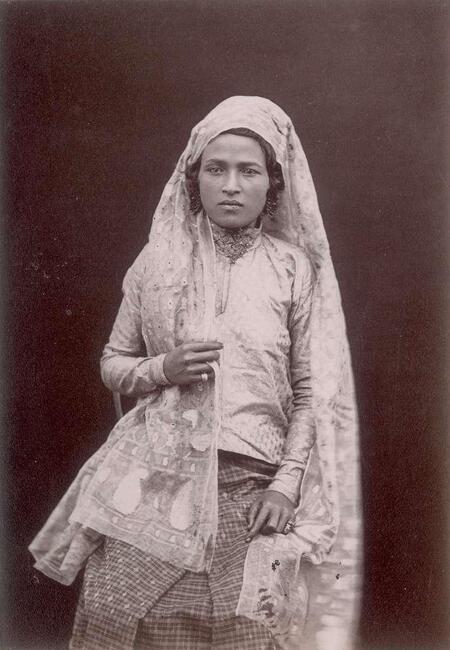
Historical photographs depict the distinctive attire of Muslim women in Indonesia.Their wardrobe featured long skirts made of patterned fabrics, loose-fitting blouses, and various head coverings.The second photograph is particularly interesting—a portrait of a woman from Aceh—where the specific tailoring, ornamentation, and fabric combinations are clearly visible. These images reflect the influence of local traditions on women’s clothing, some elements of which were later incorporated into contemporary Indonesian fashion.Lambert & Co. Photo Studio, «Woman from Aceh in Singapore, ” circa 1890. KITLV Collection, Leiden University Library.
Historical photographs reveal the wide variety of Muslim women’s attire across different countries and regions.
Silhouettes, fabrics, head coverings, and decorative elements varied significantly. Some looks featured long, loose-fitting dresses and veils, while others showcased patterned fabrics, drapery, and ornamentation.
This diversity allows us to trace how the outward appearance of Muslim women has evolved under the influence of cultural traditions, societal shifts, and fashion, and to see which elements of their clothing have endured to this day.
HOW THE CLOSED SILHOUETTE EVOLVED
With the evolution of modern Muslim fashion, the approach to creating modest clothing itself has changed. Instead of suits built predominantly around traditional outerwear shapes, designers have begun offering carefully conceived ensembles composed of dresses, jackets, pants, and headscarves.
Particular attention is now being paid to the combination of fabrics, silhouette, and color. Modest clothing is becoming increasingly integrated into the professional fashion industry.
THE SCARF CHANGES SHAPE
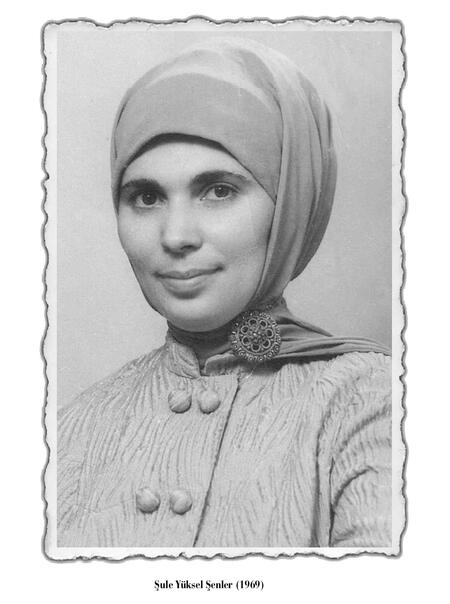
In the 1960s, new ways of wearing the headscarf began to emerge in Turkey, linked to contemporary urban wardrobes. One notable example was the style of Sule Yüksel Şenler. Her look combined a modest head covering, a tailored contemporary jacket, and decorative accessories. This demonstrates how the tradition of head coverings could adopt new forms in line with prevailing ideas of women’s fashion at the time.
Jules Vokel Schneider. A page with recommendations for closed women’s attire from Seher Vakti magazine, 1970.
In the 1970s, modest women’s clothing began appearing in specialized publications. The magazine Seher Vakti published images of coats, scarves, and recommendations for pairing them. Particular attention was paid to the shape of the headwear, the fabric pattern, and the details of the outer garments.
These publications demonstrate that contemporary versions of Muslim fashion started to take shape long before the emergence of major international fashion shows.