
INTRODUCTION
PISCA is a Russian direct-to-consumer accessories brand built around soft, rounded pillow bags and a wider family of lifestyle accessories. It is operated as a small business and sells mainly through its own website, the marketplace Golden Apple, and a handful of Moscow pop-up points.
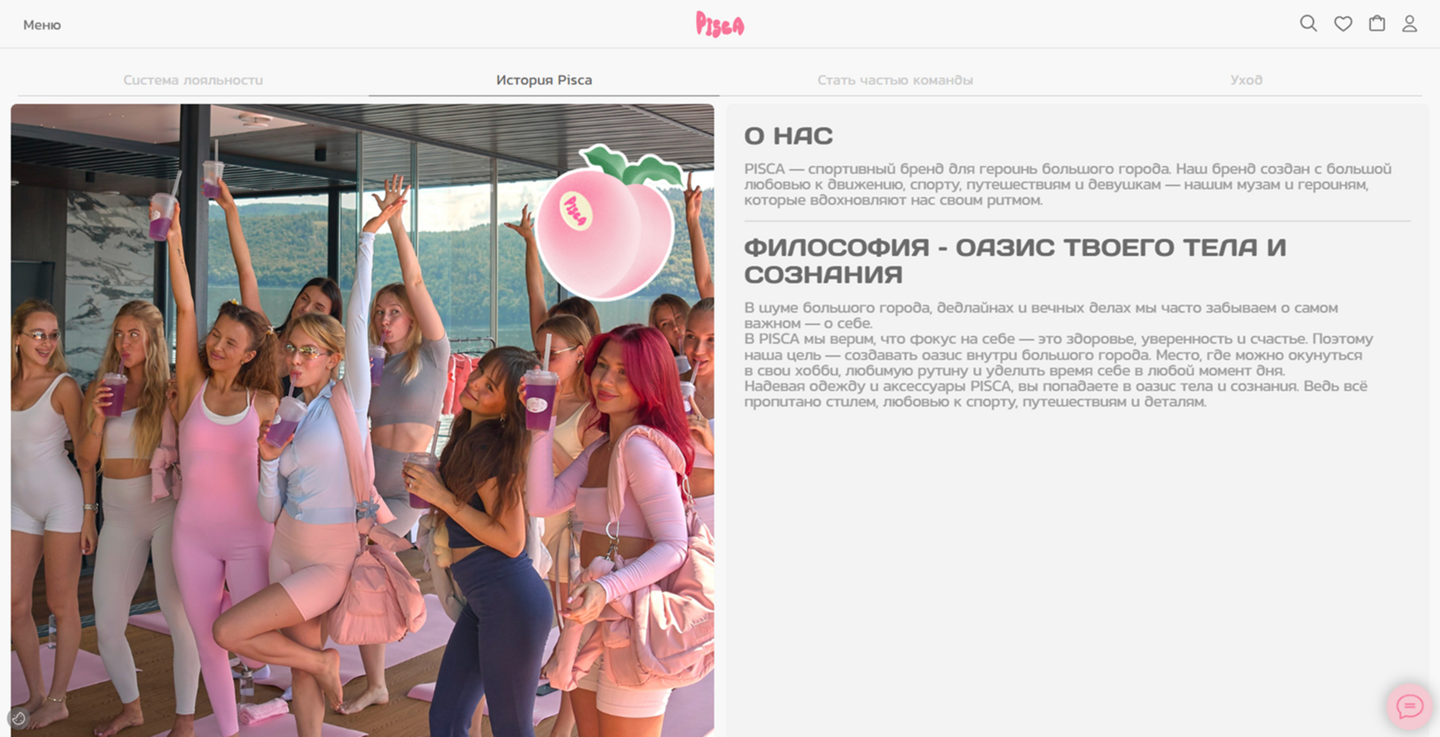
The brand describes itself as having emerged «in the rhythm of the big city»: its founders saw that the market offered only two extremes (expensive luxury bags or unattractive, shapeless ones), and positioned PISCA in the middle, as a stylish, functional and affordable product.
① Brand and product
The product range is centered around «pillow bags» and includes mini pillow bags, phone cases, cosmetic bags, laptop sleeves, tote bags, bags with removable handles, and gift certificates. The color palette is deliberately broad and inviting, and playful names (Pillow, Candy, Bisque, Marshmallow/Zefir) emphasize the soft, hedonistic style.
② Core positioning
PISCA positions itself as a handbag brand for women with an active lifestyle. Its core promise is emotional, not technical: accessories are perceived as «an extension of you and your rhythm.» The brand’s emotional core is movement, sports, travel, and self-care in the hustle and bustle of the big city.
③ Target audience
The target audience is young, urban, active women (approximately 18-35 years old) who grew up in the digital age. They love fitness, yoga, travel, work, and aesthetics, and want a combination of style and comfort at a mid-market price. The brand cultivates a community based on a specific identity, which it calls «pisca girls», and claims to have over 40000 members. These customers learn about the brand primarily through influencers, the Golden Apple marketplace, and social media, and shop primarily online.
COMMUNICATION CHANNELS
PISCA’s public field is built almost entirely on Russian-market digital platforms and on a mix of owned, earned, and community channels. This reflects both the post 2022 shift of Russian brands away from Western platforms and PISCA’s own community-first DTC model
(1) Social media
Pinterest — visual mood boards that feed and amplify the brand’s candy-coloured aesthetic.
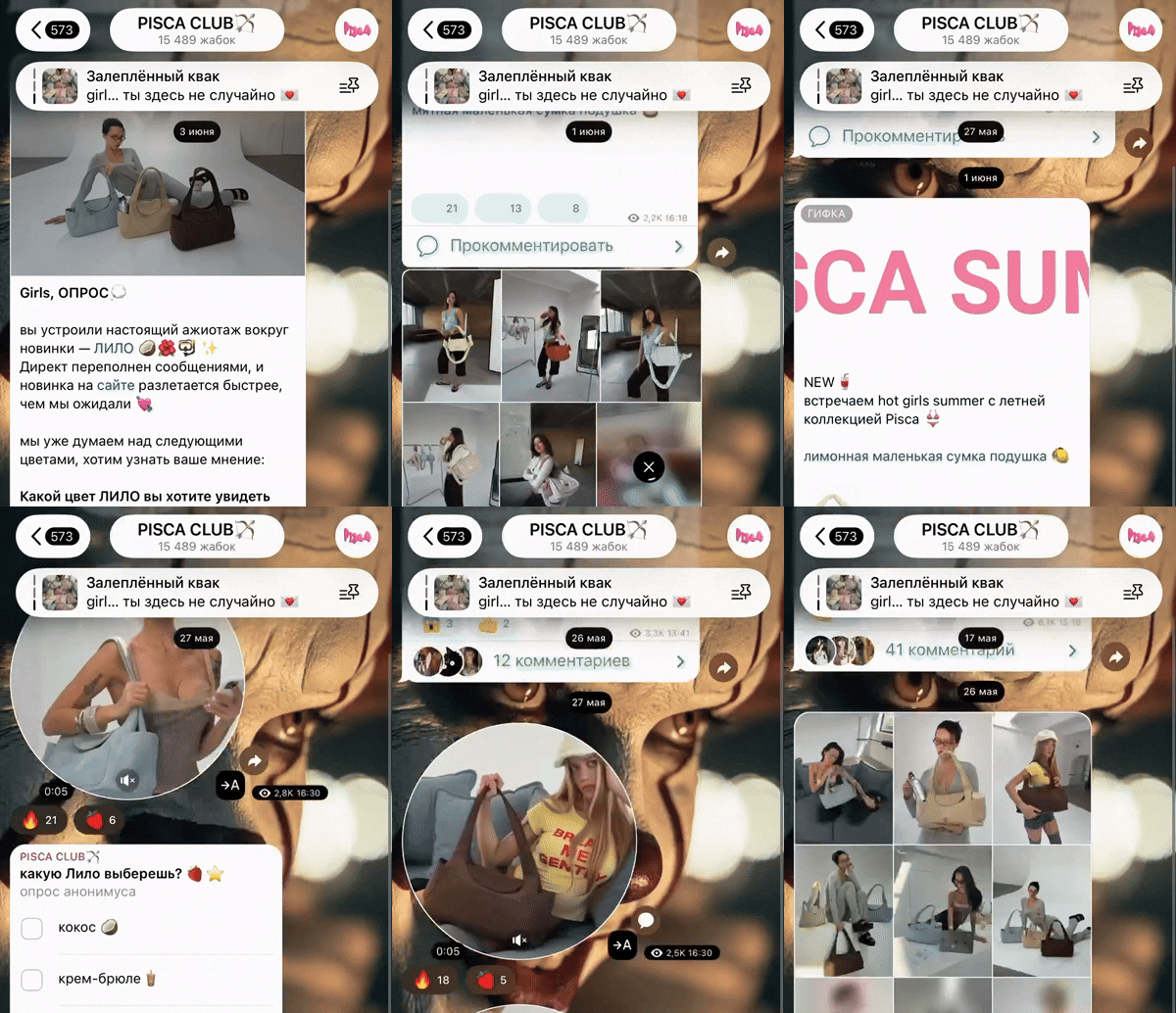
Telegram (two channels) — @piscainfo works as a one-way broadcast feed for news and new arrivals, while @piscawho is the brand’s «care department», a direct, conversational support channel.
VKontakte (vk.com/piscawho) — the primary community hub, framed for those who want to be part of the community. It carries product drops, user content, and day-to-day community interaction.
(2) PR and marketing strategies
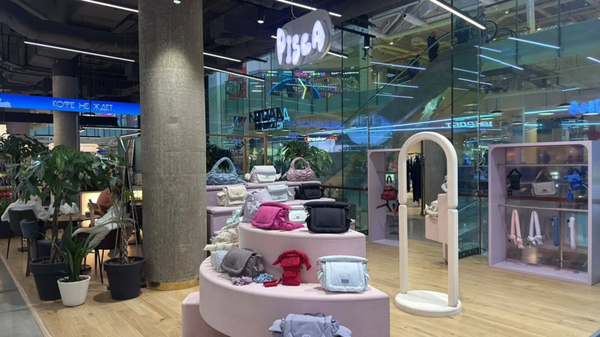
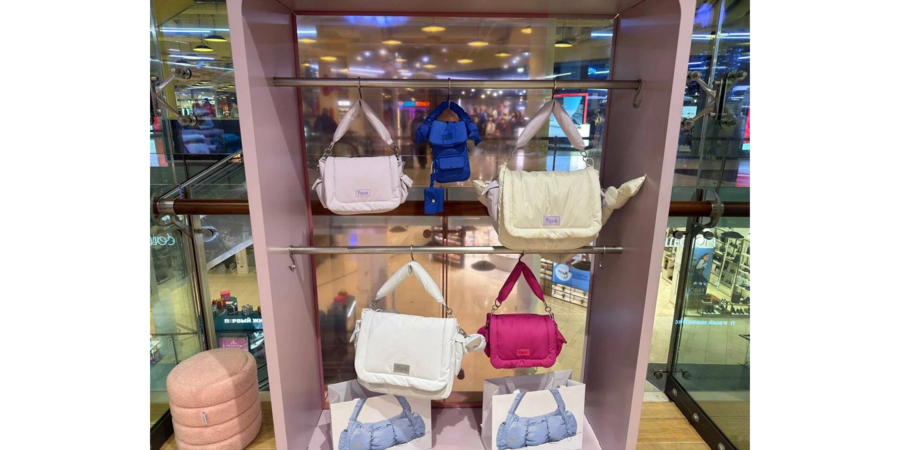
Experiential / pop-up retail — physical touchpoints and discovery in Moscow.
Experiential / pop-up retail — physical touchpoints and discovery in Moscow.
Retail-as-PR — distribution through Golden Apple, a leading Russian beauty and lifestyle retailer, where placement itself acts as a credibility and visibility play.
Experiential / pop-up retail — physical touchpoints and discovery in Moscow.
CRM and loyalty — a «Club PISCA» program with Pisca Coins earned on every order plus 400 welcome points on registration, designed for retention and repeat engagement.
Owned email newsletter — new-product announcements direct to subscribers.
Co-creation — «PISCA Lab» openly invites customers to submit product ideas, the most popular requests are put into production and showcased as items «developed together with you».
distribution through Golden Apple, a leading Russian beauty and lifestyle retailer, where placement itself acts as a credibility and visibility play.
Co-creation — «PISCA Lab» openly invites customers to submit product ideas, the most popular requests are put into production and showcased as items «developed together with you».
Owned email newsletter — new-product announcements direct to subscribers.
THEORETICAL FRAMEWORK
(1) The Elaboration Likelihood Model (ELM)
Petty and Cacioppo’s (1986) information-processing probability model describes two persuasion pathways. In the central pathway, motivated and capable audiences carefully analyze the arguments contained in a message, forming relatively strong and stable attitudes. In the peripheral pathway, audiences with less involvement or ability rely instead on simple cues (visual appeal, color, mood and emotion, liking the source, and social proof), forming attitudes more quickly but less consistently.
The model is well suited to fashion accessories, which are primarily low-involvement, hedonic purchases based on aesthetics, where peripheral cues perform most of the persuasive work.
(2)The Dialogic Theory of Public Relations
Kent and Taylor (1998, 2002) reframe public relations as a two-way, ethical negotiation of meaning rather than one-way broadcasting. They propose five principles of dialogic communication:
• Mutuality — a collaborative, «we» orientation between organisation and public.
• Propinquity — being present and accessible so publics can engage in real time.
• Empathy — a supportive, person-centred climate that treats publics as people, not targets.
• Risk — willingness to engage on open-ended terms whose outcome the organisation cannot fully control.
• Commitment — genuinely acting on dialogue and investing in the relationship over time.
ANALYSIS