Исходный размер 1240x1750

Red Bull: Communication Strategy Analysis

Проект принимает участие в конкурсе

INTRODUCTION

Brand identity

Red Bull is a global brand that operates not only as an energy drink company, but also as a media production system. Its communication is based on symbolic meaning rather than product explanation.
Исходный размер 1280x743

Red Bull logo

«Red Bull gives you wings» = energy, performance, and extreme lifestyle.
Исходный размер 1098x848

Positioning

Red Bull positions itself as a lifestyle and cultural brand associated with:

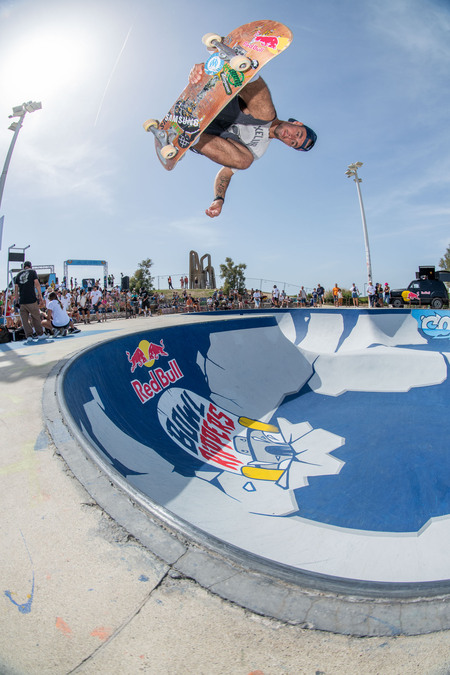
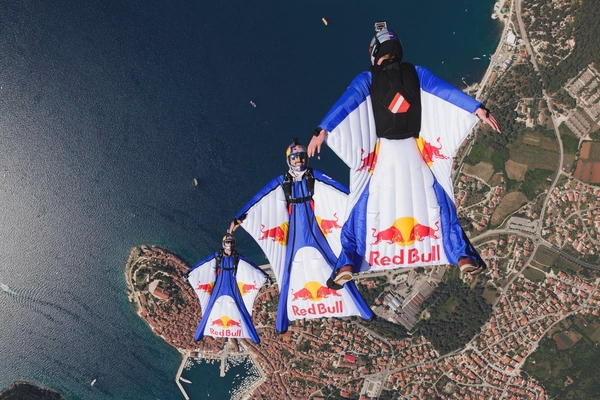
extreme sports risk and adrenaline high performance culture creativity and youth identity

The product is secondary; the experience is primary.

Исходный размер 3392x1908

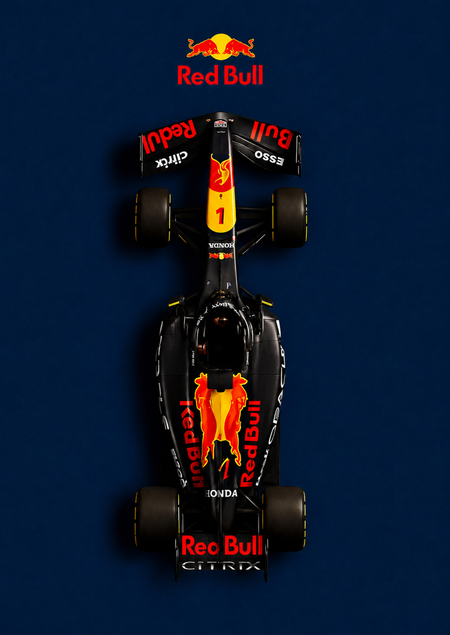
Red Bull Racing (F1)

Target audience

The primary audience is:

16–35 years old students and young professionals extreme sports and gaming communities individuals oriented toward productivity and performance

Audience motivation is emotional rather than rational.
Cultural communication context

Red Bull communication reflects:

low-context communication style (clear visual meaning, minimal ambiguity) individualism (self-performance, achievement, competition) high stimulation culture (speed, intensity, risk).

COMMUNICATION CHANNELS

Media ecosystem

Red Bull operates as a multi-platform media ecosystem:

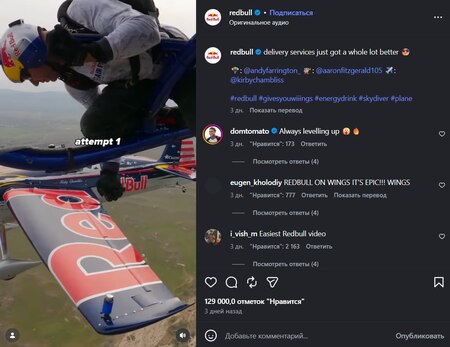
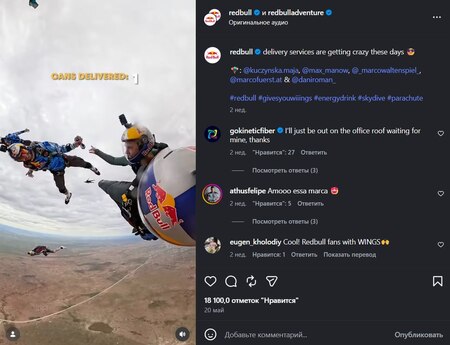
Instagram (visual identity) TikTok (viral short-form content) YouTube / Red Bull TV (long-form storytelling) live sports events global sponsorships

The brand functions like a hybrid of media company and sports institution.

Исходный размер 1280x603

Red Bull TV homepage

Social media strategy

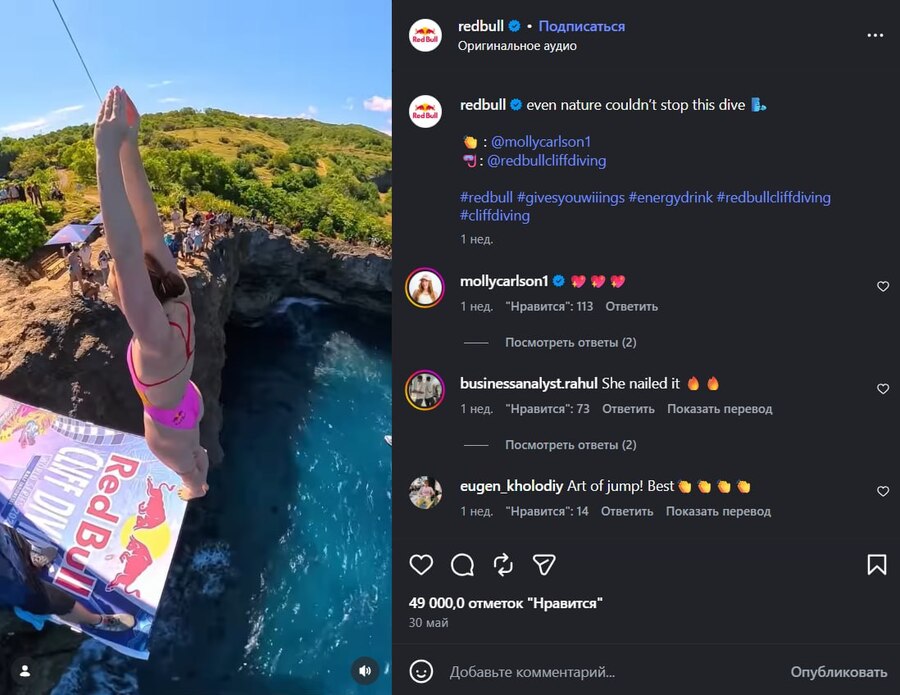
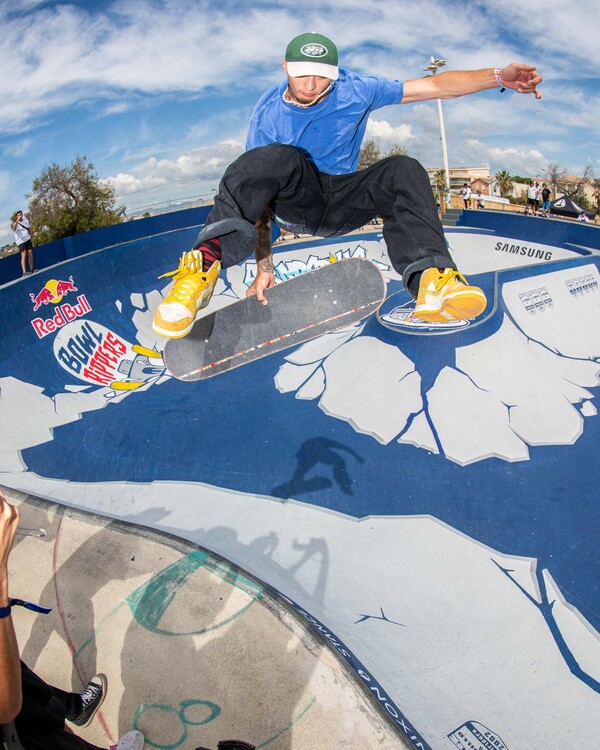
Red Bull’s social media communication is highly visual and emotion-driven. Posts rely on:

extreme action imagery minimal textual explanation high aesthetic and cinematic quality

This creates immediate emotional engagement rather than rational interpretation.

Исходный размер 1095x849
Исходный размер 1102x846

YouTube / Red Bull TV

Red Bull TV functions as a full-scale media platform producing:

documentaries live sports coverage athlete-focused storytelling branded entertainment content

This positions Red Bull as a content creator rather than an advertiser.

Исходный размер 1280x676

PR strategy

Red Bull uses strategic public relations through:

global sports sponsorships (F1, extreme sports, esports) branded events (Air Race, Rampage, Cliff Diving) athlete partnerships and long-term storytelling

PR here is relationship-building rather than direct persuasion.

Исходный размер 1200x600

Red Bull Air Race

Исходный размер 1500x1000

Cliff Diving event page

Communication style summary

Overall communication is:

one-directional (brand → audience) visually dominant emotionally driven low in direct dialogue or conversational interaction.

THEORETICAL FRAMEWORK

Elaboration Likelihood Model (ELM)

ELM explains how persuasion occurs through:

central route (logical argument, high involvement) peripheral route (emotion, visuals, low cognitive effort)

Red Bull mainly uses the peripheral route of persuasion.

Media Logic Theory

Media Logic Theory (Altheide & Snow) explains how media formats shape perception of reality. Red Bull operates as a media system where:

format is more important than product entertainment replaces advertising lifestyle becomes the message

ANALYSIS

Peripheral persuasion

Red Bull communication does not rely on logical arguments or product explanations. Instead, it uses:

extreme visuals emotional stimulation fast-paced editing

This activates peripheral processing rather than rational decision-making.

Исходный размер 1200x600

Emotional conditioning

Extreme sports imagery creates strong emotional associations:

adrenaline excitement freedom risk-taking

These emotions become linked to the brand identity.

Исходный размер 3840x2674

Attitude formation

Consumer attitudes toward Red Bull are formed through association, not reasoning. The brand becomes synonymous with:

energy performance extreme lifestyle

Исходный размер 1400x933

Red Bull Racing

MEDIA LOGIC ANALYSIS

Red Bull as media company

Red Bull functions as a media production system rather than a traditional beverage brand. It creates and distributes content similar to:

sports networks streaming platforms entertainment media companies.

Loading...

Content dominance over product

In Red Bull communication, the product is rarely central. Instead, content focuses on:

athletes events storytelling narratives

This demonstrates media logic prioritizing content over commodity.

McLuhan: «The medium is the message»

The communication format itself constructs meaning:

speed and intensity of editing = brand energy cinematic sports footage = brand identity visual spectacle = product meaning

Loading...

Reality construction

Red Bull does not reflect reality; it constructs a curated version of reality focused on extreme performance culture. This aligns with media theory concepts of mediated reality construction.

Исходный размер 1500x1000
Исходный размер 711x403

Red Bull extreme sports event collage

Audience role

The audience is primarily positioned as:

spectators consumers of spectacle passive receivers of content

Interaction is limited compared to traditional social media dialogue models.

Исходный размер 1102x850

CONCLUSION & RECOMMENDATIONS

Effectiveness of communication

Red Bull communication is highly effective due to:

strong emotional engagement global visual consistency high recognition across cultures integration of entertainment and branding

Theoretical conclusion

From a theoretical perspective:

ELM → strong reliance on peripheral persuasion Media Logic → transformation of brand into media system PR theory → emphasis on sponsorship over dialogue

Исходный размер 1100x849

Weakness: limited dialogue

Despite strong branding, Red Bull shows weak dialogic communication:

minimal interaction with users low conversational engagement limited two-way communication

This reduces social presence and relational depth.

RECOMMENDATIONS

(1) Increase dialogic communication by:

actively responding to user comments encouraging interactive campaigns integrating audience-generated content

This aligns with Dialogic Theory (Week 7).

(2) Enhance social presence by:

behind-the-scenes content athlete personal storytelling more human-centered communication

(3) Shift partially from broadcast model to network communication model:

from audience → community from content consumption → participation

Исходный размер 1200x630
Исходный размер 1500x998
Библиография
1.

Communication Theory Lectures (Weeks 1–9)

2.

Petty & Cacioppo — Elaboration Likelihood Model

3.

Altheide & Snow — Media Logic Theory

4.

McLuhan — Media Theory

5.

Grunig — PR Excellence Theory

6.7.8.

Instagram @redbull

Источники изображений
1.

Instagram Red Bull posts

2.

YouTube Red Bull TV content

3.

Red Bull sponsored events (F1, extreme sports)

4.
Мы используем файлы cookies для улучшения работы сайта и большего удобства его использования. Более подробную информац...
Показать больше