
INDEX
(0) Introduction
(1) Collaborators (2) Inspirations
(3) Conclusion
INTRODUCTION
In August 2016, Frank Ocean released something in two days that is difficult to capture with a single word.
First came Endless—a forty-five-minute visual album on Apple Music, shot with a black-and-white observational aesthetic: Ocean builds a spiral wooden staircase in his studio as a continuous soundscape unfolds around him. Then came Blonde—seventeen tracks that critics hailed as one of the decade’s most important albums. Both projects exist as a unified statement: the first explores space and process; the second explores its finished, yet intentionally open, form.
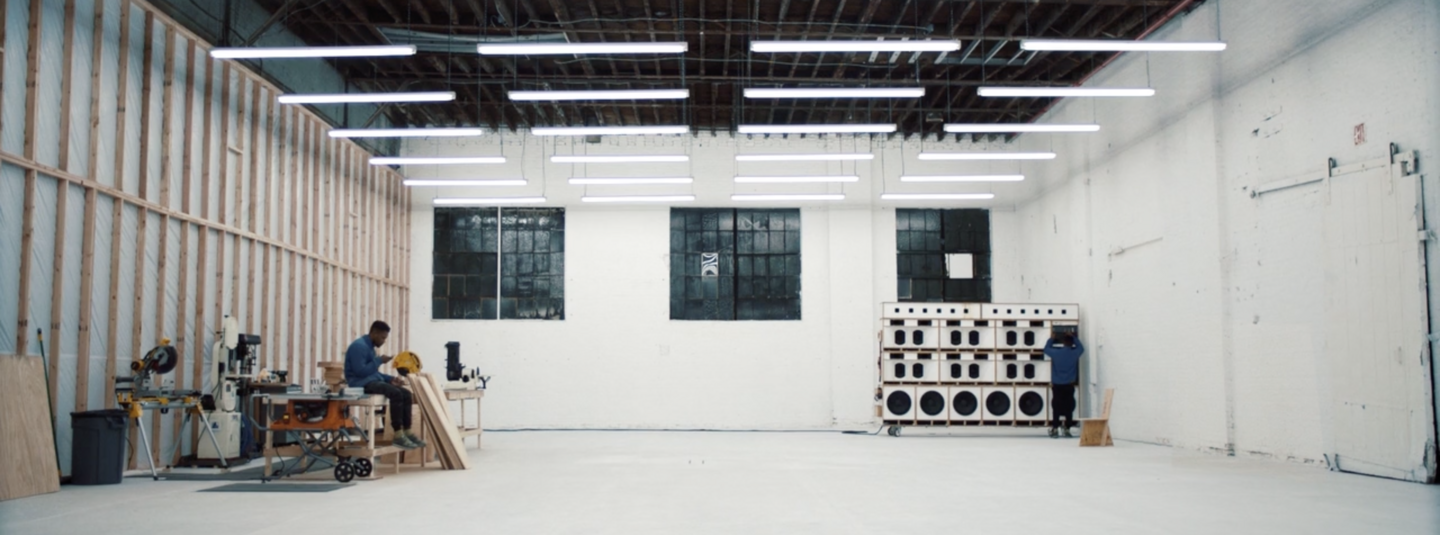
Endless. Frank Ocean. 2016
The choice of this topic stems from a desire to trace how sound art practices permeate the mainstream pop album—not as homages or stylizations, but as a fully realized artistic methodology. Endless and Blonde are interesting because Ocean worked simultaneously with several traditions of experimental sound, doing so literally and directly: by inviting specific artists whose practices are rooted in sound art into the project.
Research materials were selected based on two key criteria. The first was documentary: priority was given to verified sources. The Boys Don’t Cry zine, released concurrently with Blonde, contains a list of fifty Ocean favorites—among them are Steve Reich, Aphex Twin, and Brian Eno. This is a direct, authored source that allows us to discuss the influence not speculatively, but based on the musician’s own testimony. The second criterion was sonic: the selection included only those aspects of both albums that can be analyzed specifically as sound work—specific tracks, techniques, and structural decisions.
The structural analysis is divided into two parts. The first, «Co-creators, ” examines the artists who directly participated in creating Endless and Blonde and contributed their practices in sound work: Brian Eno, Wolfgang Tillmans, and Arca. The second, „Sources of Inspiration, ” addresses sound artists and experimental musicians named by Ocean: Steve Reich and Aphex Twin. In both sections, the analysis is built on comparison: a specific fragment or technique from Endless/Blonde is compared with a sound art piece to reveal not merely similarity, but structural commonality of method.
Key research question: Can Endless and Blonde be considered projects engaging with the logic of sound art, rather than merely adopting its aesthetics?
The hypothesis is as follows: Ocean does not adapt experimental music techniques for the pop format—rather, he incorporates pre-existing sound methods into his albums, the authorship of which belongs to specific sound art practitioners. This transforms Endless and Blonde from being merely «albums with experimental sound» into something more precise: a curated project in which the boundary between pop music and sound art is intentionally blurred.
Guru’s Yardstyle. Tom Sachs for Frank Ocean’s Endless. 1999/2016
CO-AUTHORS
«White Ferrari» begins with an almost imperceptible sound layer—the synthesizer functions here less as an instrument and more as texture: it drifts beneath the vocal, never asserting itself into the foreground or forming a distinct rhythmic pattern.
This is not accompaniment or melody in the classical sense—it is a sonic environment in which a voice exists. Brian Eno formulated this very principle as the foundation of ambient music: a sound that «can be either actively listened to or ignored—like atmosphere.»
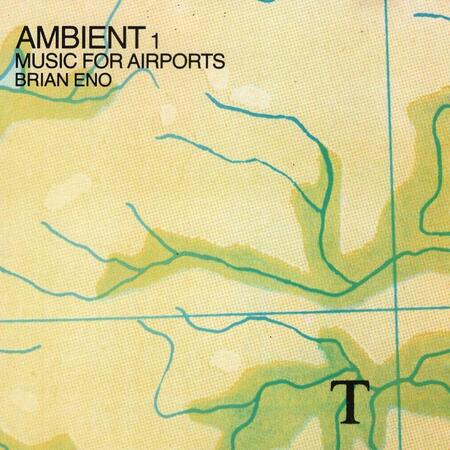
In Music for Airports (1978), Eno builds a sonic space from repeating loops of varying cycle lengths—they never phase-lock, creating an environment that is constantly shifting yet feels static.
In «White Ferrari,» the method is similar: in addition to the synth ambient instrumental permeating the entire track, every so often (at 0:18 and 0:54) you can hear a chopped beat, as if recorded on a poor speaker into a phone’s dynamic speaker. Also, starting around 2:40, a quiet noise emerges as the track’s barely perceptible «foundation"—it resembles what you’d get if all urban sounds were compressed, leaving only the upper frequencies.
These delicate, almost imperceptible sonic details are precisely the foundation of ambient music.
He is credited in Blonde, although his exact role is not disclosed—perhaps this principle of «sound as space» was his main contribution.
Another key creative partner for Olsen during that period was Wolfgang Tillmans, who took the photographs for the Blonde cover. However, on Endless, he contributed specifically to the project’s musical component—literally «gifting» the album one of his musical works.
«Device Control» frames the entire Endless experience: in its shortened form, it opens it, and in the full seven-minute version, it concludes it. The track is composed of press releases from Apple, Samsung, and Sony—text about smartphones, control gestures, and the idea that the device «understands you”—read by a synthesized voice devoid of inflection. This is a complete conceptual sound object in which form (cold, machine speech) enters into conflict with content (the rhetoric of intimacy and understanding).
The structural parallel with Laurie Anderson’s «O Superman» (1981) is evident here: that piece also uses a synthetic voice, detached from emotion, and linguistic clichés—advertising, politics, military reports—become material for analyzing power over perception. Tillman’s method is the same: the language of corporations, which purports to be human, sounds like a diagnosis precisely because it is delivered without affect. Ocean initially planned to use only fifteen seconds of the track for the intro, but ultimately included the full original in the finale. Tillman only learned about this at the moment of release. The artist’s sonic work turned out to be the architectural element of the entire project—its beginning and its end.
Arca was involved with Endless as a key producer, alongside James Blake and Jonny Greenwood. Her contribution is evident in episodes where the rhythmic structure is intentionally fractured: the beat appears not as a foundation, but as an interference that destabilizes the track’s structure, elements drop out of the grid, and silence intrudes upon the rhythm like a legitimate percussive element.
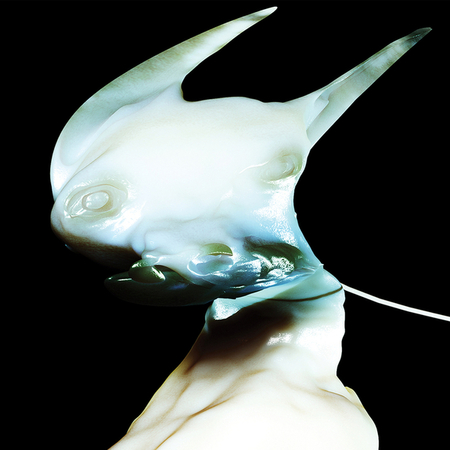
In their album Xen (2014), Arca constructs tracks from glitch and fracture: rhythm emerges not as a given, but as something that ought to coalesce, yet does not, leaving the listener in a state of unresolved tension. This is an artistic practice rooted in the idea that the listener’s body navigates sonic space through the expectation of rhythm. In the context of Endless, this approach functions with particular precision: the visual sequence—a monotonous, almost ritualistic movement of hands—creates one rhythm, Arca’s sound creates another, and the tension that arises between them constitutes the artistic statement.