Contents
Introduction
Research Concept
Science as a Visual Code
Science as Verifiable Information
Science Through Contrast
Scientific Form as an Object of Critique
Conclusion
Bibliography
Image Sources
Introduction
Scientific language has long been employed by cosmetic brands as a means of validating product efficacy and safety. Chemical terminology, percentages, laboratory imagery, and references to research can convey factual information, but they simultaneously serve as visual indicators of scientific credibility.
The Ordinary is particularly interesting because it makes scientific rigor a central component of its communication—from product names and packaging to educational materials and advertising campaigns.
I am interested in how The Ordinary creates a recognizable scientific brand image not only through information about its formulas but also through the very way those formulas are visually presented.

Research Question: Through what visual and communicative means does The Ordinary construct an image of scientific credibility, blending verifiable scientific facts, visual signs of science, and a critique of advertising tropes within the cosmetics industry?
Research Concept
This research examines scientific credibility not as an inherent quality of a cosmetic product, but as an image constructed through visual and communicative elements—typography, numerical notations, laboratory aesthetics, website structure, bibliographical references, and advertising rhetoric.
I suggest that the image of scientific rigor for The Ordinary is built through a combination of verifiable facts and visual cues of science. Furthermore, the brand reinforces its own position by criticizing industry advertising tropes and encouraging the viewer to perceive rationality as an alternative to marketing promises.
By appealing to scientific facts and common sense, the brand questions the marketing claims of its competitors without directly asserting its own scientific superiority. In this way, by demonstrating the flaws in others' arguments, The Ordinary indirectly shapes the perception of its own scientific competence and credibility.
The research objective is to identify the visual and communicative mechanisms through which The Ordinary constructs an image of scientific competence.
The study incorporates materials where scientific rigor becomes integrated into visual communication, including The Ordinary’s packaging, official website, educational articles, outdoor advertising, digital archives, and promotional installations.Materials are selected based on the presence of one of three criteria: visual signifiers of science, verifiable scientific information, or critiques of marketing mechanisms.The research is comprised of four sections. The first is dedicated to scientific credibility as a visual code. The second examines the presentation of scientific information and sources. The third analyzes the formation of authority through the critique of advertising techniques. The fourth investigates the paradox of using scientific forms to debunk pseudoscientific marketing.The theoretical foundation is built upon Roland Barthes' «Rhetoric of the Image,» studies on perceived brand transparency, and materials from ()
Scholarship as a Visual Code
Since its founding in 2016, The Ordinary has utilized a visual language that diverges from conventional cosmetic advertising aesthetics. Instead of decorative imagery, emotional promises, or idealized skin representations, the product information takes center stage on the packaging.
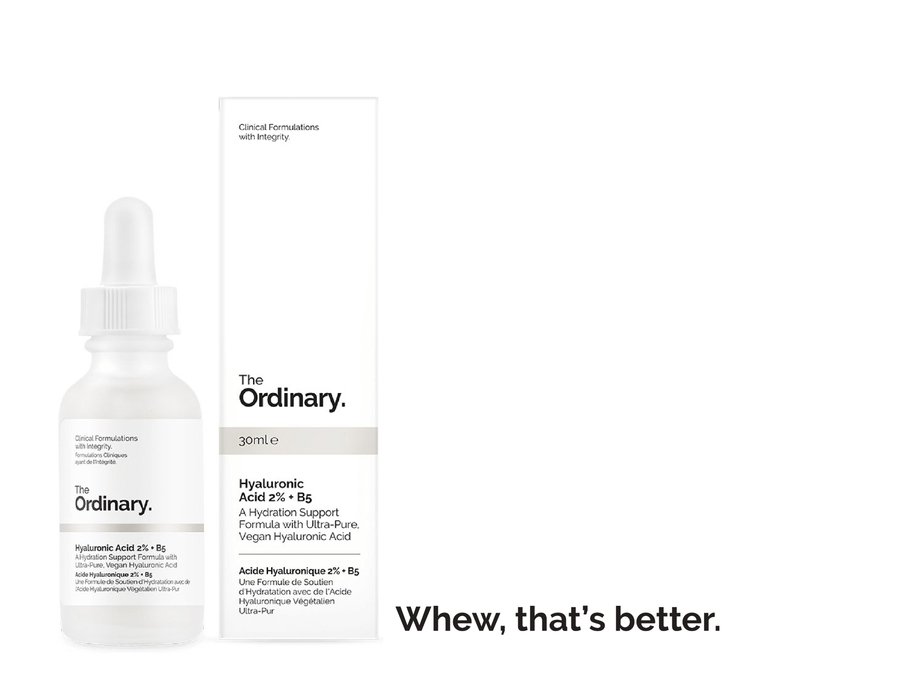
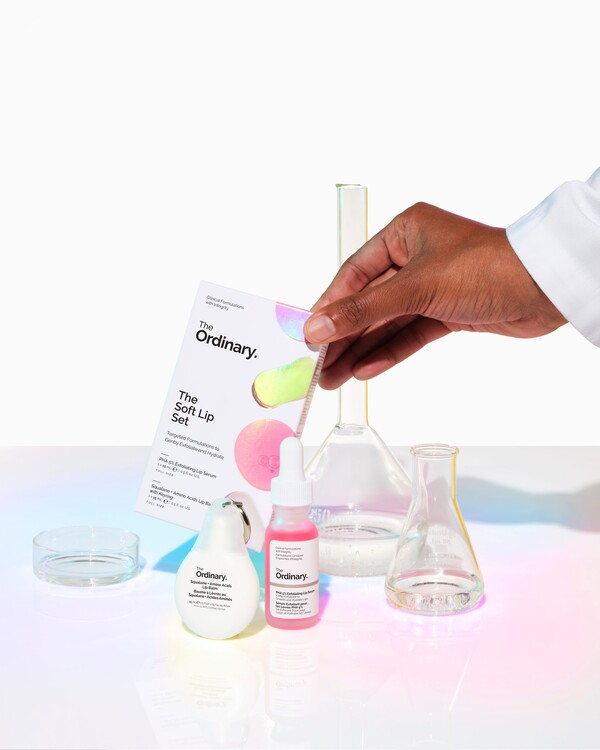
The brand’s visual identity evokes laboratory products: white labels, rigorous typography, chemical names, and concentration specifications. Rather than promising beauty, the primary graphic element becomes compositional data.
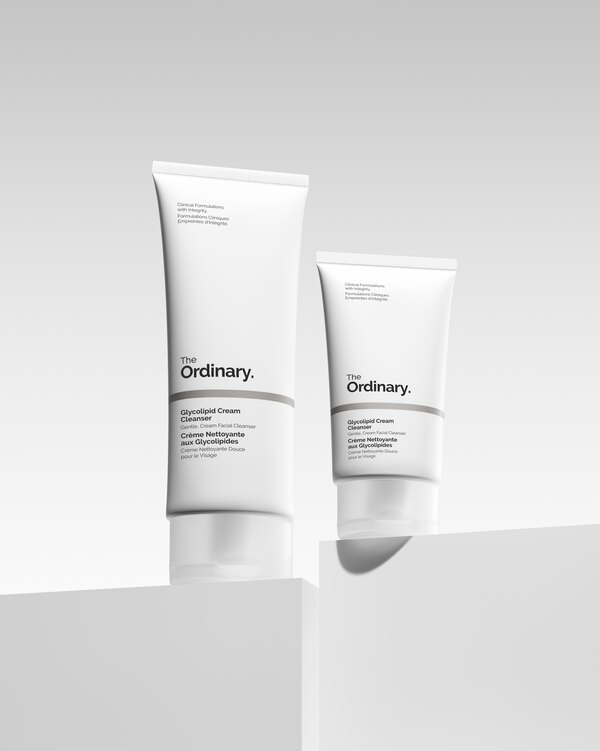

According to Roland Barthes’ semiotics, an image possesses not only a direct meaning (denotation) but also additional cultural meanings (connotation).In the case of The Ordinary, the chemical names and percentages provide factual information about the product, but simultaneously evoke associations with scientific precision and objectivity.
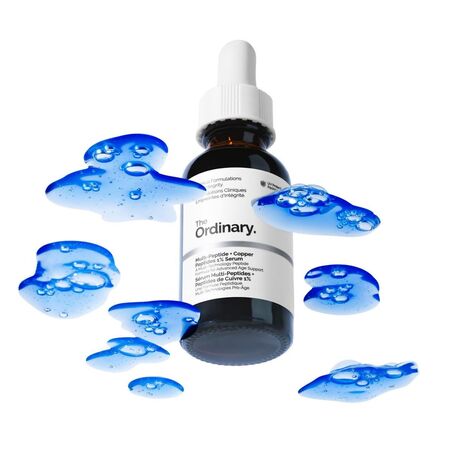

The form of the packaging plays an additional role. Glass vials and pipettes evoke laboratory equipment. The process of applying the serum visually parallels the precise dosing of a substance.
However, neither the bottle’s shape nor the rigor of the design serves as proof of the product’s effectiveness. Their value lies in the fact that they make the scientific nature recognizable even before engaging with the research.
However, The Ordinary is not limited to signs of scientific legitimacy. In its digital communications, the brand also provides sources that potentially allow users to verify some of its claims.
Scientific rigor as verifiable information
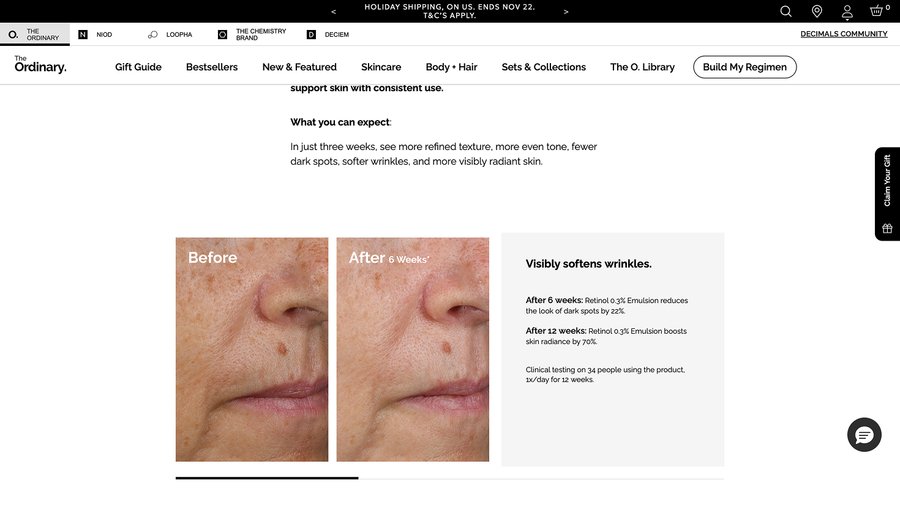

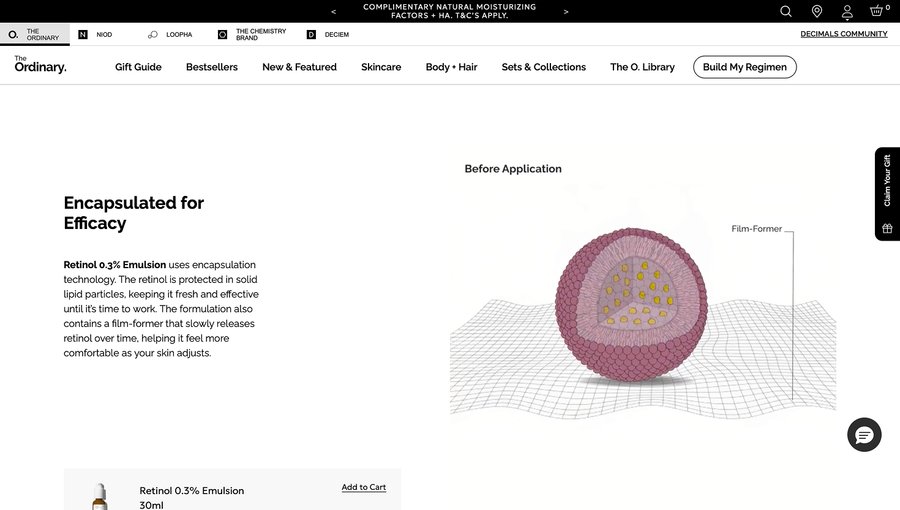
The principle of transparency at The Ordinary extends beyond the packaging. On the brand’s official website, it explains the purpose of ingredients, formula specifics, and skin care routines.
In its educational materials, The Ordinary employs an explanatory language. Instead of offering a brief promise of results, the reader is invited to understand the principles behind ingredient functionality and common skincare misconceptions.
In some articles, The Ordinary includes numbered lists of scientific publications, citing authors, work titles, and journals.Visually, these lists resemble an academic paper. However, unlike the laboratory aesthetic of packaging, bibliographic citations also serve a practical function: they allow readers to find the original source and verify the research upon which the explanation is based.