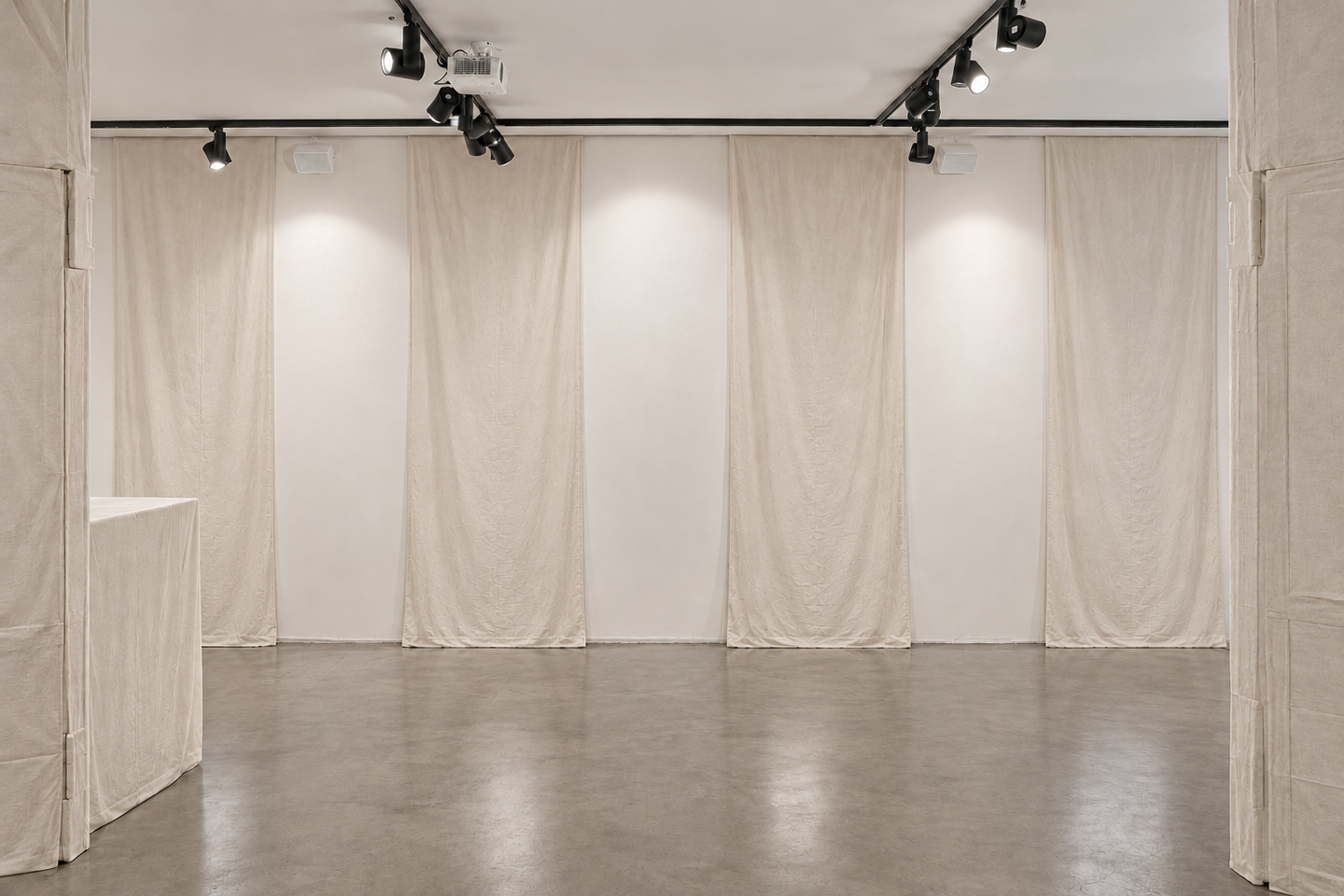
Trails. A Multimedia Exhibition Project
An exhibition about an experience that transforms our perception of space and makes it impossible to return to the way we first encountered it.
Space is never perceived in isolation. Every new experience inevitably relates to those that came before, and perception becomes a process of continually layering and reinterpreting previous states. Space itself may remain unchanged, yet it is impossible to experience it for the first time again: the initial encounter has already become part of the next.
How does previous experience transform our perception of space, and how can this transformation become part of an artistic statement?
Artistic Approach and Concept
Space is never perceived in isolation. Every new experience inevitably relates to those that came before, and perception becomes a process of continually layering and reinterpreting previous states. Space itself may remain unchanged, yet it is impossible to experience it for the first time again: the initial encounter has already become part of the next.The exhibition Trails explores the ways in which previous experience continues to act upon the present: accumulating, recurring, and transforming how we perceive what follows. These processes emerge in the works through different modes of engaging with space and material. Each work addresses a particular aspect of previous experience, revealing how it shapes our perception of the present.The exhibition is conceived as a system of interconnected works, united by a shared inquiry into the experience of space and the ways it is shaped by what came before. The installation strategies determine how the works relate to one another and to the exhibition space, forming a cohesive spatial structure.
Artistic Context
In developing this project, I researched a range of artists whose practices primarily involve installation, as well as selected works by these artists. The most relevant examples are:
Do Ho Suh — Seoul Home / LA Home / New York Home… (1999)This work was inspired by Suh’s longing for his childhood home in Seoul after moving to New York. Using translucent silk, Suh meticulously recreated the details of the traditional Korean hanok in which he grew up, creating a ghostlike presence of a house suspended high above the exhibition space. By transforming architectural structures into ephemeral, portable sculptures, the artist evokes the fleeting nature of memory, particularly in the context of his own experience of migration and displacement. The work also suggests that home can travel with us—a concept reflected in its evolving title. Each time the sculpture is exhibited, the location is added to its title, becoming a record of the places it has inhabited. The project invites us to consider how familiar architecture can exist beyond its original setting and how its perception changes when it is relocated.Rachel Whiteread — Ghost (1990)In Ghost, Whiteread created a plaster cast of the interior of a Victorian room, transforming its walls, ceiling, windows, and other architectural details into a sculptural form. Instead of the room itself, the viewer encounters a cast of its interior surfaces. The work preserves the structure of a specific place while making it inaccessible to its former use and mode of perception. It demonstrates how the form of a place can be preserved through transformation rather than through a literal reproduction of its familiar surroundings.Ann Hamilton — seam (1994)In the installation seam, Hamilton brings together textiles, images, sound, and architectural space to create an environment whose perception depends on the viewer’s position and movement. Individual elements emerge gradually and are not always available to be viewed simultaneously; the experience of the work therefore develops through partial observations and the viewer’s physical presence within the installation. Hamilton creates a situation in which perception becomes inseparable from the organization of space and the viewer’s interaction with its elements. This work is particularly relevant to an exploration of how exhibition design can alter familiar ways of looking and perceiving.
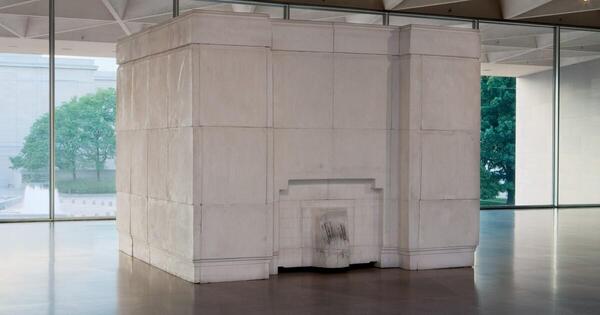
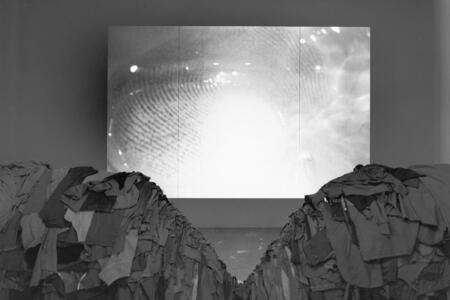
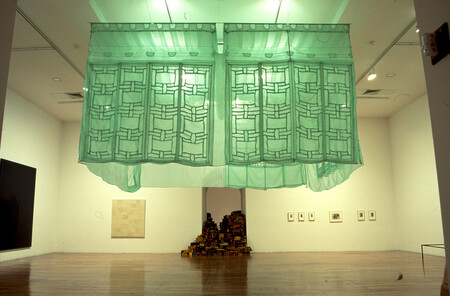
from left to right: Rachel Whiteread — Ghost (1990); Ann Hamilton — seam (1994); Do Ho Suh — Seoul Home / LA Home / New York Home… (1999)
Artistic Experiments and the Search for Form
My artistic research focuses on material approaches to engaging with previous experience. In painting, I explore the possibility of transforming an image by partially erasing it and applying new layers. In textile experiments, I investigate how concealing architectural elements can alter the perception of an exhibition space. My work with ceramics explores the reproduction of a familiar motif and its incorporation into a new spatial context.These experiments help me determine how the properties of materials, scale, and methods of display can become integral to an artistic statement rather than merely serving as means of realizing a pre-formulated idea.
*AI-generated visualization
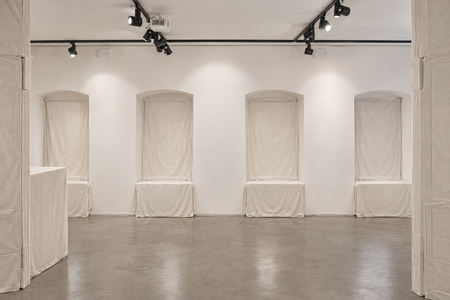
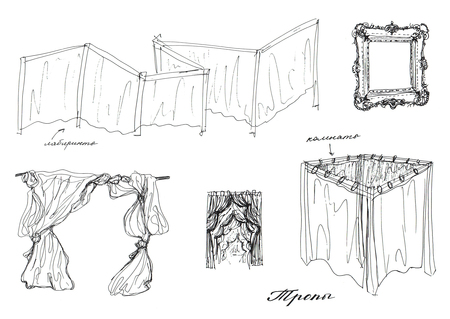
*AI-generated visualization; sketch
Exhibition Form and the Viewer’s Experience
The exhibition is conceived as a cohesive spatial composition in which the arrangement of the works becomes part of the artistic method. The relationship between the works and the architecture of the gallery, their visibility, and their positioning in relation to one another establish the conditions of perception and allow the exhibition itself to explore the influence of previous experience.Installation strategies will be developed alongside the artworks. Particular attention will be paid to how concealment and revelation, repetition and transformation can shape the perception of both the works and the exhibition space.
Proposed media: textile, painting, ceramics
Project Development and Production
Trails is currently at the stage of developing its artistic concept and exploring possible exhibition formats. The project involves creating new works in painting, textile, and ceramics, as well as developing a cohesive exhibition structure.The preferred format is an exhibition in a single gallery space that allows me to work with the architectural features of the venue and establish relationships between the works. Specific technical solutions, the final selection of works, and installation requirements will be determined through artistic experimentation and in consultation with the gallery.
I would be delighted to discuss the possibility of presenting Trails in your gallery or collaborating on the further development of the exhibition concept.
Proposed exhibition dates: May 1–15, with the exact dates to be agreed upon.
About the Artist
Darya Moskalenko.My artistic practice is rooted in two primary media: textile and non-figurative painting. Through material exploration, I investigate themes such as the boundaries between dreams and reality, meditative states and immersion, intuitive and automatic sewing, embodiment, tactility, and the interaction between material and space. I am currently developing a multimedia project that explores how previous spatial experience is reconsidered in contemporary art, why it cannot be relived in exactly the same way, and what can remain of an experienced space when the experience itself cannot be repeated.Ceramics has become a way for me to translate this interest in material into everyday forms. I am drawn to its slowness and physicality, and to the way an idea takes shape through the hands, with the finished object always bearing traces of its making. I am interested in bringing together artistic expression and functionality: an object can be part of everyday life while retaining its own distinct character and status as an artwork, without becoming an impersonal domestic item.
Education:
— Surikov Art School No. 1, Krasnoyarsk (2019–2021)
— Krasnopresnenskaya Children’s Art School (2021–2023)
— Film College No. 40, Moscow International Film School — Photography (2021–2022)
— HSE Art and Design School — BA in Design and Contemporary Art (2023–2027)Selected Exhibitions:
— Boundaries. Territories, Si19 Gallery, June 3–6, 2025
— Journeys: Through Time and Space, Arkhangelskoye Museum-Estate, April 23–August 30, 2026
— Open-Quant, ZIL Library, June 19–24, 2026
— Megalithic Complex, Gryaz Village, May 30, 2026
— East of the River, Russian State Library, Department of Oriental Literature, June 5–15, 2026
— Reassembly — solo exhibition project, Si19 Gallery, June 16–20, 2026
Contacts
telegram: @dari_moss
email: ddvvmm77@gmail.com
Bibliography
Do Ho Suh: Almost Home. Smithsonian American Art Museum & Renwick Gallery. Available at: https://americanart.si.edu/exhibitions/suh (accessed October 11, 2026).Do Ho Suh. Museum of Contemporary Art (MOCA). Available at: https://www.moca.org/artworks/seoul-homela-homenew-york-homebaltimore-homelondon-homeseattle-homela-home (accessed October 11, 2026).«In the Library: Rachel Whiteread’s Ghost.» National Gallery of Art. Available at: https://www.nga.gov/exhibitions/library-rachel-whitereads-ghost (accessed October 13, 2026).«Projects 48: Ann Hamilton.» The Museum of Modern Art (MoMA). Available at: https://www.moma.org/calendar/exhibitions/441 (accessed October 14, 2026).«Rachel Whiteread.» National Gallery of Art. Available at: https://www.nga.gov/exhibitions/rachel-whiteread (accessed October 13, 2026).
Image sources