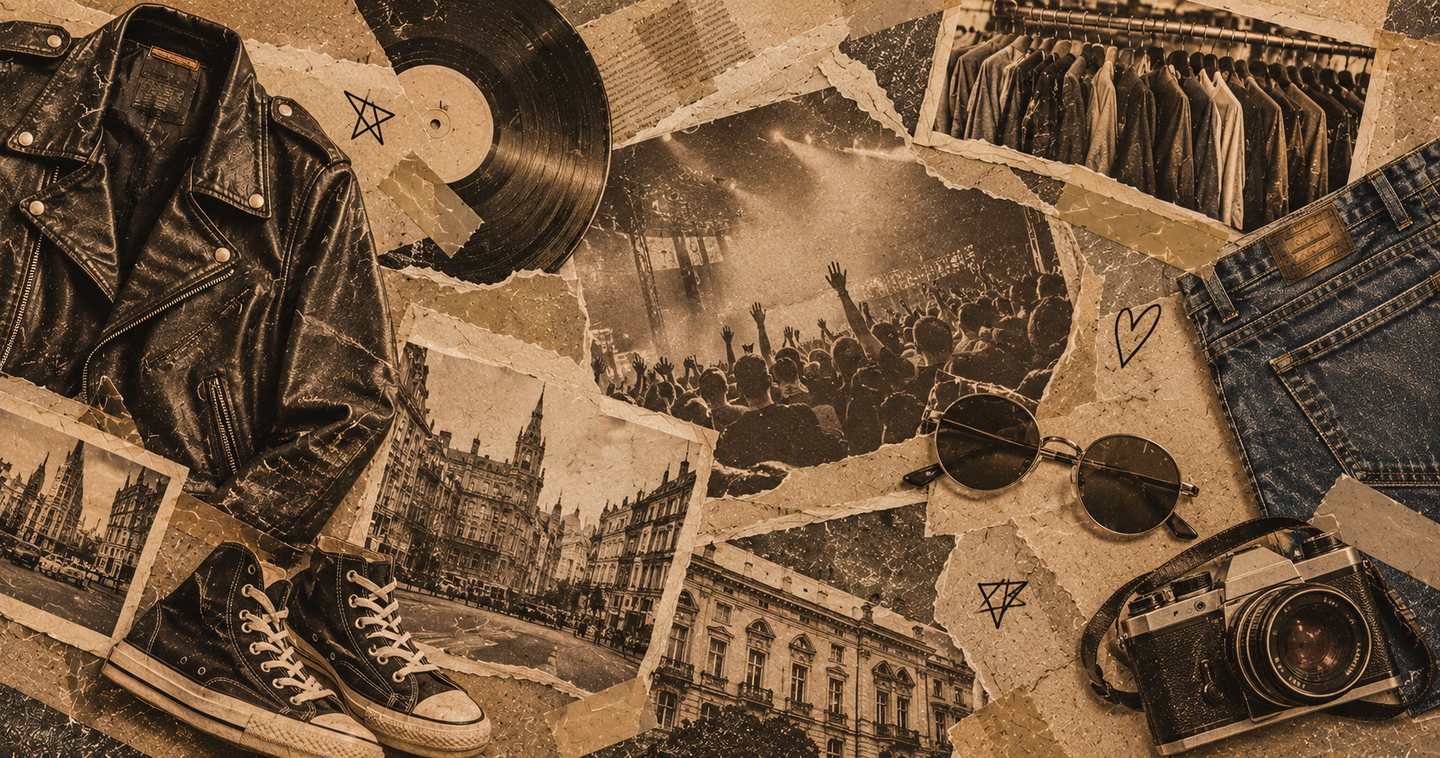
Items with a history
«Items with a History»—a Russian-language media outlet dedicated to vintage clothing, thrift shopping, and personal style. The project showcases how to find unique items, understand their origins and quality, and integrate them into a modern wardrobe. The central focus of the study is not the trend or the brand, but the object itself: its history, provenance, character, and potential for new interpretation. In a single piece, a user can view a specific item, learn when and why it appeared, why it looks the way it does, where to find it, and how to style it today. Goal: To create an accessible media platform that transforms clothing searching into an act of exploration, play, and a method for forming one’s own personal style.
Data Sources for Media
Primary, secondary, and supplementary sources are used to create publications. They help in finding topics, verifying historical facts, studying fashion, and tracking audience interests.
Primary Sources
Data that the media gathers independently and can use to create its own content.-Personal Photos of Items—photographing vintage clothing, tags, fabrics, seams, hardware, and other details. Example: Photographing an old leather jacket and analyzing its construction and condition.
-Visiting Thrift Stores—independently researching stores, inventory, and interesting finds. Example: Visiting three vintage stores in Moscow and compiling a selection of the best spots.
-Audience Surveys—collecting opinions on vintage clothing, shopping, and style preferences. Example: Showing three vintage looks and asking the audience which one they would choose for themselves.
-Interviews—conversing with vintage store owners, collectors, and stylists. Example: Asking a thrift store owner how they source and select items for the shop.
-Personal Experiments—practical investigations into clothing. Example: Comparing two outwardly similar jackets based on material, seam quality, and condition.
Secondary Sources
Existing materials that help verify information and investigate a topic in greater depth.— Brand Official Websites—company history, archival collections, and production specifics. Example: Studying the history of the Levi’s 501 jeans.
— Fashion Museums and Archives—historical photographs, garments, and materials on costume development. Example: Finding photographs of 1970s fashion and comparing them to modern styles.
— Books and Research—the history of fashion, the development of the textile industry, and consumption culture. Example: Using research to explain the popularity of vintage clothing.
— Professional Media—articles on fashion, vintage, apparel design, and resale. Example: Examining publications about the resurgence of 1990s fashion.
— Catalogs and Collections—archival images of clothing models, advertising campaigns, and old brand catalogs. Example: Comparing the vintage and modern photoshoot for a single label.
Supplemental Resources
Primarily used for generating ideas, visual examples, and gauging audience reception.— Pinterest—searching for references, vintage aesthetics, and visual trends. Example: Compiling a mood board of 1980s street fashion.
— Social Media—observing vintage bloggers, retail shops, and user-generated finds. Example: Investigating which styling methods for vintage garments are gaining traction.
— Mapping Services—locating secondhand stores, vintage boutiques, and consignment shops. Example: Discovering interesting stores in Moscow and marking them on a thematic map.
— Audience Comments and Messages—questions, feedback, and suggestions from followers. Example: If users frequently ask how to distinguish vintage from modern clothing, preparing a dedicated article.
Operating Principle: Personal photography, observations, and research form the foundation of publications. External sources are used for fact-checking, contextual research, and supplementary material.
Data Schema: Human and Machine Processing
Media work is built upon the collaborative use of automated tools and editorial processing. Machine services assist in gathering, sorting, and analyzing information, while the human remains responsible for the credibility, meaning, and quality of the final material.
1. Topic Ideation Human: observes an interesting trend, a popular direction, or poses a question that might engage an audience. Example: Why have leather biker jackets become a symbol of rock culture? 2. Material Curation Machine Processing: -Searching for articles, archives, and historical photographs. -Researching information on brands and specific apparel models. -Optical character recognition on photographs and scans. -Organizing gathered materials. Human: selects appropriate sources, verifies the accuracy of the information, and determines which materials can be used. 3. Information Analysis Machine Processing: -Comparing clothing characteristics. -Grouping information by periods and styles. -Identifying recurring design motifs. -Analyzing search queries and audience interests. Human: analyzes the collected data, determines the core message, and shapes the publication’s content.
4. Material Creation Machine Processing: -Drafting the text. -Structuring the article. -Generating headline options. -Condensing and adapting the text for various formats. Human: editing the text, fact-checking, adding authorial insights, and finalizing the presentation. 5. Visualization Machine Processing: -Searching for visual references. -Creating rough image concepts. -Photo processing. -Generating illustrations and supplementary visual assets. Human: selecting photographs, ensuring the visuals align with the content, building the composition, and maintaining a unified media style. 6. Publishing and Analysis Machine Processing: -Adapting publications for different platforms. -Scheduling material releases. -Gathering statistics on views, reactions, and saves. Human: reviewing the final publication, posting it, and analyzing audience engagement.
Main Distinction
Machine Processing Searches, collects, recognizes, sorts, compares, and speeds up information handling.Human Processing Observes, verifies, analyzes, makes decisions, and is responsible for the final outcome.Guidelines for Automated Services
Automated services are used at various stages of publication preparation. Each tool performs a specific task, but its results must always be reviewed by an editor.