
Introduction
The automobile is more than just a mode of transport. It simultaneously functions as a personal space, a protective shell, an environment for music and sonic self-expression, and a component of urban and social life. Inside, the individual strives to control the sonic environment and isolate themselves from the outside world; externally, the car itself becomes a source of sound—a visible and audible marker of identity and status.
1. The Car as Space Between Home and the Outside World
The automobile is gradually transforming into a second home: people spend a significant portion of their daily lives in it, shaping their personal atmosphere, listening to music, relaxing, working, and temporarily isolating themselves from the urban environment. Simultaneously, the car connects opposing functions—it both shields the individual from the outside world and enables them to navigate within it. Sound has become one of the main tools for creating this mobile privacy.

A man wearing sunglasses intently drives a car on an open country road. Artist: Shixart1985
Travel Trailers in a Tourist Campground, 1930 Author: State Library and Archives of Florida
Lone Tourist, Dias Lake, Sierra Nevada, California, 6–16 Author: Don Graham
1970 Commer Motorhome, built on a truck chassis. Author: Riley from Christchurch, New Zealand
Glamping: Comfortable Camping 2007 Author: W. Bulach
Road Trip 2023 Author: Rashid Jorvi
Highway 2008 By Mrmariokartguy
Family Road Trips 2019 Author 27gkw
Campervan Interior, Kitchen 1929 Bibliothèque nationale de France
California or Nothing 1920–1957 By Covarrubias, Miguel
2. The Automobile as a Shell: Body, Dwelling, and Road
The automobile can be viewed as an extension of the human body: it protects, transports, and isolates the individual from the external environment. For McLuhan, the dwelling serves as a collective extension of the body, and the automobile is its mobile protective shell. The machine changes not only distances but also the relationship between humans and the city—space begins to be perceived from within a moving object.
In Chapter 13, «Housing, ” McLuhan writes about the house as a collective skin that regulates heat and energy. In Chapter 22, „The Automobile, ” he terms the car a „carapace, a protective and aggressive shell“ of the urban individual. Chapter 10, „Roads and Routes of Paper Movement, ” allows this thought to be further elaborated: transport is not merely movement, but a form of communication that transforms space and social ties.
Car Interior 2024 Author Dhaval Surana
ACS 1955 Automobile Salon Artist Tasman Ross
Interior of a 2005 automobile Author: J Lian from Boston, USA
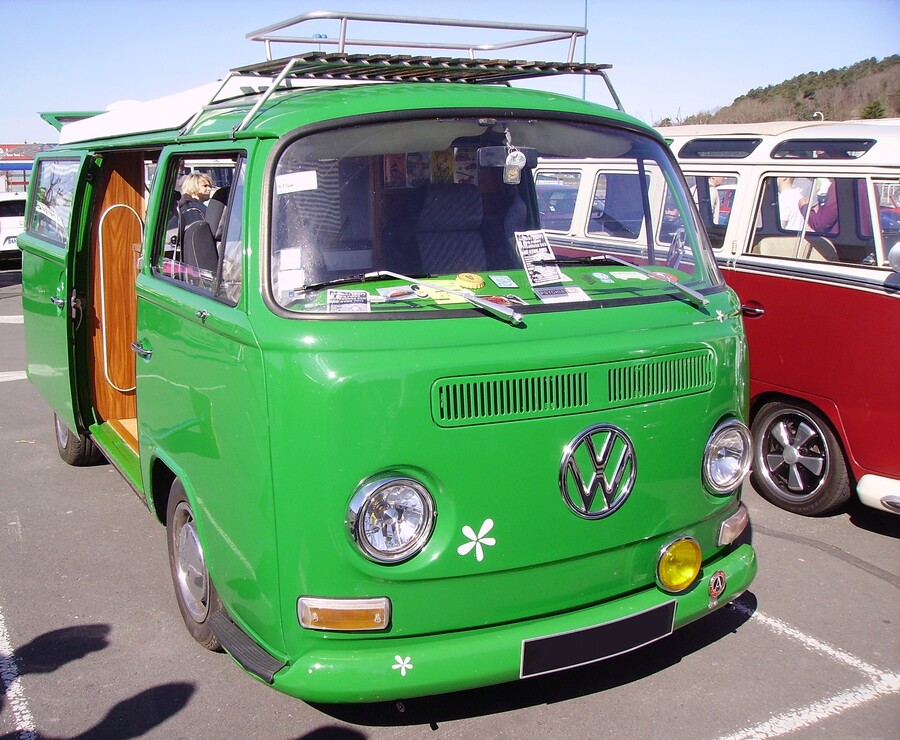
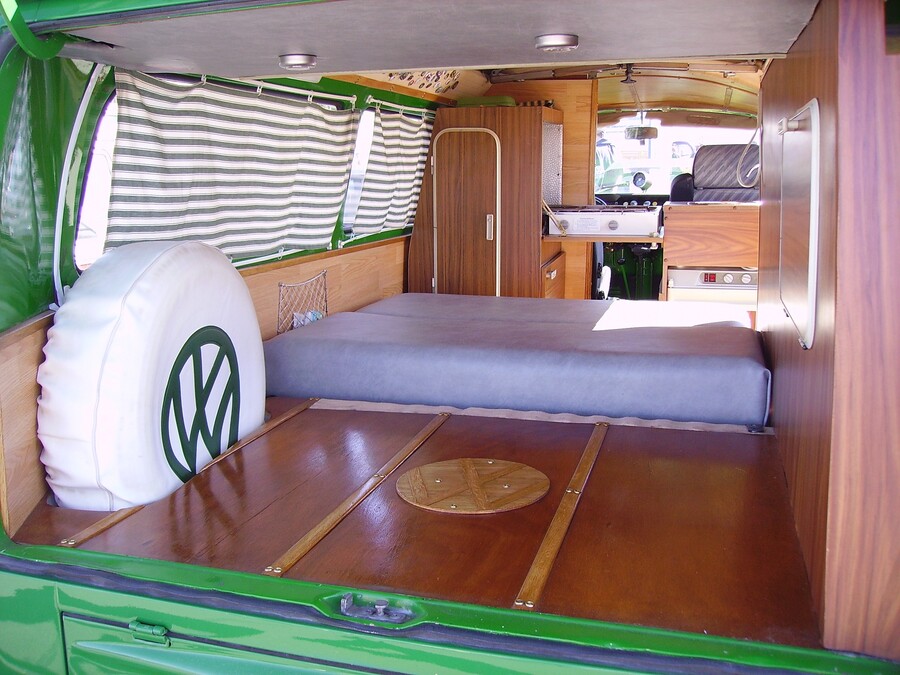
Volkswagen Type 2 Camper Interior, 2013