«We are not just selling glasses — we are building a world»
— Hankook Kim, Founder

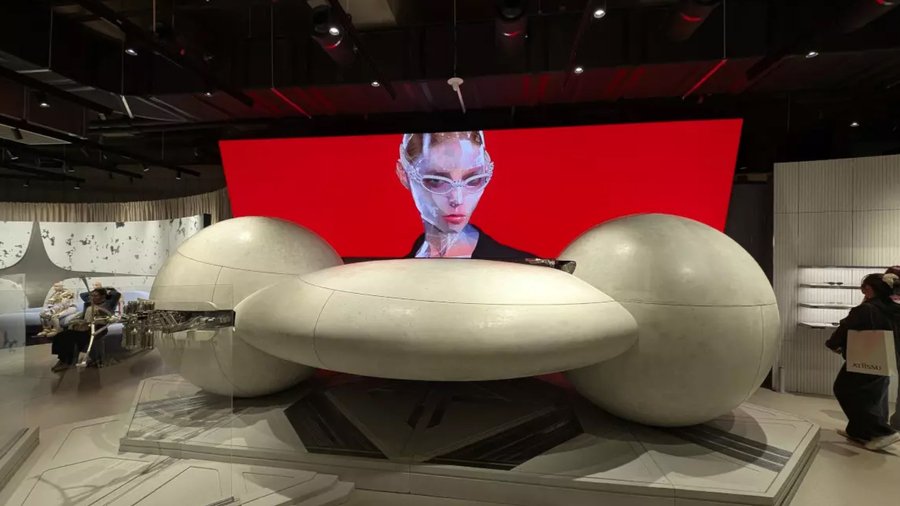
Gentle Monster Flagship Store, Seoul — 2024 futuristic retail interior
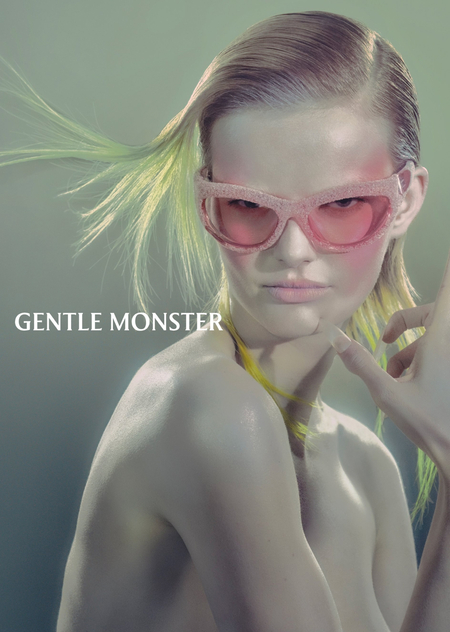
Gentle Monster is a South Korean luxury eyewear brand founded in 2011 by Hankook Kim in Seoul. From its very first store, the brand rejected conventional retail logic — surrounding eyewear with robotic sculptures, sensory installations, and rotating art concepts. Today it operates over 100 stores globally and collaborates with Jennie (BLACKPINK), Hailey Bieber, and Maison Margiela.
Core positioning: experimental, immersive, provocative. The brand does not define itself through product quality alone, but through the cultural experience it creates around the product
Who Is the Gentle Monster’s Consumer?
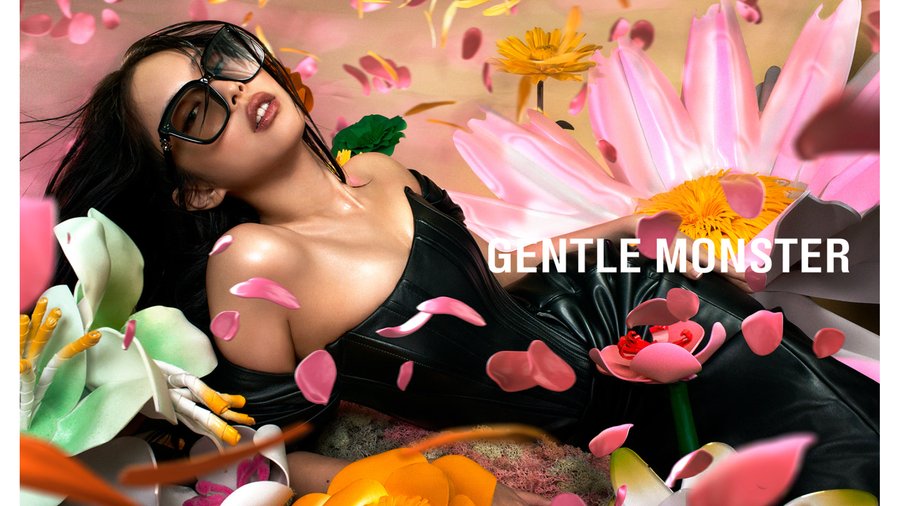
Gentle Monster x Jennie Kim, «Jentle Garden» campaign — Spring/Summer 2022. Shot by Hugo Comte. Digital floral environments
Demographics: 20–35 years old, urban, globally connected Psychographics: interested in contemporary art, streetwear, architecture, self-expression through objects Media behavior: heavy Instagram user, values aesthetics over price argument
«Interpersonal communication satisfies our identity needs — we establish who we are through communication with others»
For this audience, consuming Gentle Monster IS a form of self-communication — the brand signals cultural belonging before it sells a product.
A Brand That Speaks in Every Medium
Gentle Monster, flagship Marais — Paris, France — 2025. Giant Head Kinetic Object
Gentle Monster communicates across five primary channels, each serving a distinct communicative function — with total aesthetic coherence across all of them.
Socials & The Store: Two Communication Environments
***GRAM: The feed functions as a curated art magazine — not an advertising board. No price tags, no sale banners, no calls to action. 2.8M followers scroll it like a gallery.
PHYSICAL RETAIL: Every flagship is redesigned multiple times per year around new installations. Robotic sculptures, fog machines, mirrored mazes — and somewhere inside, glasses.
Collaborations & Community: PR Without Advertising
Gentle Monster x Jennie Kim Анонс третьей коллаборации — 2024 Animated capybara reveal
COLLABORATIONS (left column): Jennie (BLACKPINK) — Jentle Garden. Hailey Bieber. Maison Margiela. Huawei. Each treated as an art project, not an endorsement. The celebrity IS the peripheral cue.
ORGANIC COMMUNITY (right column): Visitors photograph installations and share without incentive — creating a self-sustaining loop. This reflects Symbolic Convergence Theory (Week 3): shared experience builds group identity.
We’ve seen WHAT the brand communicates. Now: WHY does it work?
The channels above are not simply platforms — they are engineered communication environments. In Part 2, we apply two theories from the course to explain the mechanics behind Gentle Monster’s effectiveness.
THEORY 1 — WEEK 4: Elaboration Likelihood Model — Petty & Cacioppo, 1986 THEORY 2 — WEEK 5: Framing Theory — Entman, 1993
Peripheral Cues in Action: Visual Evidence
Gentle Monster never argues for its products logically. No copy about lens quality, UV protection, or durability. Instead — three types of peripheral cues:
CUE TYPE 1 — Aesthetic cue: Surrealist store sculpture → triggers awe. Attitude change without a single word.
CUE TYPE 2 — Celebrity cue: Jennie wearing glasses → credibility transfer. The fan’s attitude toward the celebrity moves to the product.
CUE TYPE 3 — Prestige cue: Production quality of posts and films signals luxury before any product detail is shown.
The Store as a Persuasion Machine
Gentle Monster’s physical retail environments are the most sophisticated application of peripheral persuasion in the brand’s arsenal. When a visitor enters a store, they are immediately immersed in a total sensory environment — architecture, light, sound, movement — that makes rational product evaluation temporarily impossible.
This is designed persuasive structure. The architectural magnificence pre-frames the product as extraordinary before the customer has even looked at the eyewear. In ELM terms: biased elaboration — the environment structures cognition so any product encountered within it inherits an aura of prestige
Framing Theory: How Meaning Is Constructed
Framing Theory (Entman, 1993) explains how the presentation of a subject determines how it is understood.
The same pair of glasses can be framed as:
FRAME A — Functional product: Vision, protection, price FRAME B — Fashion accessory: Style, trend, season FRAME C ← GM uses this — Cultural artifact: Identity, art, experience
Visual Evidence: Gentle Monster’s Frame in Practice
VISUAL FRAMING — competitor comparison (left): Ray-Ban Instagram: product on white background, specs, price focus. GM Instagram: surrealist installation, no product copy, no price. Same product category. Completely different frame.
LANGUAGE FRAMING (right): GM says: «installation», «world», «experience», «story» GM NEVER says: price, discount, quality, best, value Every word enforces the art-object frame.