Navigation
1/ The Portrait of the Female Designer: Between Professionalism and «Femininity»2/ «Feminine» Design Fields: Ceramics, Textiles, Home Appliances, Packaging3/ Professional Press and Exhibitions: The Inclusion and Exclusion of Women4/ Women as Users and as Designers: Advertising Home Appliances5/ «Feminine» Form and Material: Pastels, Plastic, Streamlining6/ Critical Reflection: How the History of «Feminine Design» is Being Reconstructed Today
Concept
When discussing the golden age of American industrial design in the 1930s–1950s, the prevailing image is typically one of a rugged world of metal, engineering, and streamlined forms created by men. However, the history of women in this profession presents a far more complex perspective. Many researchers attempted to fit women into this masculine canon, but their professional identity emerged not from blind imitation, but from a subtle visual dialogue. For them, it became clear that working in spheres labeled as «feminine» was not merely a limitation, but a survival strategy. Women designers, whose names often remained on the periphery of the professional press for years, actually forged a unique stratum of the material world where «femininity» itself became a tool for legitimization.
Women designers in the U.S. during the 1930s–1950s were professionals who constructed their identity at the intersection of «femininity» and industry. They created the visual language of domestic design, where dual representation (presence in «female» niches despite absence from mainstream iconography) shaped their professional strategies. By forging new paths for self-actualization within the industry’s constraints, they developed a design approach rooted in labeling specific spheres and materials as «feminine.»
It is considered an interesting fact that the professional survival of female designers was built upon the ambivalence of their visual representation. In appliance advertising, the woman simultaneously played two roles: as the creator of the object and as the recipient—the «homemaker» for whom the object was intended. This created a complex visual conflict. On one hand, women were included in professional press and museum exhibitions as an «exception» or as bearers of a «specific feminine perspective.» On the other hand, they themselves leveraged this labeling to establish themselves within the industry. The core of their work lay in skillful balancing. They designed spaces of everyday life where the form and material of an object were linked to femininity, transforming this constraint into professional expertise. This facilitated the refinement of their legitimization strategies within a marginalized segment.
Their visual strategies and approach to constructing the «female» within everyday design played a monumental role in understanding the modern history of the profession. Female designers strove to create objects for the user and reexamine the essence of the professional environment, which was a complex system combining commercial success, aesthetics, and marginalized status.
In my visual research, I aim to closely examine the dual visual representation of female designers in press and advertising from the 1930s–1950s, investigate the methods that became their survival strategies, and analyze the influence they exerted on contemporary exhibitions, archives, and critical reflection (the reassembly of the history of «women’s design»).
Thus, the following hypothesis was formulated: «The dual visual representation of female designers in the press and advertising shaped their professional identity and survival strategies within the industry, as the labeling of certain fields and materials as ‘feminine’ served as a tool for professional legitimation while simultaneously reinforcing their marginalized position relative to the ‘male’ industrial mainstream.»
Portrait of a Female Designer: Between Professionalism and «Femininity»
The visual representation of the female designer during the 1930s–1950s functioned as a mechanism of gender mediation, easing the tension between the masculine sphere of industrial production and normative femininity. In archival photographs featuring Belle Ghogn, Marianne Brandt, and Eva Zeisel, the use of compositional codes is demonstrated—codes that legitimized professional status through «softening» visual markers.

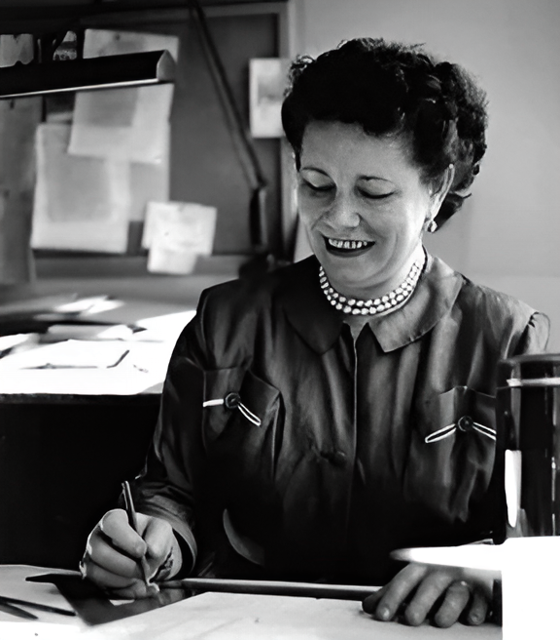
Right: Belle McGowan at a desk. Source: Smithsonian Institution Archive (c. 1930) Left: Mariana Brandt, self-portrait (1923)
The woman is placed within the context of a workshop—a space of intellectual and physical labor—but her attire, posture, and energy transmit a sense of «femininity, ” preventing the audience from perceiving her as a threat to the patriarchal order, despite prevailing stereotypes, gender roles, and limited access to education.
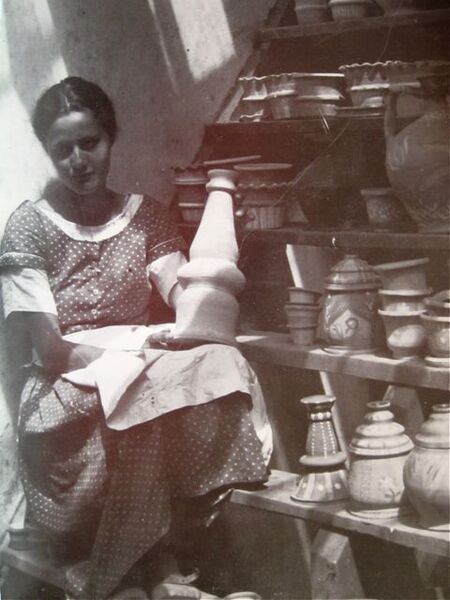
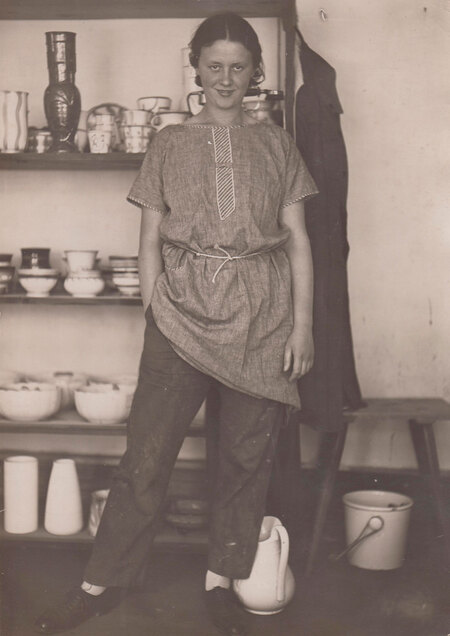
Eva Zeisel during her studies in Vienna. Source: Eva Zeisel Archive (1925–1926)
The rhetoric of these images constructs the image of a «professional, yet a lady,» where competence does not negate gender expectations. Dorothy Cole’s photography presents an entirely different register, depicting the designer in a basement converted for military production. Here, salon aesthetics are absent. What we see is the workflow, physical labor, an environment without ornamentation.
Dorothy Cole while working at the Baxter Lab factory for military needs. Photographer Howard Hollem (1942).
Comparing these types of images allows us to conclude that the designer’s visual persona depended on the context—(peacetime vs. wartime production)—and served as a tool for legitimation: a woman could only access the profession provided she visually adhered to gender conventions.
2/ «Women’s» Design Fields: ceramics, textiles, home appliances, packaging
The labeling of certain design fields (ceramics, textiles, tableware, packaging) as «feminine» functioned as a form of professional segregation, yet a visual and material analysis of these objects reveals the strategic potential of this niche.
Women designers employed essentialist notions of «feminine taste» as a pathway to industrial production and the mass market. The visual design of these objects paradoxically both constrained and legitimized their participation. The industry delegated the design of domestic items to them, based on the stereotype of women’s «natural» inclination toward the home environment—yet it was precisely this that allowed designers to integrate into commercial design and claim authorship, albeit within a segment considered «secondary» to the technical one.
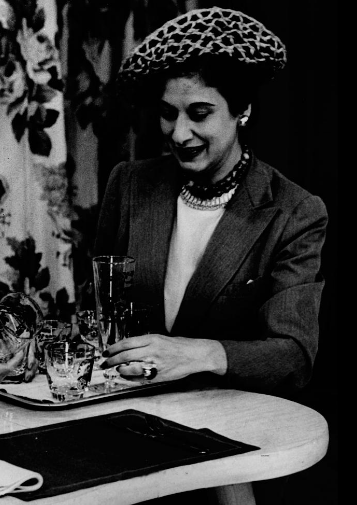
Freda Diamond and Libbey Glass: Transparency and «Democratic» Design
Freda Diamond radically shifted away from the «artistic» approach to everyday objects. Her strategy was based on scientific analysis of needs. By abandoning expensive crystal and opting for visually «neutral» glass, she insisted on the functionality and practicality of items for daily life. Conducting extensive surveys of retail chains, Diamond demonstrated to the industry that design is not intuition—it is precise calculation. She legitimized women in the profession through marketing analytics, proving that a female designer is just as adept a market researcher.
Photo/ Freda Diamond, Source: Freda Diamond collection at the Smithsonian Institution (archival materials 1945–1984)
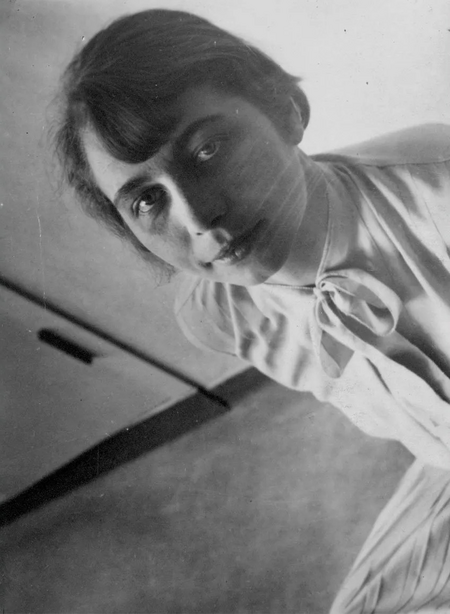
Gunta Stölzl: Weaving as a Commercial Project and Institutional Struggle
Gunta Stölzl’s approach aimed to overcome the status of «second-rate craft» that the Bauhaus had assigned to weaving. By heading a workshop, she shifted focus from creating unique «painterly» panels to developing serial industrial patterns. Her strategy involved rigorous commercialization and the introduction of synthetic materials. Stölzl proved that textile production is a highly profitable and technically complex process requiring engineering acumen, thereby legitimizing women in leadership positions within design.Photo/ Gunta Stölzl, Source: Bauhaus-Archive Berlin (1927)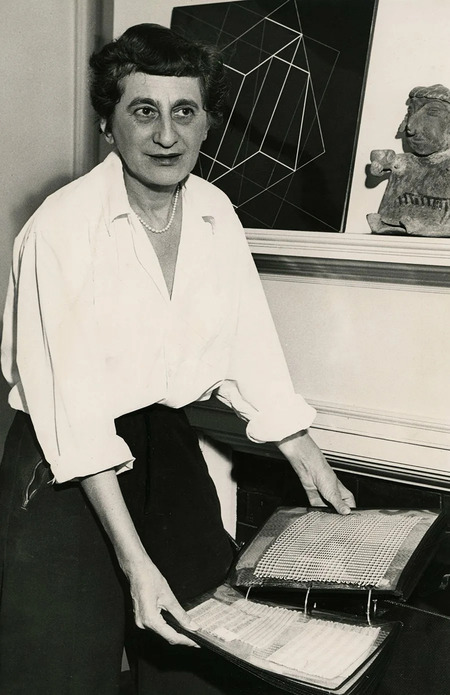
Annie Albers and Textile: From «Women’s Craft» to Industrial Innovation
If Schtölzl fought for the commercial viability of textiles, Annie Albers elevated them to the level of conceptual art and high technology. Her approach was based on the synthesis of functionality and avant-garde: she used materials that simultaneously absorbed sound and reflected light, working at the intersection of architecture and design. Albers dismantled the hierarchy between «high» art and applied craft, insisting that weaving is a complete engineering discipline. Museum recognition and collaboration with industrial giants proved that «women’s handiwork» could be cutting-edge industrial design.Photograph/ Annie Albers, Source: Bauhaus-Archive Berlin (1930)

Alma Ziegler-Buscher: The Children’s Room as a Laboratory for Functional Design
Alma Ziegler-Buscher operated in a unique niche—the children’s room. Her approach was not merely designing objects, but rather «open systems» and a developmental environment. By creating furniture and toys, she transformed the child from a passive consumer into a co-creator of form. Legally protecting her designs with patents, Ziegler-Buscher legitimized children’s design as a serious engineering and pedagogical discipline, proving that designing toys requires no less professionalism than creating furniture for adults.Photo/ Alma Ziegler-Buscher, Source: Bauhaus-Archive Berlin (1923)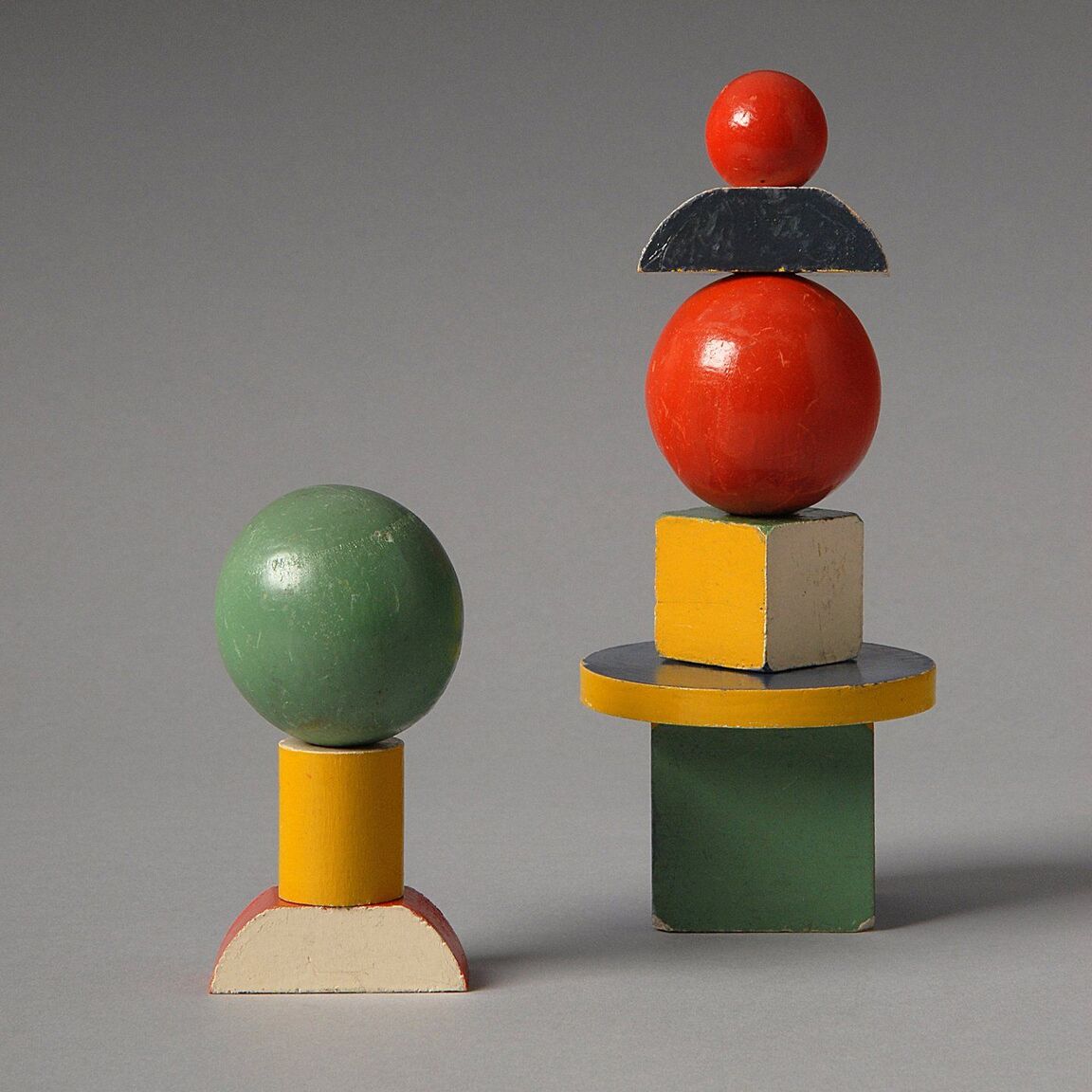




Мебель для детской комнаты в Haus am Horn, Альма Зидхофф-Бушер (1923)
Thus, the industry delegated the design of household items to them, based on the stereotype of women’s «natural» affinity for the domestic sphere, yet it was this very thing that allowed designers to integrate into commercial design and claim authorship.
3/ Professional Press and Exhibitions: Inclusion/Exclusion of Women
Institutional representation of female designers in the professional press and at exhibitions during the 1940s and 1950s functioned as a mechanism of «managed inclusion.» Museums and specialized journals did not completely exclude women; rather, they utilized their work to create a semblance of progressiveness while rigidly regulating their status. This manifested through two visual mechanisms. First, through curatorial fragmentation: women’s work was most frequently placed in «safe» categories of applied arts (ceramics, textiles, glass), whereas «major» industrial design (furniture, appliances, architecture) remained a masculine domain. Second, through statistical invisibility: within the bulk of the exhibits, women’s works dissolved, creating the illusion of equal participation while statistically remaining a marginal phenomenon.
Even rare instances of personal recognition—such as Annie Albert’s exhibition at MoMA—legitimized women only within the traditionally «feminine» niche (textiles). Thus, the press and museums constructed the image of the female designer as a carrier of a «particularly feminine perspective» or a «decorative complement,» preventing her from claiming the universal status of a creator-inventor. The institution afforded women visual presence but denied them the authorial status of «great» style.
4/ The Woman as User and Designer: Household Appliance Advertising
The advertising industry of the 1940s generated a fundamental semiotic rupture between the figure of the professional woman and the consumer woman. This divide can be described as visual appropriation: advertising claimed objects created by female designers, entirely erasing their authorship and returning the object to the public solely within the context of domestic life. Advertising posters constructed a persistent visual trope of the «multitasking housewife,» where technology served merely as a tool for servicing the family. In this visual paradigm, the woman lacks subjectivity—she does not create things; she only interacts with them. The conflict between these two roles lies in the fact that the designer woman (the subject of production, standing at the drafting table) and the user woman (the object of advertising persuasion in an apron) exist visually in parallel realities.