Navigation
- Concept
- The Mass Wave of Emigration
- The Wardrobe as a Memory of Past Life
- Clothing in a New Everyday Life
- Russian Fashion Houses in Paris
- Craftsmanship as a Means of Survival
- Russian Emigration: Restaurants, Balls, and Social Life
- The Emigrant Archetype in Cinema
- Conclusion
- Bibliography
Concept
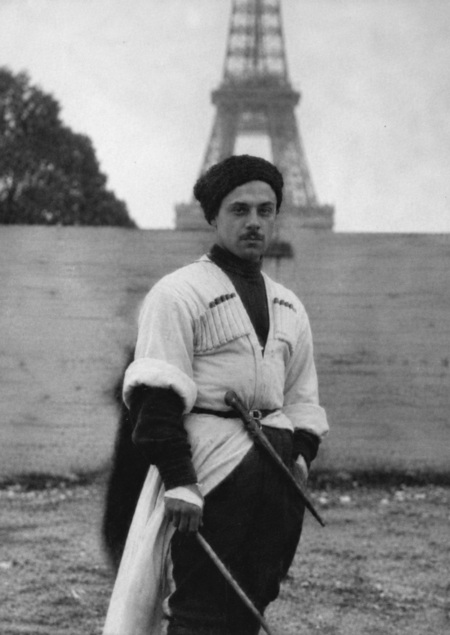
Russian émigrés' clothing today is often associated with the image of pre-revolutionary Russia: furs, elaborate dresses, and military uniforms. However, after the Revolution, clothing meant far more. People were leaving the country, losing their accustomed way of life, and trying to preserve at least a fragment of their former existence. Clothing served as a reminder of home, yet it also became something that needed to be carefully preserved, altered, or sold.
In exile, the wardrobe took on a different significance. For some, it helped maintain a familiar appearance and a sense of belonging; for others, it became a source of income. Russian tailors, embroiderers, and couturiers opened workshops and gradually became part of European fashion.
I will discuss how the role of clothing for Russian émigrés changed and why the same garment could simultaneously be a memory of the past and a way to start life anew.
The goal of this research is to analyze how the role of clothing changed in the lives of Russian emigrants after the revolution and to understand what circumstances transformed it into both a means of preserving identity and a tool for adapting to a new life.
1920–1930
1. Massive wave of emigration
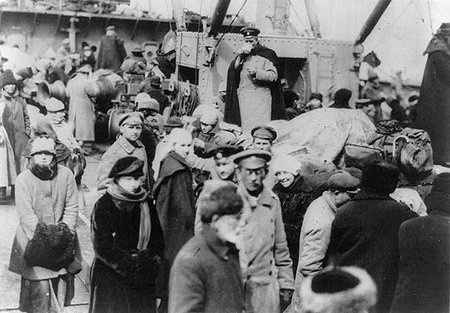
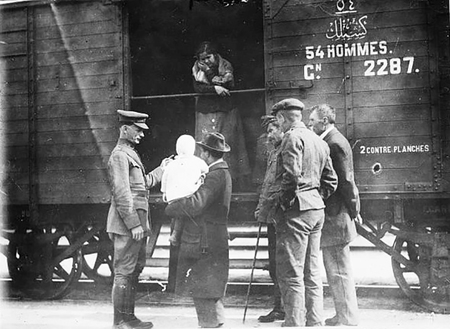
1. White Russian refugees crowding a Red Cross relief boat, en route to the Island of Proti near Constantinople, 1920. 2. Refugees for Bulgaria. James A. Mills, an American Red Cross worker from New York, directing the leading of a relief train in Constantinople destined to take Russian refugees to Varna, Bulgaria. Boxcars still bearing wartime signs were used to transport the refugees, 1920.
After the Civil War, emigration affected people from vastly different social strata. Those who left included military personnel, nobility, intelligentsia, entrepreneurs, and ordinary city dwellers. Along with their homes, they had to leave behind most of their familiar possessions.
Moving forced a reevaluation of personal belongings. As space for luggage became scarcer, the selection of truly essential items grew more critical. Clothing proved to be both a part of personal memory and a practical resource.
Noble refugees from Russia. The girls are dressed in old gowns donated to the American Red Cross by American women. A group of girls from the Russian nobility among the refugees evacuated from Odessa and other Black Sea ports by the American Red Cross and brought to Prati Island, Constantinople.
In this photograph, white émigrés from Russia are wearing clothing donated by American women through charity.
«Russian children at an A. R. C. relief station on Proti Island.» 1920. American Red Cross, Library of Congress.
The photograph displays simple children’s dresses, coats, and shoes. Even in such a small excerpt, one can discern how distinctly this clothing differs from the elaborate ensembles that will later appear in photographs of the Russian émigrés in Paris.
The Wardrobe as a Memento of a Former Life
Military uniforms could have remained one of the most noticeable traces of a former life. For former officers, it was more than just clothing—the uniform signified affiliation with the army, rank, and their previous social standing.
Russian Emigrants in Paris at the Russian Orthodox Church
In exile, this clothing entered an entirely different environment. The military uniform, once a part of service and public order, could now be found among everyday city wear. A visual contrast emerged between the person retaining elements of their former status and the new daily life surrounding them.
Russian refugees in Turkey. Russian refugees cared for by ARC. Proti Island, Constantinople. Several thousand Russian refugees are now being cared for by the American Red Cross in Turkey. Here is a family, the tiny member of which was born on the Black Sea. The husband is in the uniform of General Deniken’s army, August 10, 1920.
Clothing in the New Everyday
1920
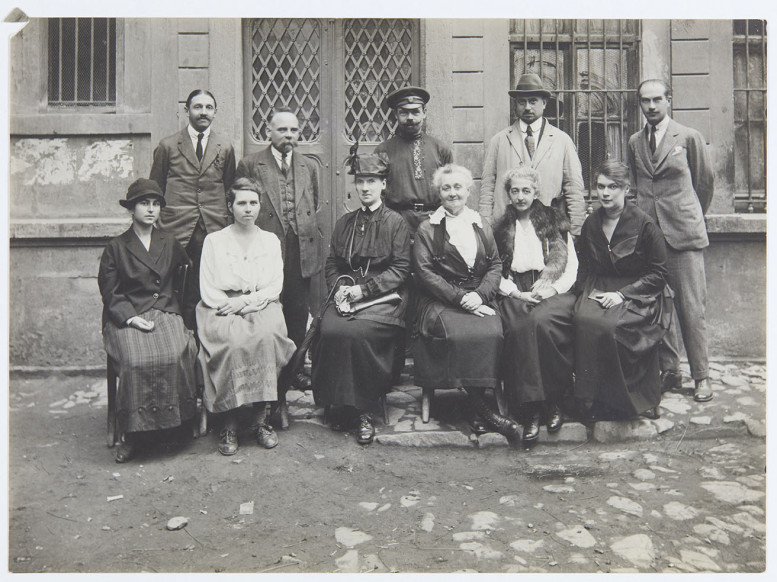
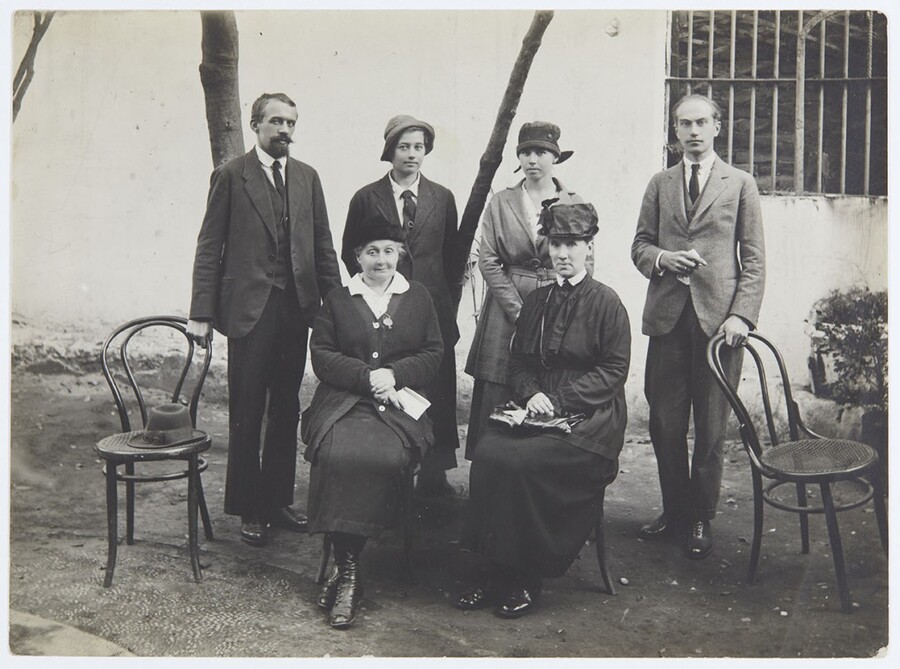
1. Group portrait from the Kuznetsov family archive, circa 1920