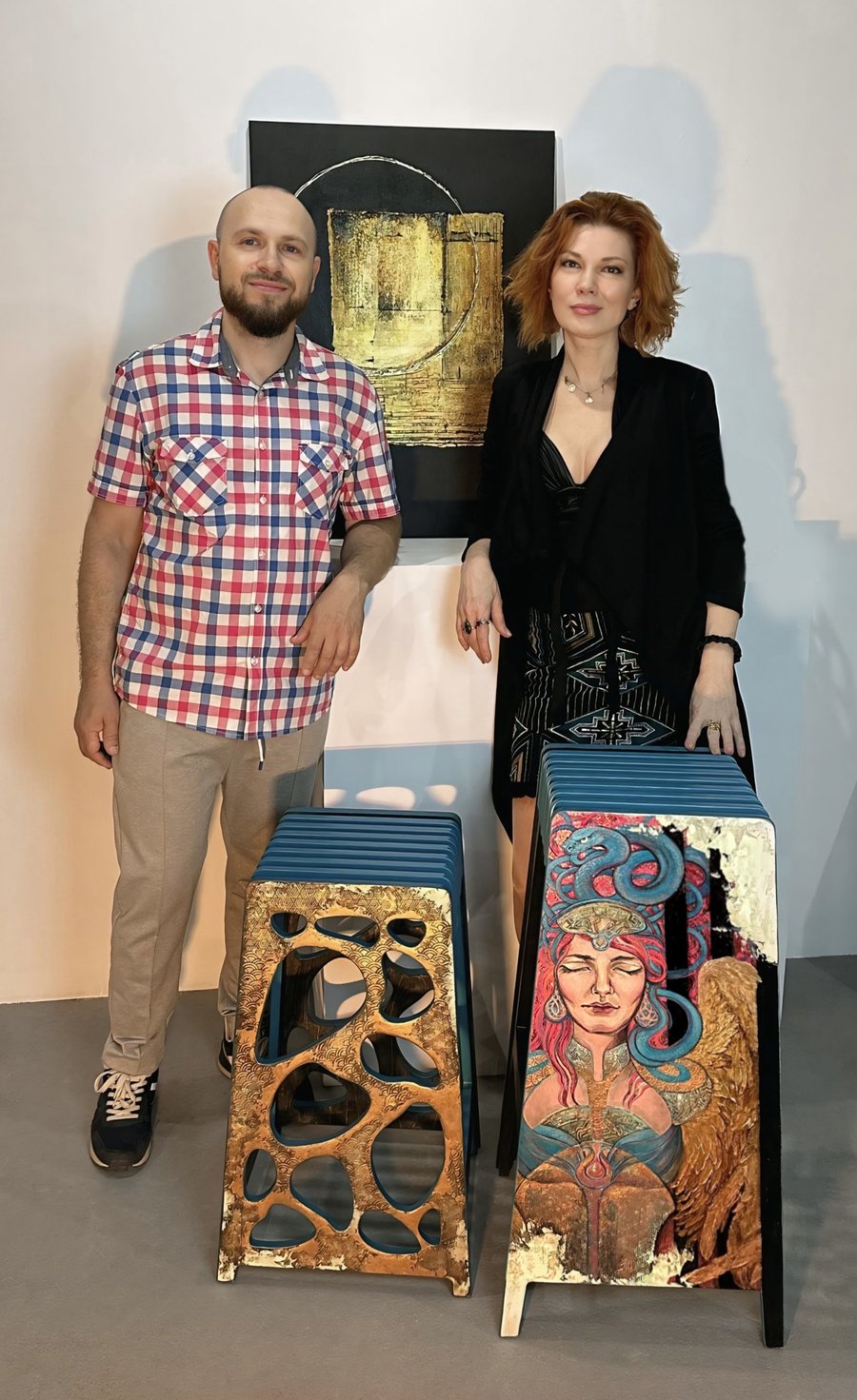
Co-authors of the project:
Roman Bondarev — designer / author’s furniture / «ROMB Craft Studio»
Gela Sol — artist / painting, design, decor / «GelaSol»
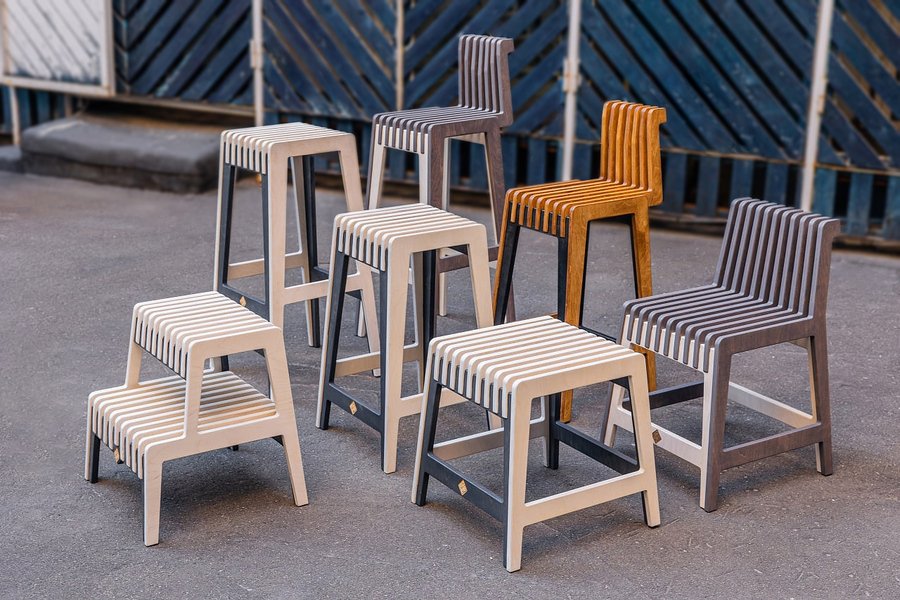
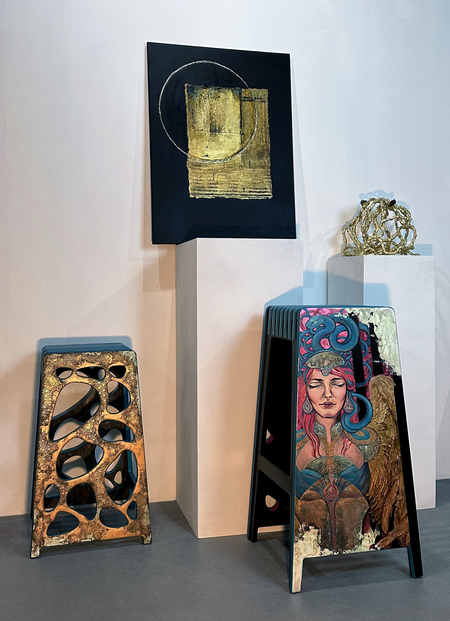
From a functional point of view, the stools of the «Umbrus» series have all the advantages: thanks to the parametric construction, they are strong and stable, do not require special care, and, importantly, are easily repairable, thereby contributing to a positive environmental effect
The basis for the decor in the presented project was two models from the series: a semi-bar stool with a height of 650 mm and a bar stool with a height of 800 mm, both with a base width of 400 mm.
They are made of plywood in a single copy. Moscow, 2024 — 250,000 rubles.
Stools from the project can be used as a functional art object for placement in interiors of almost any style and format, serving as a bold and attention-grabbing accent
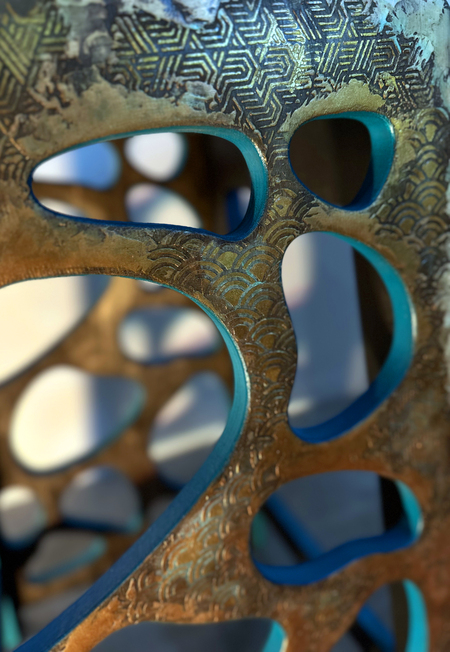
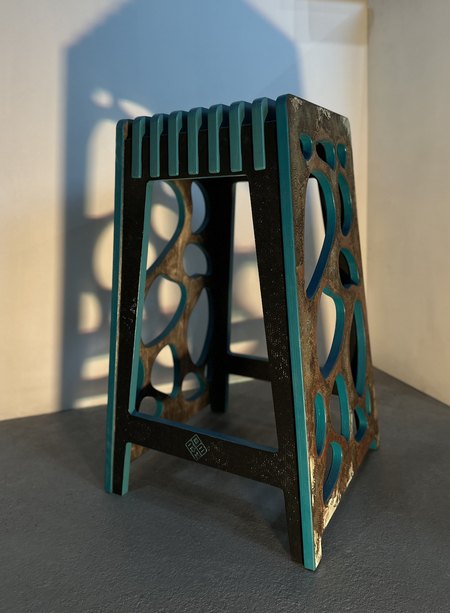
The Scandinavian minimalist design of the stools, enriched by the sophisticated lines of the original openings created by the artist Gela Sol, further enhances the originally conceived concept of the Umbrus series
The smooth shapes of the airy volume interact with the lighting and enliven the interior, creating amazing, captivating shadows.
- Umbrus, translated from Latin as «shadows»
The lines of the cuts echo the lines of the indentations, laid beneath the painted fragments, creating a unified, fairy-tale-like stylistic
The Gorgonia Maiden. In Slavic literary legends, there is a maiden who has snakes instead of hair on her head. Gorgonia is depicted as understanding and knowing the language of all living beings. Her gaze brings death. Whoever possesses the head of Gorgonia will become invincible. In the legends, this head was acquired by Alexander the Great from a sorcerer, who cunningly decapitated Gorgonia — that’s why the Macedonian managed to conquer all nations
The Swan Maiden Medusa The sea god Phorcys was married to the Titaness Ceto. Their six daughters, born in the Hyperborean regions, were initially revered as beautiful Swan Maidens. It was only much later, for ideological reasons, that they were transformed into hideous monsters — the Graeae and the Gorgons
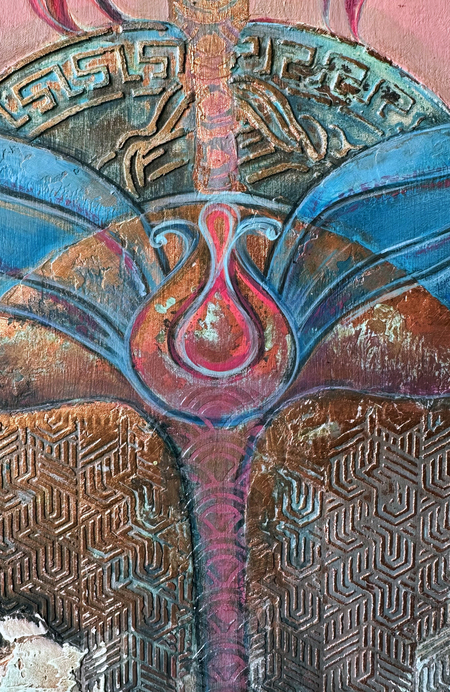
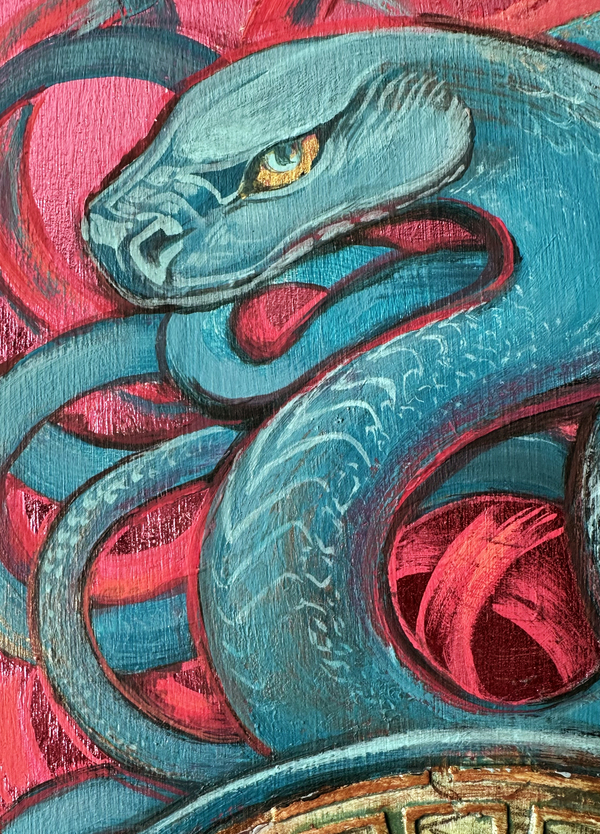
Vyrgon Slavic goddess Vyrgon possessed a non-standard appearance with zoomorphic features. By depicting the image of Vyrgon on a snake repellent, ancient Slavs believed that she would be able to protect them from troubles. In Slavic culture, aspids symbolized the struggle against evil, and thus snake patterns were often found in embroideries, paintings, and on objects of applied art