About the brand
Beauty Bomb is a Russian color cosmetics brand established in 2018 and tailored exclusively to the digital environment. A key distinctive feature of the brand is its complete rejection of traditional advertising, including both outdoor and television media. Beauty Bomb operates solely within social networks and the online space, functioning as a pure digital project built on direct engagement with its audience.
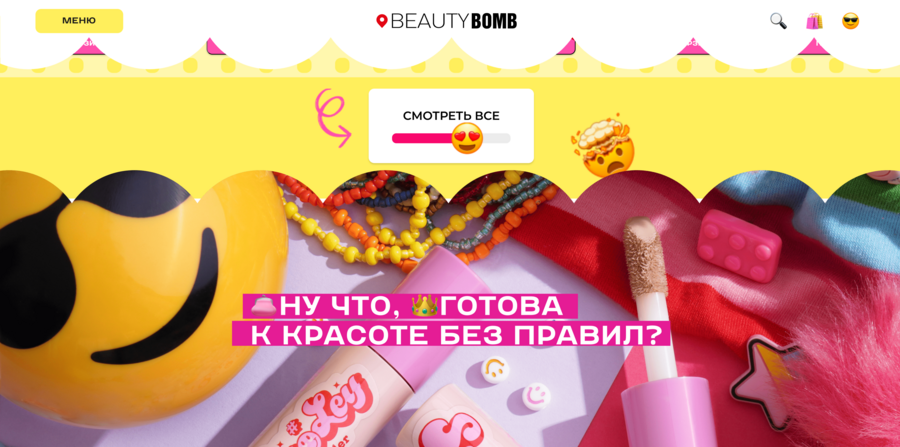
Screenshot of the Beauty Bomb official website
The brand’s positioning is formulated as «beauty without rules». This concept implies a rejection of conventional glossy beauty standards and traditional aesthetic canons. Instead, Beauty Bomb places its bets on honesty, humor, memes, freedom of self-expression, and absolute sincerity in communication. Rather than instructing consumers on how to apply makeup «correctly» the brand encourages them to play with products, experiment, and express themselves in any way they desire. This approach radically distinguishes Beauty Bomb from classic cosmetics brands that broadcast an image of idealized, unattainable beauty.
The target audience of Beauty Bomb comprises young women aged 14 to 25, with the core audience concentrated in the 14–20 demographic. These are representatives of Generations Z and Alpha — digital natives who literally «live» on social networks, primarily TikTok and VK. They communicate using a specific slang, are deeply immersed in internet meme culture and trends, and highly value sincerity and immediate feedback. This audience is unreceptive to pompous, intrusive advertising; instead of merely purchasing a product, they seek a space for communication — a community where they will be understood, where they can share personal experiences, laugh at shared jokes, and feel a sense of belonging. It is crucial to note that for these young consumers, the brand evolves from a mere cosmetics vendor into a «best friend» with whom they are willing to discuss anything.
Communication channels: the brand’s «public space»
Beauty Bomb has built a unique ecosystem of brand communities spanning all the key platforms where its target audience is concentrated. The brand deliberately abandoned the unidirectional communication model («the brand speaks — the consumer listens») in favor of a multilateral, dialogic model. In total, the brand actively maintains 11 different social networks and platforms, adapting content to the specifics of each.
TikTok, Likee, and VK Clips serve as channels for viral distribution. Here, the emphasis is placed on short vertical videos featuring memes, trending audios, challenges, and quick makeup tutorials. These platforms allow Beauty Bomb to enter the recommendation feeds of new audiences and maintain its status as a «brand that is in the loop».
Screenshots of the Beauty Bomb brand’s official page on VK
On VK, in addition to contests and long-form articles, more complex gaming mechanics are frequently launched. It is crucial to note that content is not simply cross-posted, but carefully adapted: for each platform, the brand team designs a unique format and tone of delivery based on the audience’s behavioral patterns on that specific network.
Screenshots of the official VK page of the Beauty Bomb brand
The PR strategy of Beauty Bomb is built upon several key principles. Firstly, there is a deliberate rejection of the «expert» status. The brand does not adopt a patronizing stance; instead, it communicates with its followers as equals, utilizing their own language. Secondly, there is a distinctive moderation model that has become the hallmark of Beauty Bomb. The brand’s moderators are Gen Z individuals themselves, who are fully in tune with the memes, trends, and everything within the focus of the target audience’s attention. In the comments section, they respond not with boilerplate templates, but in a lively language that resonates with the audience. This approach enables the formation of a safe and trusting community where followers are not afraid to voice their opinions.
Screenshots of the official VK page of the Beauty Bomb brand
Thirdly, this involves the active utilization of ambassadors and gaming mechanics. Rather than choosing distant, mainstream celebrities as faces of the brand, Beauty Bomb selects relevant video bloggers and influencers whom youth trust — such as Lissa Aveme or Katya Adushkina. Collaborations with them are frequently framed not as direct advertising, but as a game. The most prominent example is the «Главная Героиня» chat-bot, launched alongside a collection in the Romcore aesthetic. Users could design looks for ambassador Lissa’s avatar using virtual products from the new collection. This project accumulated 1.5 million messages within the bot. Fourthly, there is the tactic of spoilers and «word-of-mouth» promotion. Hype surrounding new collections is generated long before the release through a series of teasers that appear not as advertisements, but as puzzles or insides that «accidentally» leaked. Gaming mechanics and the ability to invite friends into projects motivate users to organically distribute information about the brand, thereby creating a viral Word-of-Mouth effect.
Chat-bot «Главная Героиня»
Thus, the public space of Beauty Bomb represents not so much an advertising platform as a multi-level gaming environment and an interest-based club, where purchasing cosmetics becomes a natural extension of engaging communication and self-expression.
Uses and Gratifications Theory (U&G)
The «Uses and Gratifications Theory» marks a paradigmatic shift in media studies. While early concepts (such as the cultivation effect or selective perception) concentrated on media factors and the power of direct media influence on individuals, U&G views the audience not as a passive object of manipulation, but as an active, selective, and goal-oriented participant in the communicative process. Instead of asking, «What do the media do to people?», the theory poses the question: «What do people do with the media?». The concept was formalized by J. Blumler and D. McQuail in the 1970s–1980s as a response to the limitations of traditional media effects theories, whose predictive power had proven insufficient for describing real audience behavior.
Basic assumptions of the theory:
1. People consume media content consciously, pursuing specific goals (for instance, choosing light content after a hard day at work instead of a complex drama).
2. Media consumption is determined by an individual’s internal psychological or social needs.
3. Media resources compete fiercely with one another and with other (non-media) sources to satisfy these needs.
4. It is assumed that users can articulate their motives and evaluate the value of content (this point is traditionally subject to scholarly criticism, as human behavior is not always absolutely rational).
In contemporary practice, the U&G theory is mapped onto Maslow’s hierarchy of needs to explain the motives behind digital media consumption:
Safety: Achieving psychological stability and reducing anxiety (for instance, watching predictable content where good triumphs over evil).
Belonging: The formation of parasocial relationships — one-sided psychological bonds where the viewer begins to sincerely empathize with the lives of media personae.
Esteem: Enhancing self-esteem and status through the mastery of educational content, life hacks, and expert advice.
Self-Actualization: The creation of user-generated content (UGC) on social networks to project one’s «Self», obtain social validation, and engage in self-expression.
The Beauty Bomb brand has constructed its social media communication as a syncretic ecosystem that completely satisfies the key levels of needs of the contemporary youth audience.
- Self-actualization, Personal Identity & UGC Media platforms allow users to construct and project their «Concept of Self». Beauty Bomb actively utilizes the concept of «identity negotiation». The brand promotes inclusivity and breaks traditional beauty templates. Through the publication of bold, subcultural, and eccentric looks, the brand provides teenagers with a legitimate resource for comparing themselves with models and answering the question: «Who am I?». Furthermore, the brand stimulates the creation of User Generated Content (UGC): followers post their makeup looks, the brand reposts them, and at the moment of social validation (likes, shares), the teenager reaches the peak of self-actualization within the digital space.
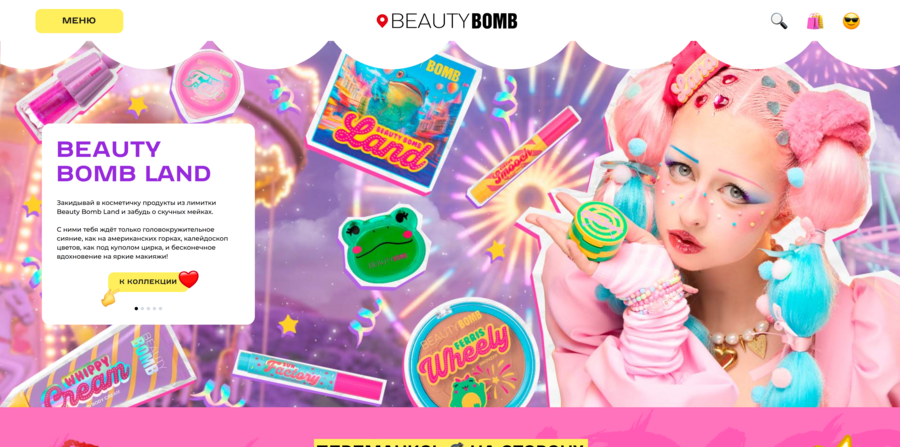
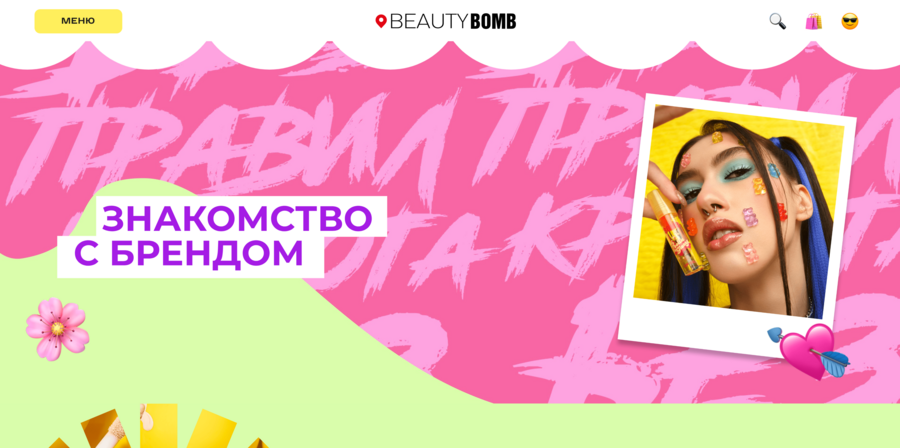
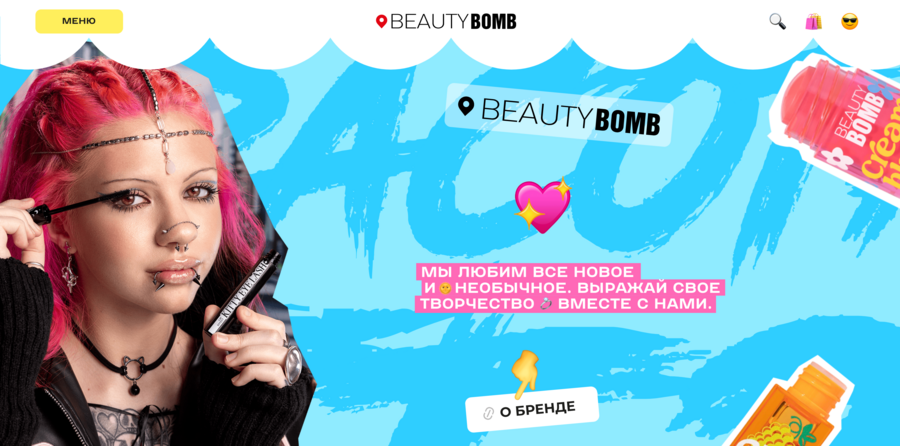
Screenshots of the Beauty Bomb brand’s official website
- Belongingness & Parasocial Relationships Beauty Bomb builds its campaigns on continuous collaborations with influencers (bloggers, TikTokers) whom Gen Z perceives as «older sisters». When an influencer demonstrates their beauty routine featuring Beauty Bomb cosmetics on TikTok, it triggers the follower’s mechanisms of empathy and parasocial connection.
The «Jelly Pirates» collection (ambassador Lia Steffi), The «Romcore» collection (ambassador Lissa Aveme), The «UFO Conspiracy» collection (ambassador Milana Star)
The «Hooliguns» collection (ambassador Marina Luxious), The «Cyberbomb» collection (ambassadors Alya Bridge and Sunkill), The «Beauty Bomb x Rollton» collaboration (ambassador Elena Raytman)
Additionally, the brand’s horizontal communication style in the comments section (characterized by informal direct address, the use of slang, emotional support, and genuine interest) satisfies the need for social integration and personal relationships, creating a «safe space» effect protected from external judgment.
Screenshots of the Beauty Bomb brand’s official TikTok page
- Diversion & Surveillance. The brand’s media content serves as a classic tool for «Diversion». Beauty Bomb generates a vast amount of entertainment content: memes about beauty-related struggles, gamified polls, and interactive quizzes. The «Surveillance» function also operates here: teenagers utilize the brand’s TikTok videos and VK Clips as a form of «everyday ethnographic research» — they observe how others apply makeup, what their peers look like, and how youth fashion is transforming, thereby satisfying their natural social curiosity.
Screenshots of the official VK page of the Beauty Bomb brand
Admittedly, the conceptualization of the audience as exclusively goal-oriented and rational is exaggerated. A portion of teenagers consumes Beauty Bomb content not because they consciously planned to satisfy a need for identity, but as a result of automatic, impulsive feed scrolling, where direct media effects and social media algorithm triggers come into play.
Furthermore, while the theory assumes freedom of choice, users are frequently constrained by their economic and informational bubbles. A teenager might be subscribed to Beauty Bomb simply because it is the only brand in their local store that is financially accessible. Consequently, their choice and subsequent «gratification of needs» are rigidly determined by external economic frameworks rather than pure psychological motives alone.