
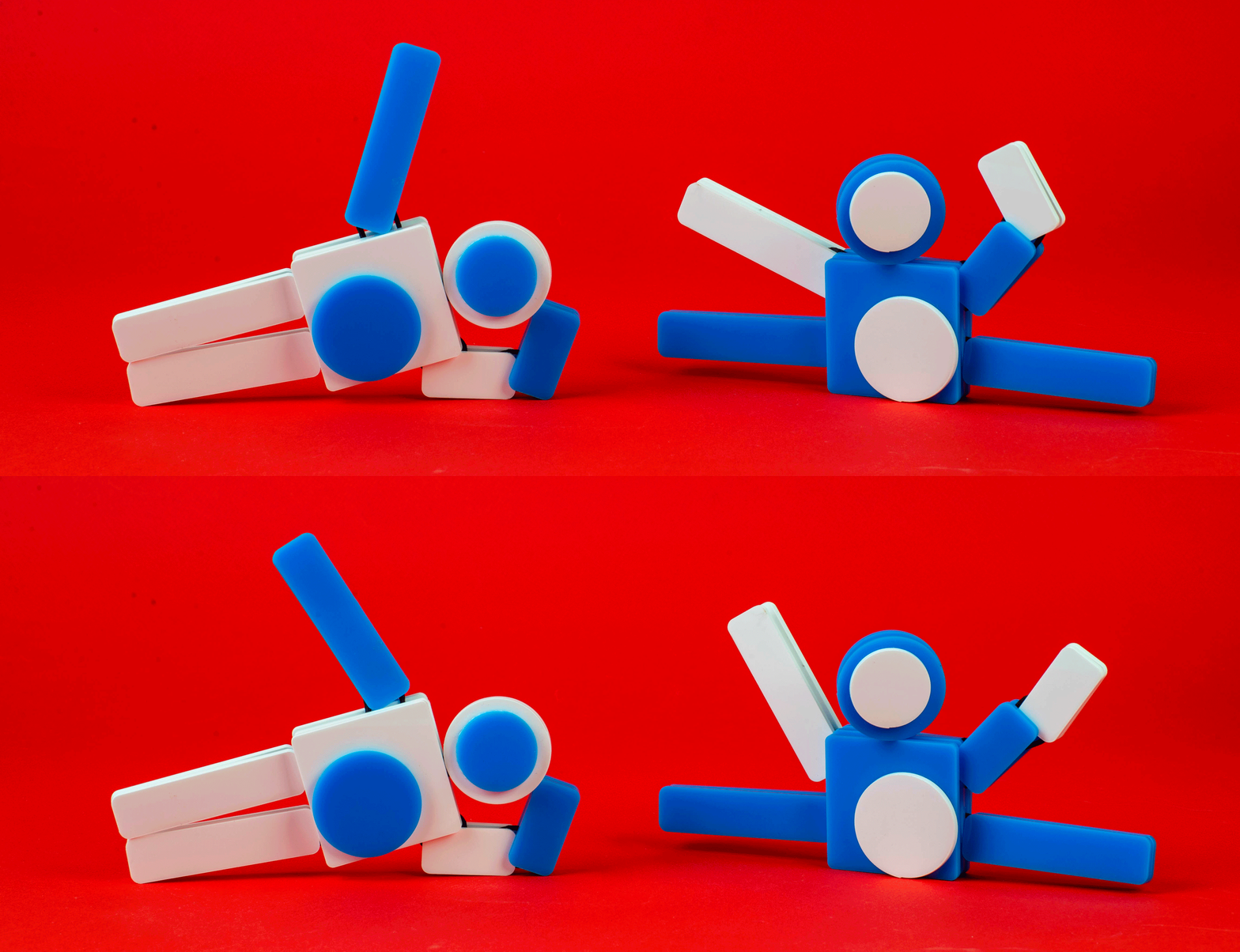
Communication theory in the field of design
In product design, Communication theory shifts the focus from creating a simple functional object to designing an environment for creating meaning and communicative experiences. The object becomes a text, a symbol, and an actor in the system of human interaction.
DanChel is a product design brand focused on producing «dancing» figures that allow customers to immerse themselves in hip-hop and breakdance culture through play. The figures provide an additional nonverbal channel of communication, fostering interaction between fans of an active lifestyle and street culture.
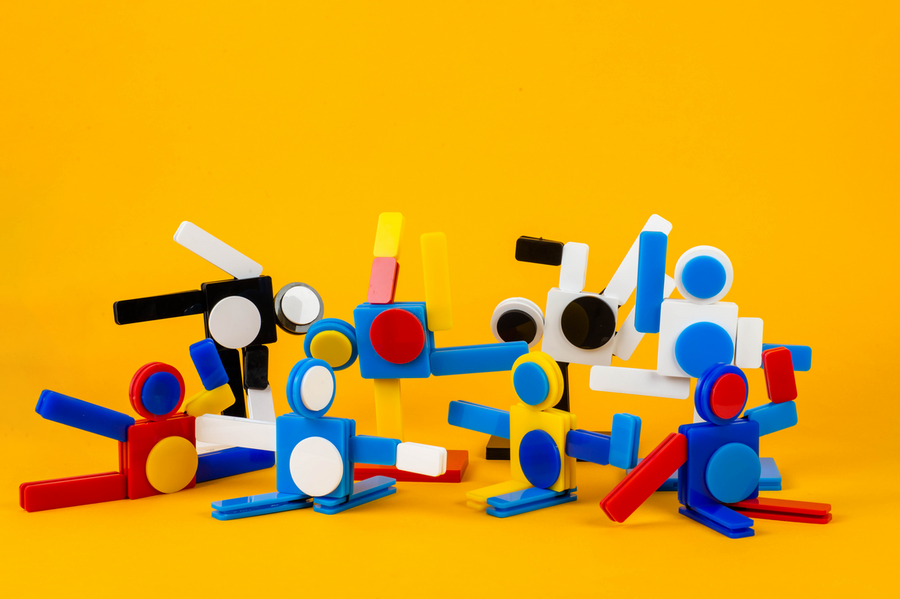
From a semiotic perspective, according to Craig, it functions as a complex sign. Its material (cast acrylic) symbolizes modernity and durability, the elastic bands act for flexibility and freedom, and its modularity represents creativity and individuality. The product conveys the message that street culture is accessible, tangible art that can be literally held in one’s hands, collected, and creatively reimagined.
The phenomenological approach is also relevant. This perspective states that meaning is not inherent in the object itself, but is co-created through the user’s life experience and interaction with it. DanChel promotes the idea of self-knowledge through the bodily experience of interacting with the figurine. Therefore, the designed object is not just a «thing», but an invitation to dialogue with the object itself, with the culture it represents, and with the user’s own identity.
Main communication role is to represent DanChel as a simbolic bridge between an art of street dance, pop culture and everyday hobbies, which leads to creating a likeminded community around the brand.
DanChel allows users to externalize and physically interact with abstract cultural concepts (for example, the dynamics of dance movement or the mood of hip-hop) promoting a deeper, more personal understanding of that culture and their own creative self.
The idea aligns with Walter Fisher’s narrative paradigm. DanChel, as a brand character, has his own story, which is conveyed through his image and style of movement. Thus, the user connects with the image of the dancing figure, projecting it onto themselves.
We offer props for personal storytelling. Therefore, brand promotion methods should also include demonstrations of interpersonal and group ways of interaction.
User interaction with figurine of DanChel (posturing, photographing, sharing) becomes a non-verbal narrative act that communicates identity and creativity within a shared creative community. Moreover, it shows the belonging to co-minded people.
Presentation for a general audience
What is DanChel?
DanChel is a materialized still image of street culture, a piece of hip-hop history you can hold in your hands. He serves as a physical bridge between the digital world and real-world self-expression.
Key visual: A dynamic video where DanChel figures come to life against a backdrop of graffiti and urban landscapes, echoing the movements of real dancers. An emphasis is on movement, vibrant colors, and individuality.
Brand logo
Advertising promotion. Generated in Grok
Target audience and key message
Target audience: Children, teenagers, and a general audience interested in contemporary culture, creativity, and self-identification. These include collectors, aspiring dancers, and anyone who feels the rhythm of the streets.
Key message: «Dance. Create. Define your style.»
Communication goal: Transform DanChel from a consumer product into a tool for self-expression and social connections, inspiring the audience to be actively creative.
Advertising promotion. Generated in Grok
Brand box packaging
Theoretical Framework: How We Deliver the Message (ELM)
For a broad, emotionally engaged audience, we use the peripheral path of the Emergencies Model (ELM), focusing not on technical characteristics but on compelling signals:
— Social Proof: «Join the Team» slogans, demonstration of a community of users. — Appeal: Association with energetic, «cool,» and authentic dance culture. — Scarcity and Novelty: Positioning as the «first-of-its-kind posing art toy.»
Brand Values and Community Building
DanChel promotes three key values that build a loyal community:
1. Authenticity: Rooted in real hip-hop culture (precise terminology, poses developed with real dancers). 2. Creativity: The figurine’s modular design encourages endless re-creation and personalization. No two stories are alike. 3. Community: The #DanChelPose hashtag challenge operates on the principle of Symbolic Convergence. Jointly created stories around the figurine create a shared «group consciousness» and a sense of belonging among owners.
Brand design code
Promotion strategy and engagement mechanics
Communication channels: — VK video: Short looping pose tutorials and challenges. — YouTube: Collaborations with artists and dancers featuring DanChel as part of the creative process. — Targeted advertising: On platforms for gamers, designers, and creative communities.
Key engagement mechanic: The #DanChelPose Challenge. Users are invited to create their own unique pose, share photos/videos, and tag friends.
This mechanic transforms passive consumers into active co-creators of the brand narrative. In practice, this implements the phenomenological principle: self-discovery and self-style are achieved through interactive interaction with an object that becomes an extension of the user’s personality.
Presentation for a professional audience
Deep Dive into Design: Three Layers of Communication
1. Semiotic Layer («Sign»): Materials as a Sign System — Acrylic (transparent/matte): Clarity, modernity, a «blank canvas.» Symbolizes potential and openness to interpretation. — Elastic connections: A sign of flexibility, tension, and dynamic fixation—a visual analogue of the «freeze» in breakdancing. — Modularity: Implements the combinatorial grammar central to hip-hop (sampling, remixing, improvisation).
Clean, simple colours without halftones are a non-verbal signal that creates a clear and strong positioning of DanChel as a dynamic and open brand. The simple palette conveys basic emotions: red (CD0001) attracts attention with energy, yellow (FDCD00) emphasizes spontaneity, dark blue (01249C) inspires trust and professionalism, and bright blue (0070E3) demonstrates approachability and innovation.