Original size 1200x1799

communication strategy: CANDLE DESIGN CASE

PROTECT STATUS: not protected
This project is a student project at the School of Design or a research project at the School of Design. This project is not commercial and serves educational purposes

(1) communication theory in candle design: from symbols to sensory experience

Design is not just a visual form, but a complex communication system. According to the Communication Theory course, communication is «the process of creating interpretable messages that evoke a response». In the context of design, every brand element becomes part of a dialogue with the consumer.

For our project, three traditions from Robert Craig’s classification were key: The semiotic tradition views communication as «the exchange of meanings through a system of signs».
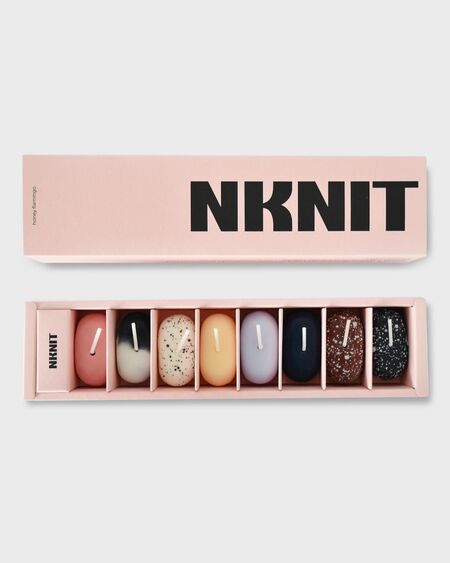
(1) honey flamingo, NKNIT (2) Candle colour blocking by Alicia Dubuis

post

Synesthesia is a unique semiotic system where signs from one modality (smells) are automatically translated into another (colors, sounds). This allows us to create multilayered sensory messages, where scent becomes a visual image, and the city an aromatic composition.

The phenomenological tradition asks the question: «Can we understand another person’s experience?» Our brand answers affirmatively — through the creator’s synesthetic experience, we invite the audience to see the world through the lens of a unique perception.

The rhetorical tradition helps build persuasion through aesthetics. According to the Elaboration Likelihood Model (Petty & Cacioppo), persuasion occurs through two pathways: central (logic, product quality) and peripheral (emotions, packaging aesthetics).

(2) customer presentation: a journey through the senses

IMAGINE: you can smell Paris!

For most, this is a metaphor. For our creator, a synesthete, it’s reality. Synesthesia is a neurological condition in which stimulation of one sense evokes a sensation in another. Our brand translates this unique experience into a product accessible to everyone.

who are we for?

(1) spiritual travelers those who value the emotional memories of travel

(2) authenticity seekers people tired of the mass market

(3) sensory aesthetes those who understand that atmosphere is created through scent

what are we solving?

post

In the age of digital overload, people are experiencing a shortage of authentic sensory experiences. As Marshall McLuhan noted, «the channel of communication determines perception». Our channel is olfaction, the most emotional of our senses, directly linked to memory.

When you light the Lisbon candle, you don’t just smell the scent — you relive the feeling of the sun on your skin, the sound of the tram, the taste of pastel de nata. We solve the problem of the emotional distance between the memory of travel and everyday life.

our values

According to Social Identity Theory, a brand is a community of people sharing common values:

(1) authenticity each fragrance is created based on a real synesthetic experience (2) inclusiveness we make a unique perception accessible to everyone (3) mindfulness natural ingredients, eco-friendly packaging (4) emotional honesty we offer real feelings, not marketing fantasies

how does it work?

According to Walter Fisher’s Narrative Paradigm, people perceive the world through stories. Each of our candles is a narrative of a journey:

(1) characters a synesthetic traveler, the city as a living being (2) plot a sensory discovery of a place through a unique lens (3) resolution the ability to return to this feeling at any moment

PLANNED COLLECTIONS: Metropolis: Tokyo, New York, London Mediterranean Soul: Lisbon, Barcelona, Athens Nordic Silence: Copenhagen, Reykjavik, Stockholm

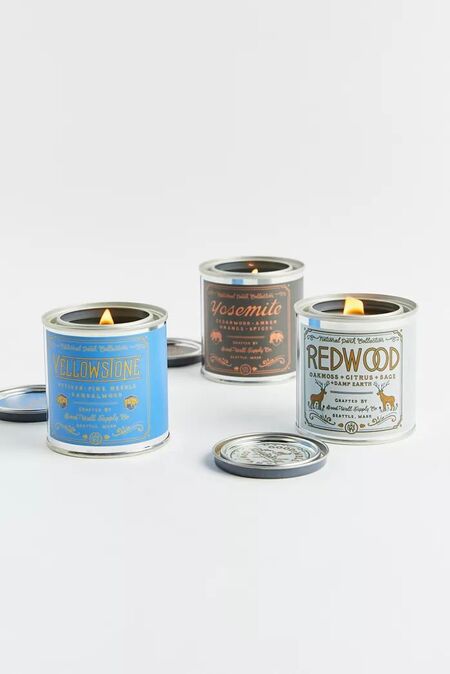
Good & Well National Parks Candle

Each candle is made with natural soy wax, essential oils, and a 40-45-hour burn time. But most importantly, it’s your personal portal to memories and dreams of travel.

(3) presentation for professionals: the anatomy of a synesthetic brand

Our task is to create a brand concept where synesthetic experiences become understandable and desirable to a wide audience. In terms of Symbolic Convergence Theory (Bormann), we need to create a shared symbolic reality.

concept development methodology

STAGE 1: mapping the synesthetic experience

post

Working with a synesthetic creator, we used the principles of the Phenomenological Tradition, focusing on her subjective perception of cities:

Paris — lavender and gold with notes of freshly baked bread

Tokyo — neon pink with a metallic finish and the aroma of sakura

Lisbon — terracotta and blue, scented with the ocean and cinnamon

STAGE 2: translation into the design system

By applying Gatekeeping Theory, we recognized our role as «gatekeepers» between a unique experience and a mass audience. Information should be:

(1) accessible (doesn’t require specialized knowledge) (2) emotional (evokes a desire to try) (3) reliable (maintains authenticity)

visual system
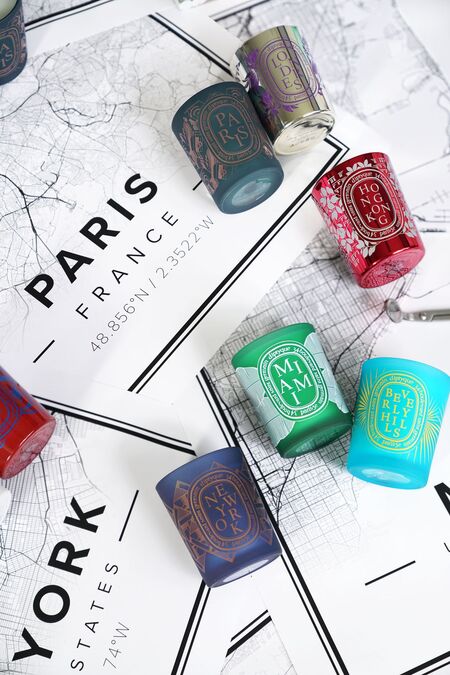
post

The color palette is based on synesthetic associations. Each city will have its own palette in:

  • wax color
  • label design
  • packaging
  • communication materials

This creates multisensory coherence: visual, olfactory, and tactile perceptions reinforce each other.

verbal identity

Based on the Rhetorical Tradition, we developed a brand language:

  • Metaphors and synesthetic descriptions «This scent sounds like jazz in rainy New York»
  • Poetic prose instead of marketing clichés (personal stories of the creator)

Naming Strategy based on the Narrative Paradigm: Not «Candle No. 3» but «Lisbon: tram to the ocean» Not «Home Scent» but «Sensory Journey»

packaging concept as a performance

The unpacking process is designed as an immersive experience:

  • City map with «sensory points»
  • Card with synesthetic description
  • QR code for the playlist the creator listened to while imagining this city

communication strategy

Framing Theory: We frame one product differently for different audiences:

  • for travelers emphasis on geography and memories
  • for designers focus on aesthetics and concept
  • for eco-conscious people naturalness and ethics

Two-Step Flow Theory: We plan to focus on opinion leaders: bloggers about travel, interior design, and conscious consumption.

Content Strategy:

  • Instagram: visual stories of cities through synesthesia
  • YouTube: documentary series on fragrance creation
  • Podcast: conversations with synesthetes and perception researchers
  • Offline: pop-up sensory installations

positioning

According to Optimal Distinctiveness Theory, we balance uniqueness (synesthesia) with universality (travel). We don’t plan to compete with the mass candle market; we’re creating a new category of «sensory guides.» Our competitors include travel books, art albums, and meditation practices.

Pricing: premium, but not luxury. «Affordable uniqueness» for those who value quality and history.

technical concept

Ingredients: natural soy wax, essential oils, cotton wick

Expected burn time: 40-45 hours

Production: handcrafted in small batches to control quality and preserve the authenticity of each fragrance

(4) from theory to practice: integrating communication models

theoretical foundation

From Craig’s seven traditions, we selected three main tools: Semiotic Tradition: The Language of Scents

We developed the concept of an aromatic alphabet. A system of base notes that «tell» the story of a city. We created a visual code for each scent.

Example: «Tokyo» is described not as «floral-woody,» but as «a neon pink dawn over Shibuya, when the city is still asleep: metal, sakura, and anticipation».

(1) North Carolina Old North State Candle (2) Good & Well Supply Co. Washington, D.C. Tin Candle

phenomenological tradition: experience as a product

Our product is not a candle, but access to a unique perceptual experience. We create experience maps for each city, capturing not objective characteristics, but the subjective sensations of a synesthete.

Each candle is accompanied by a meditative practice — an audio recording in which the creator describes her experience, helping one «see» the scent.

rhetorical tradition: two paths to persuasion

Central path (for rational buyers):

  • detailed ingredient information
  • educational content about synesthesia
  • transparency of production

Peripheral path (for emotional buyers):

  • visually perfect packaging
  • poetic descriptions
  • travel storytelling

solving key challenges

CHALLENGE 1: How to explain synesthesia simply? We plan to use Show, Don’t Tell — visual metaphors instead of scientific explanations. The website will feature a «synesthetic simulator» where you can «see» smell through color.

CHALLENGE 2: How to avoid being perceived as «too niche»? Synesthesia is a hook, but the emotional connection with travel is what unites the audience. We apply Optimal Distinctiveness Theory to balance uniqueness and universality.

CHALLENGE 3: Competing with the mass market? Creating a new category. According to Agenda Setting Theory, we will shape the discourse on synesthesia and alternative ways of perceiving the world.

planned performance measurement

Using the Theory of Planned Behavior, we will track three levels:

1. attitude: do they understand the concept? (engagement rate, time on site)

2. subjective norm: do they talk about the brand? (mentions, UGC)

3. perceived behavioral control: is the product accessible? (conversion rate)

vision of the future: from product to movement

Building on Critical Tradition, we see the brand’s potential as a cultural phenomenon:

  • raising awareness of neurodiversity
  • legitimizing alternative modes of perception
  • creating a community of sensory experience enthusiasts

Planned development steps:

  • synesthetic lab (workshops on perception research)
  • collaborative collection with other synesthetes
  • educational platform on perception and emotions

why does this strategy work?

We don’t just sell candles — we create a new language of communication between brand and consumer. Using synesthesia as a unique advantage, we transform the product into a medium for conveying deep emotional experiences.

According to McLuhan, «the medium is the message». In our case, the very method of communication (through synesthetic experience) becomes the brand’s key message: the world can be perceived in different ways, and that’s beautiful.

Bibliography
Show
1.

Craig, R. T. Communication theory as a field // Communication theory. //Week 1: Defining Communication

2.

Griffin, E. A first look at communication theory / E. Griffin, A. Ledbetter, G. Sparks. //Week 1: Defining Communication

3.

Brown, P. Politeness: some universals in language usage / P. Brown, S. C. Levinson.//Week 2: Interpersonal Communication

4.

Goffman, E. The presentation of self in everyday life.//Week 2: Interpersonal Communication

5.

Bormann, E. G. Symbolic convergence theory: a communication formulation // Journal of communication.//Week 3: Group Communication

6.

Tajfel, H. The social identity theory of intergroup behavior / H. Tajfel, J. C. Turner.//Week 3: Group Communication

7.

Ajzen, I. The theory of planned behavior // Organizational behavior and human decision processes.//Week 4: Rhetoric and Persuasion

8.

Fisher, W. R. Narration as a human communication paradigm: The case of public moral argument // Communication monographs.//Week 4: Rhetoric and Persuasion

9.

Petty, R. E. The elaboration likelihood model of persuasion / R. E. Petty, J. T. Cacioppo.//Week 4: Rhetoric and Persuasion

10.

Entman, R. M. Framing: Toward clarification of a fractured paradigm // Journal of communication. //Week 5: Media Effects

11.

Lazarsfeld, P. F. The people’s choice: how the voter makes up his mind in a presidential campaign / P. F. Lazarsfeld, B. Berelson, H. Gaudet.//Week 5: Media Effects

12.

McCombs, M. E. The agenda-setting function of mass media / M. E. McCombs, D. L. Shaw // Public opinion quarterly. // Week 5: Media Effects

13.

McLuhan, M. Understanding media: the extensions of man.//Week 5: Media Effects

14.

White, D. M. The «gate keeper»: a case study in the selection of news // Journalism quarterly.//Week 5: Media Effects

15.

Brewer, M. B. Optimal distinctiveness: Its impact on social identity and intergroup relations // Psychological review.//Week 6: Social Media

We use cookies to improve the operation of the website and to enhance its usability. More detailed information on the use of cookies can be fo...
Show more