Navigator: — Introduction — I. The Psychedelic Revolution—The emergence of underground comics and the visual culture of the 1960s counterculture — II. Comics in the Punk Era—The intersection of independent comics, punk rock, and samizdat culture in the 1970s–1980s — III. From Underground to Alternative—The evolution of the visual language of independent comics in the 1980s–1990s — Conclusion
Introduction
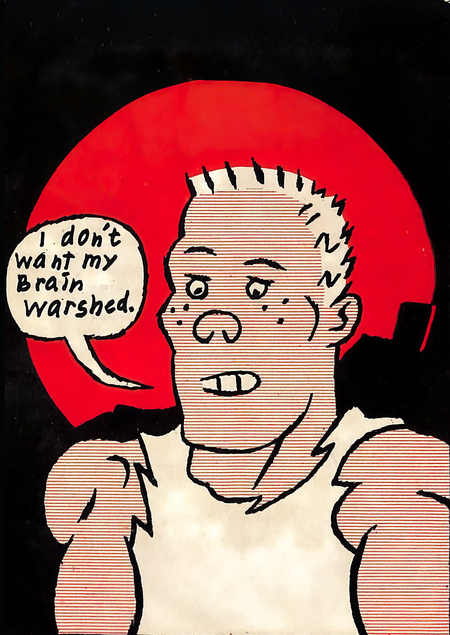
Rock music has always had a complicated relationship with propriety. It delighted in disrupting good manners, arguing with parents, and gradually transforming its own appearance into a distinct statement. By the late 1960s, it became clear that counterculture existed far beyond the stage. It permeated clothing, magazines, posters, album covers, and, of course, comic books. The latter proved to be a surprisingly suitable medium for cultural defiance. While the mass American industry continued to produce stories about superheroes and familiar adventures, independent artists experimented with form, provocation, grotesque imagery, and themes unlikely to gain conservative public approval. This gave rise to the underground comix movement—American independent comics that gained particular traction during the 1960s and 1970s. Artists in this movement addressed political satire, drug culture, everyday life, and social contradictions. Their works were distributed through alternative printing and independent presses, gradually forging their own territory. Robert Crumb played a vital role in this process; his publications became one of the most significant elements of the comic book medium. His graphics merged caricature, detail, and intentionally uncomfortable imagery—as if the lines on the paper itself refused to behave politely.
The relevance of this research lies in the ability to trace the history of American comic books through their interaction with music culture. The focus is on the visual language that developed at the intersection of comics, musical graphics, concert posters, and fanzines. It is important to consider the distinctions between these forms. Similarity in the use of grotesque elements, rough line work, or psychedelic imagery does not yet prove a direct influence from one medium to another. It is far more critical to examine specific instances of collaboration and compare them with works that arose within a closely related cultural environment. The object of study is American underground and alternative comics from the 1960s to the 1990s. The subject of study is its visual techniques and modes of interaction with the aesthetics of rock culture, independent musical graphics, and print culture. The research question is: how did American underground comics participate in shaping the visual language of the rock counterculture in the second half of the 20th century, and what graphic techniques united comics, musical graphics, and independent print culture? The hypothesis is that American underground comics and the rock counterculture developed within tightly linked, independent cultural spheres. The grotesque, psychedelic imagery, the deformation of conventional graphic forms, and a demonstrable freedom of expression became shared means of expressing alternative identity. The goal of this research is to identify the specific characteristics of the visual language of American underground comics and to trace its interaction with rock culture from the 1960s through the 1990s.
To achieve this goal, it is necessary to examine the historical preconditions for the emergence of underground comics, analyze the key works of 1960s artists, study the shifts in graphic language during the punk and post-punk eras, and trace the development of alternative comics in the 1980s–1990s. Special attention is given to music album covers, concert posters, magazine publications, and independent print works where the intersection of these two cultures becomes particularly evident. The research material was selected based on visual and historical significance. It includes works by Robert Crumb, Gilbert Shelton, Gary Panther, Peter Bagge, and Daniel Clowes, as well as examples of music graphics and independent printing from the corresponding period. The analysis considers composition, line quality, typography, color usage, character portrayal, and the specific characteristics of the print medium. The sources are primarily museum collections, archival materials, publications from specialized journals, and testimonials from the artists and musicians themselves.
The research is divided into three chapters, each sequentially revealing the evolution of the American comic book within the context of music culture. The first chapter is dedicated to psychedelic culture and the emergence of underground comics in the 1960s. The second examines the influence of the punk and post-punk scene on independent graphic works of the 1970s and 1980s. The third addresses alternative comics from the 1980s and 1990s and the further development of the established visual language. This movement allows us to see how artistic techniques changed and why some of them continued to thrive even after the culture itself ceased to be novel to the public.
I. The Psychedelic Revolution—The Emergence of Underground Comix and the Visual Culture of the 1960s Counterculture
In the first chapter, we will trace how the American comic book emerged within the countercultural revolution of the 1960s. This was a time when conventional ideas about freedom, morality, and social norms were rapidly shifting, and graphic design became one of the means to express these changes. San Francisco turned into a kind of hub for this scene, where numerous concerts, independent newspapers, posters, and comics existed, finding too little space within the confines of the mainstream. Artists like Robert Crumb, Gilbert Shelton, and Victor Moscoso used the expressive potential of drawing to comment on their contemporary culture with humor, irritation, and indecent frankness. It is here that the visual language of the underground comic begins to take shape.
Robert Crumb. «Zap Comix No. 1, ” 1968
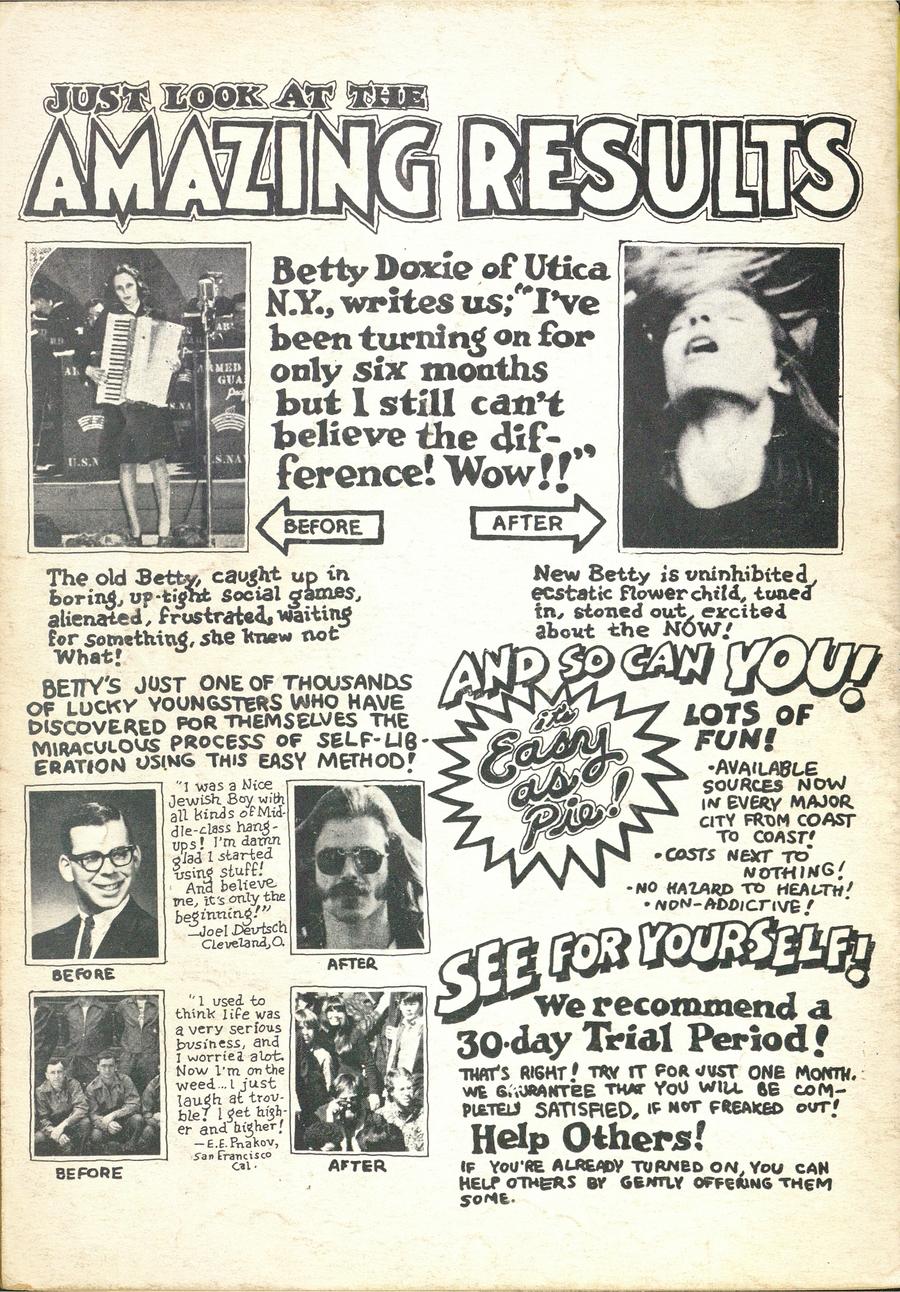
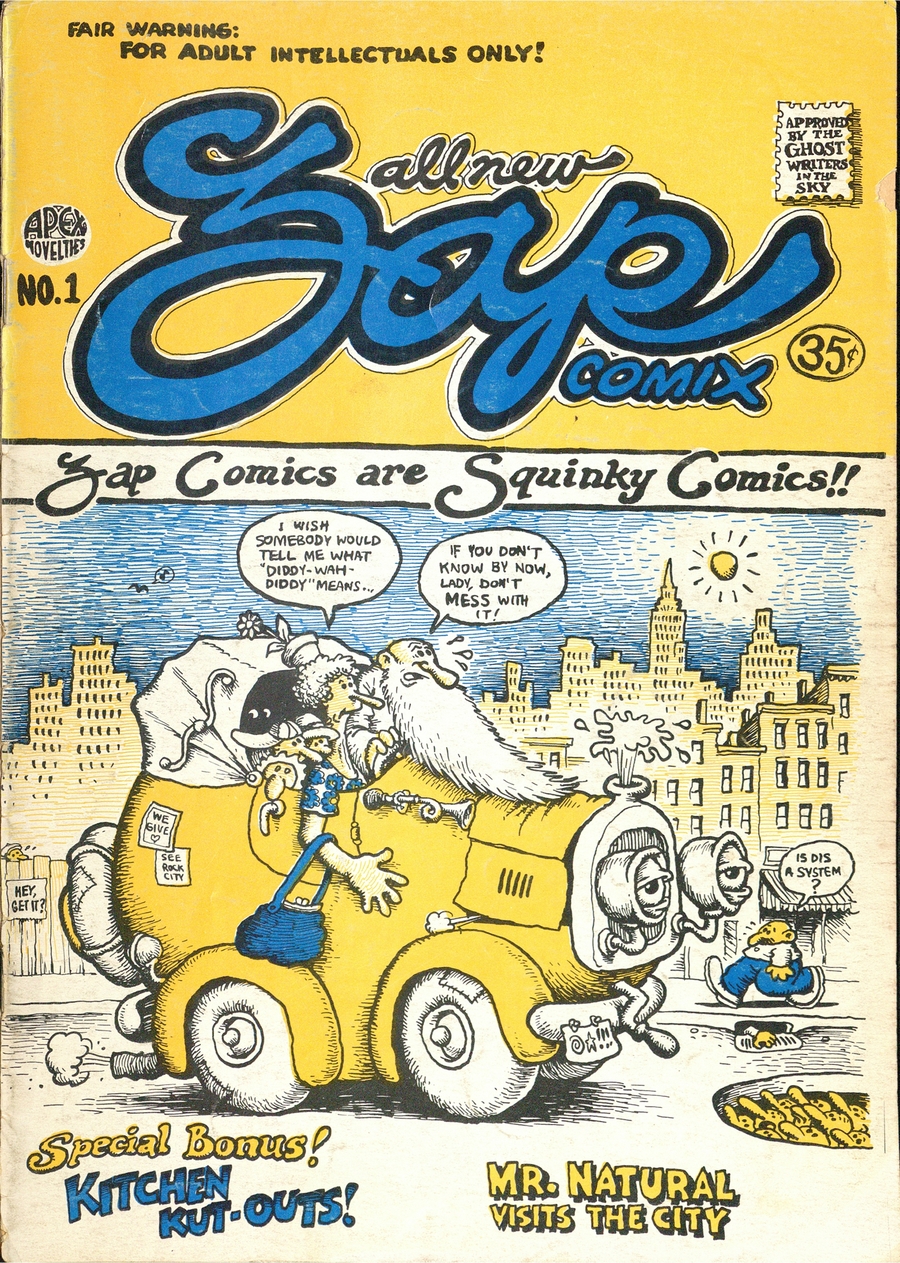
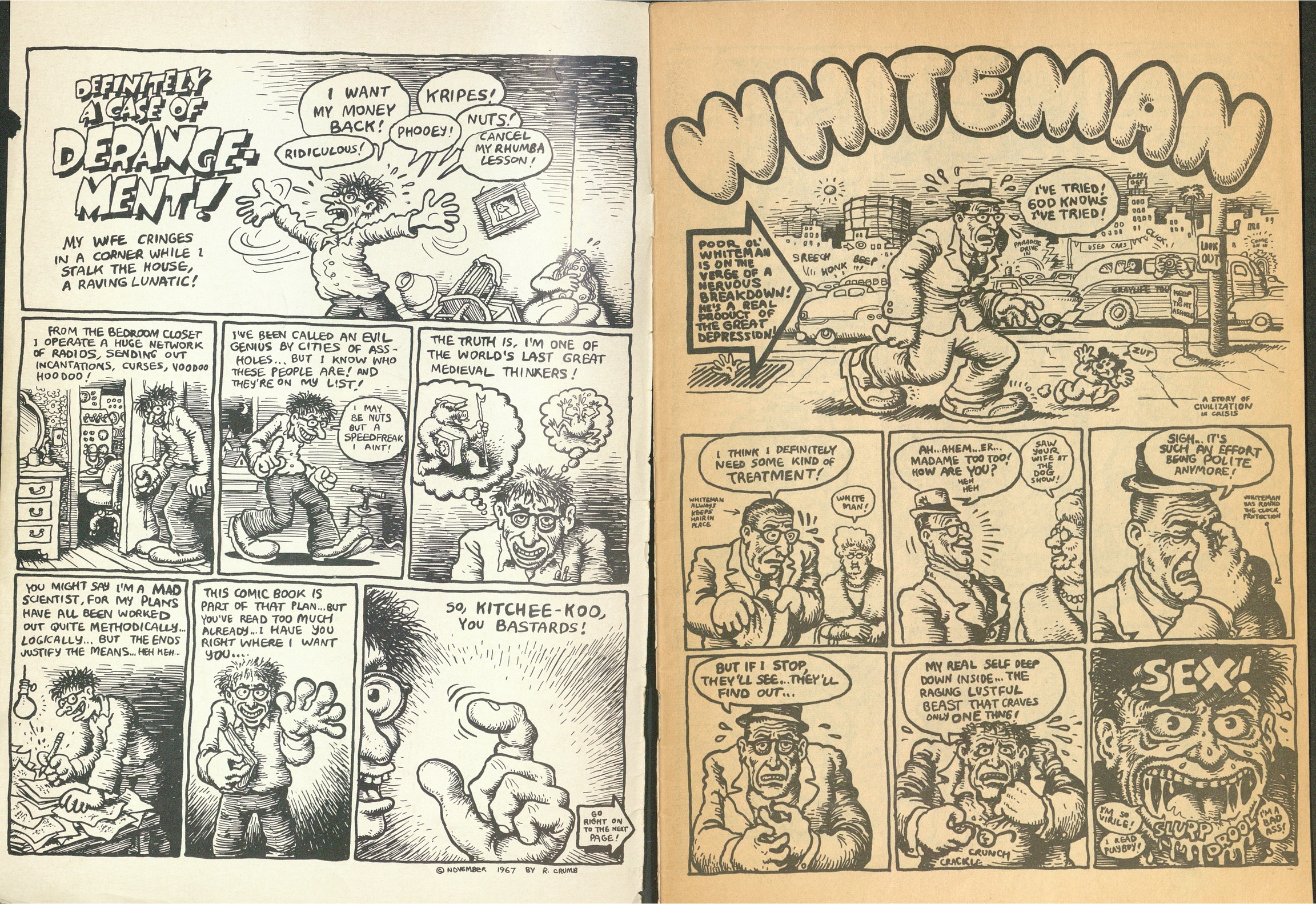
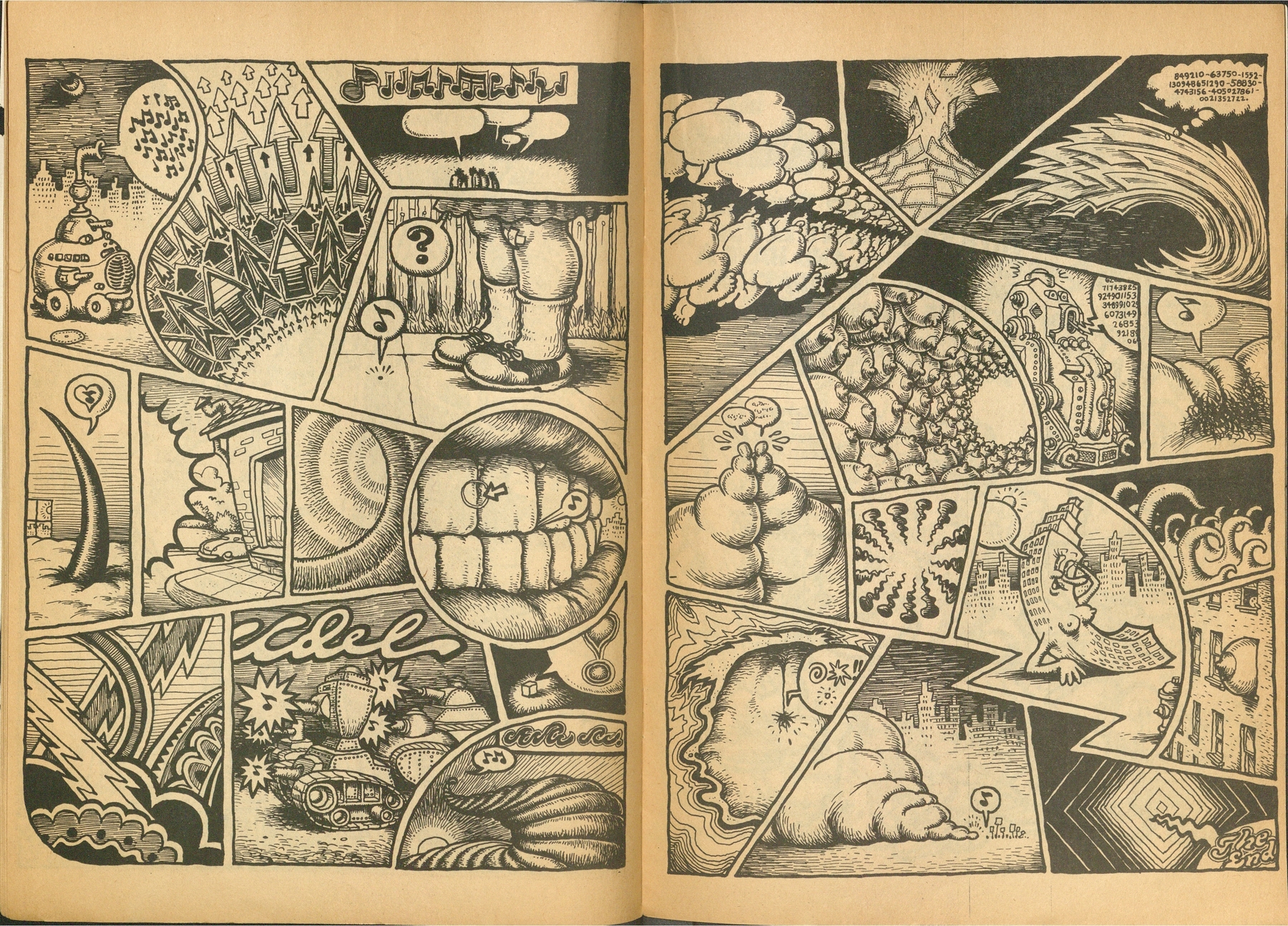
Robert Crumb. «Zap Comix #1, ” 1968