«Between Classes» is a media platform about short strolls through Moscow that fit easily into a student’s day.
The commute to the university gradually becomes routine: the subway, a familiar street, a specific classroom. Even free time often passes in the same spots, though around the next corner might hide a quiet courtyard, a small park, or access to the embankment.
To really discover the city, you don’t always need a whole weekend. Sometimes, half an hour between classes or a short walk after studying is enough. The key is knowing where to start, how long the journey will take, and how to get back to your plans on time.
Where can you go near the university? How can you hang out without spending too much? What can you suggest to a friend instead of another trip to a cafe? And where should you turn if it starts raining?
City guides offer many ideas, but you usually have to put the route together yourself: checking distances, finding entrances, and calculating the time. This can eat up your entire free break.
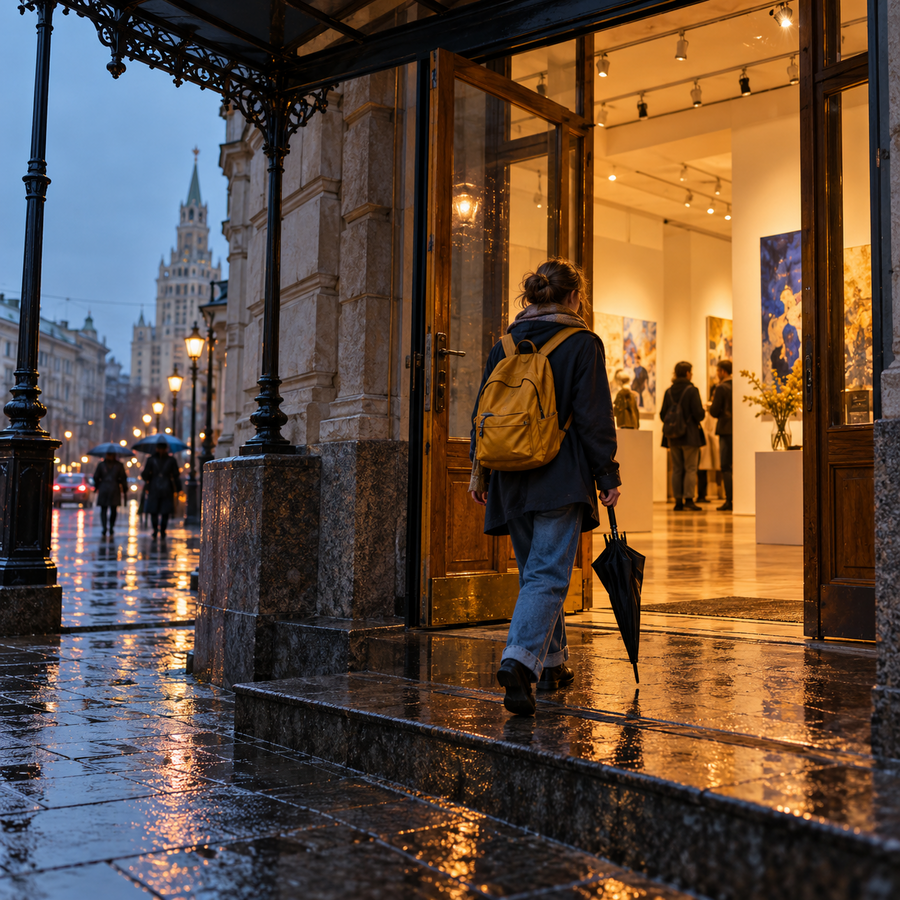

Short walks near the universities and metro stations so that an hour break can become an opportunity for a small discovery.
«Between Classes» is media for students who want to discover Moscow even on days filled with studies.What can you see if you slightly change your route from class? On weekdays, the city often becomes a backdrop: in the morning, we rush to classes; in the evening, we return home. We walk familiar streets almost automatically and postpone walks until the weekend. We suggest starting with a small detour from your usual path: walking through a quiet courtyard, lingering by the water, or peeking into a neighboring alley. These strolls don’t require much preparation and fit easily between appointments.«Between Classes» helps you step outside the «home–university» routine more often and gradually become more familiar with the city.

Media Goal
«Between Classes» makes short walks an accessible part of the academic week. The project helps students quickly choose a route, change the scenery, and gain new experiences without extensive preparation.
The media helps the reader to: — find interesting spots near the university or metro station; — select a walk based on time, budget, and mood; — understand the route length and sequence of stops in advance; — make breaks and post-class time more diverse; — organize meetups with friends without incurring mandatory expenses; — gradually discover neighborhoods beyond the usual route.
The value of the project lies in the ready-made walking plan. The reader doesn’t need to gather addresses from various collections or manually calculate the entire journey—the starting point, duration, stops, and potential costs are all compiled in one resource.
We help students discover Moscow in their free time between daily commitments.
Segment and niche topic
Segment Urban lifestyle media focused on walks, local discoveries, and affordable leisure for the student audience.Niche Topic Pedestrian routes through Moscow lasting 30, 60, and 90 minutes, located near universities and metro stations. The core of the project involves short walks that fit into a real schedule—between classes, after studying, or before an evening engagement. We select locations based on distance, accessibility, and the ability to spend time there on a small budget.Media scope includes: — quiet alleys and city courtyards; — parks, squares, and embankments; — architectural details and local stories; — spots for a brief stop; — walking routes for solo or group exploration; — rain contingency options; — walks that do not require mandatory purchases or paid entry.

Editorial System
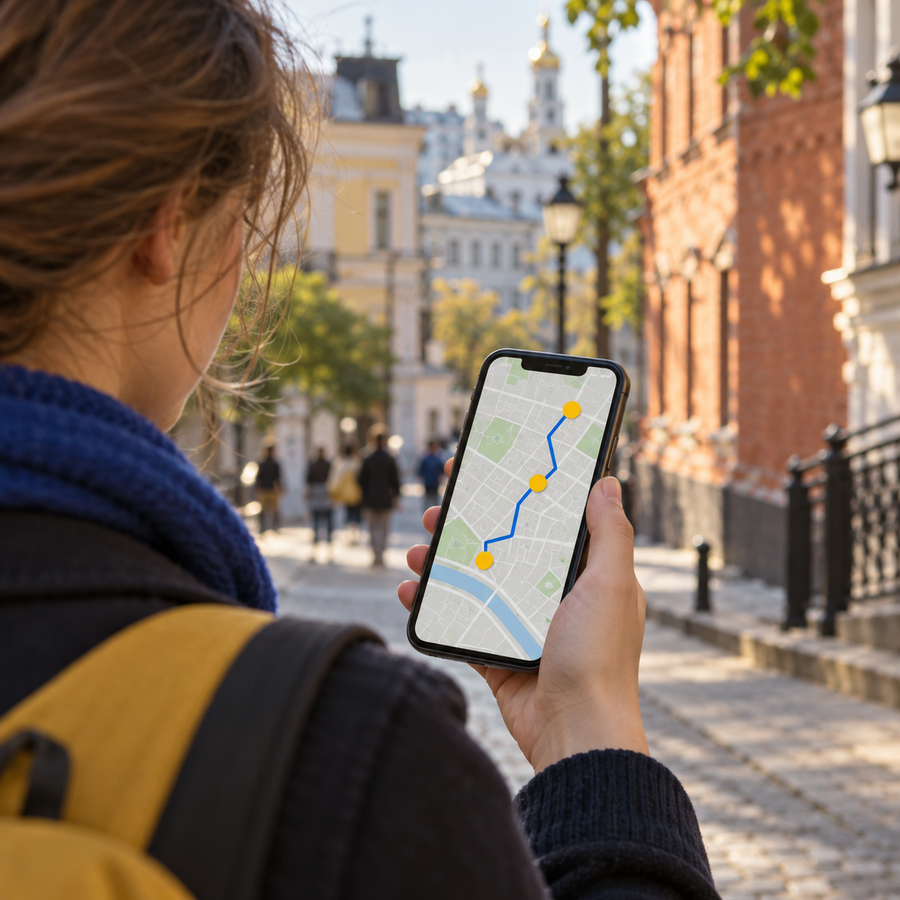
Six categories help you choose a walk based on your available time, company, and the weather.«Thirty Minutes» Short routes near the campus. We specify travel and return times so the walk fits within a break. Example: a small loop through neighboring alleys before the next class.«After Classes» Walks lasting 60–90 minutes, perfect for decompressing after studies and lingering in the city a bit. Example: from the university to the embankment—a stroll to relax by the water.«Free to Enter» Routes with no paid entry or required purchases. All extra costs are noted separately. Example: a square, architectural details, and a quiet courtyard—three stops requiring no tickets.«Meet Up Along the Way» Ideas for walks with a friend, a group, or on a date. We choose a convenient meeting spot and locations where you can have a relaxed conversation. Example: an hour alone after classes—a route with a stop on a bench.«If It’s Raining» Options with short transitions and stops indoors. We clarify the entry conditions and potential costs in advance. Example: how to modify a walk if the weather turns bad at the first stop.«Look Around» Small stories about details you might easily walk past: an unusual window, an old sign, or the structure of a city courtyard. Example: what to notice in a familiar alley if you walk a little slower.The editorial system is built on the intersection of: starting location × available time × reader’s situation.
Competitive Analysis
Analysis Goal — to determine where students currently find ideas for urban leisure, how easily they turn those ideas into a planned outing, and what portion of the planning they must do independently. We are comparing city media, personal blogs, channels featuring location roundups, and routing services.Analysis Criteria Positioning and Audience — to whom is the project directed, and does it account for student budgets and schedules. Theme and Place Selection — does it provide individual recommendations or link stops into a complete itinerary. Platforms and Adaptation — where is the content published, and how does its presentation change between the website and social media. Formats and Tools — does it utilize maps, cards, short videos, roundups, and neighborhood navigation. Visual Style — do the photos and diagrams help the user understand the route and recognize the location during the walk. Tone of voice — how accessible, friendly, and relatable is the language to the student audience.Practical Value and Feedback — whether time, costs, and visiting requirements are specified; what questions readers have, and what can be applied to our project.
Direct Competitors
KudaGo A city project featuring curated selections of places, events, and routes. Publications include ideas for neighborhood strolls and dates. Source Platforms: website and app. Formats: collections, place cards, themed routes, event listings. Visuals: vibrant photographs and striking headlines. Tone of voice: friendly, encouraging people to try new things. Strength: diversity of recommendations catering to various interests. Key Insight: While a curated collection attracts attention, the reader needs to quickly determine what suits them. «Between Pairs» uses time, budget, and proximity to their place of study as primary selection criteria.Mosprogulka A website about Moscow’s places, landmarks, and urban life. It helps users notice interesting sights beyond typical tourist spots. Source Platform: website. Formats: articles about locations, city stories, themed recommendations. Visuals: photos of sites and streets, informative presentation. Tone of voice: conversational, city-loving. Strength: attention to minute details that are easily overlooked. Key Insight: A walk becomes more engaging when you know what to look for. We can enhance a route with short stories that are convenient to read while stopped.«Discover Moscow» An interactive city guide focused on the history and architecture of the capital. It offers information on sights, routes, and self-guided city exploration formats. Source Platforms: website and mobile application. Formats: landmark cards, routes, audio guides, quests. Visuals: maps and photographs of urban sites. Tone of voice: educational, historical-cultural. Strength: connecting the walk with substantive narratives about the city. Key Insight: A route should deliver an experience, not just a direction. For our project, it is important to combine short stories with a clear duration for the walk.
Indirect Competitors
«Afisha» A service for choosing city entertainment: movies, exhibits, plays, concerts, and other events. It competes for the time a student might spend walking around. Source Platforms: website and mobile app. Formats: listings, event cards, editorial selections, ticket purchasing. Visuals: posters, photographs, large cards. Tone of voice: informational, recommendation-based. Strength: the ability to move from selection to a specific action. Key insight: a recommendation is more useful when the next step is obvious. In our publications, this step will be opening a route with a starting point and stops.Time Out Moscow Media covering city life, culture, and leisure. It publishes recommendations and author-led routes, but covers significantly more topics than just walks. Source Platform: website. Formats: roundups, reviews, interviews, author guides. Visuals: magazine-style presentation with expressive photography. Tone of voice: lively, urban, recommendation-based. Strength: the ability to turn locations into an engaging story. Key insight: a walk can have a mood or a theme. We can offer routes for a quiet break, meeting a friend, or discovering new experiences.Tripster A platform for excursions and tours, including those in Moscow. It introduces people to the city through guided programs. Source Platform: website with catalog and booking. Formats: tour descriptions, itineraries, reviews, guide profiles. Visuals: photographs of locations and walking participants. Tone of voice: enthusiastic, inviting. Strength: a clear program and an author’s perspective on the city. Key insight: it is easier for a person to decide on a walk when they understand what they will see. It is beneficial for us to show the main stops and expected highlights in advance.
Potential Competitors
Yandex Maps A search and routing service. It already helps solve the practical aspects of a walk: finding a point and understanding how to get there. Source Platforms: browser and mobile app. Formats: map, place cards, routes, photos, and reviews. Visuals: functional, focused on navigation. Tone of voice: neutral, concise. Strength: seamless transition from a found location to its route. Why a potential competitor: Ready-made themed walks for a short break could merge navigation with the objective of our media. Our takeaway—provide links to the map and verify the route between stops.2GIS An urban directory with navigation and guides. Collections feature landmarks, pedestrian routes, and other leisure spots. Source Platforms: website and mobile app. Formats: maps, organization cards, guides, saved collections. Visuals: map and compact informational cards. Tone of voice: practical, service-oriented. Strength: connecting place information with navigation. Why a potential competitor: This service already partially solves a similar problem. Collections specifically for students and short breaks would intensify the overlap. We must consider not just the address, but also the entrance, operating hours, and the ability to save a route.The Vyshka An independent media outlet about student life. It intersects with «Between Classes» primarily through audience and its daily context. Source Platform: website. Formats: articles, interviews, stories, and topical features. Visuals: student editorial style. Tone of voice: relatable, conversational. Strength: understanding the rhythm of academic life and student interests.Why a potential competitor: A regular feature on walks near campus buildings could offer similar value to an already familiar audience. Our conclusion is to build content around the actual schedule and student concerns.
Competitive Analysis — Findings
The proposed concept, «Between Pairs, ” combines three characteristics.Reader Schedule — the starting point We begin with the question, „How much time do you have?“ Routes available for 30, 60, and 90 minutes help select a walk that fits between commitments.Ready-Made Itinerary instead of self-assembly We connect stops into a sequential route. We specify a starting point, time accounting for breaks, potential costs, and options to shorten the journey.City Near Campus We focus on areas around universities and subway stations. We help users discover Moscow through short walks throughout the week.Elements to borrow for project development: — from KudaGo — mood and situation-based collections; — from „Mosprogulki“ — attention to subtle urban details; — from „Uznay Moskvu“ — brief histories of stops; — from „Afisha“ — a clear next step; — from Time Out — expressive photography and unique editorial style; — from Tripster — a clear program description; — from mapping services — convenient navigation; — from student media — language relatable to the audience.Core Insight: A visually appealing location alone does not solve the reader’s problem. They need an answer: „Will I have time to go there, how much will it cost, and how can I fit the walk into my day?“
The foundation of our format is clear scheduling plus convenient start times and a pre-planned itinerary.
Distribution Channels
The «Between Classes» content is adapted to different ways of exploring the city: quickly choosing a walk, experiencing the atmosphere of a place, saving an idea, or finding a detailed itinerary.
VK — choose and go The project’s main channel. Here, the reader receives a complete walking plan and can suggest their own starting point.
We publish: — 30, 60, and 90-minute itineraries; — maps with stops and links; — information on expenses and entry requirements; — options for shortening the route; — surveys about districts and free time; — routes based on subscriber requests; — navigation for the subway, universities, and specific topics. At the beginning of every post, we include the essentials: where we start, how long it will take, and what we will see. This helps users make a decision even before reading the full description.
YT — feel the walk Short videos and cards introduce new audiences to the project and show why a route is worth taking. The core principle: starting point → several stops → impression from the walk. Publication examples: — what you can see in half an hour near the university; — a walk from the subway station to a quiet square; — an evening route for meeting a friend; — what a certain alley looks like in the morning versus after sunset. In the videos, we convey the atmosphere; in the descriptions, we provide the time, start point, and a link to the detailed plan.
Pinterest — save for later Visual collections help users build a personal list of future walks. We plan to post: — photos of courtyards, streets, and embankments; — cards for short routes; — collections by district; — ideas for walks as a couple; — seasonal city details; — boards for «Half an Hour in the City, ” „After Class, ” and „On a Budget.“ Each post links to the full itinerary so that an appealing image can be turned into a real walk.
Website — choose based on your schedule In the next phase, the website will become a library of routes with filters for starting location, time, budget, and weather. Navigation will be built around three questions: Where am I? → How much time do I have? → How do I want to spend it? For example: near the university → 60 minutes → a quiet solo walk.
Target Audience
The project operates under a B2C model. Four segments have been identified based on objectives. Personas serve as working hypotheses for subsequent interviews.